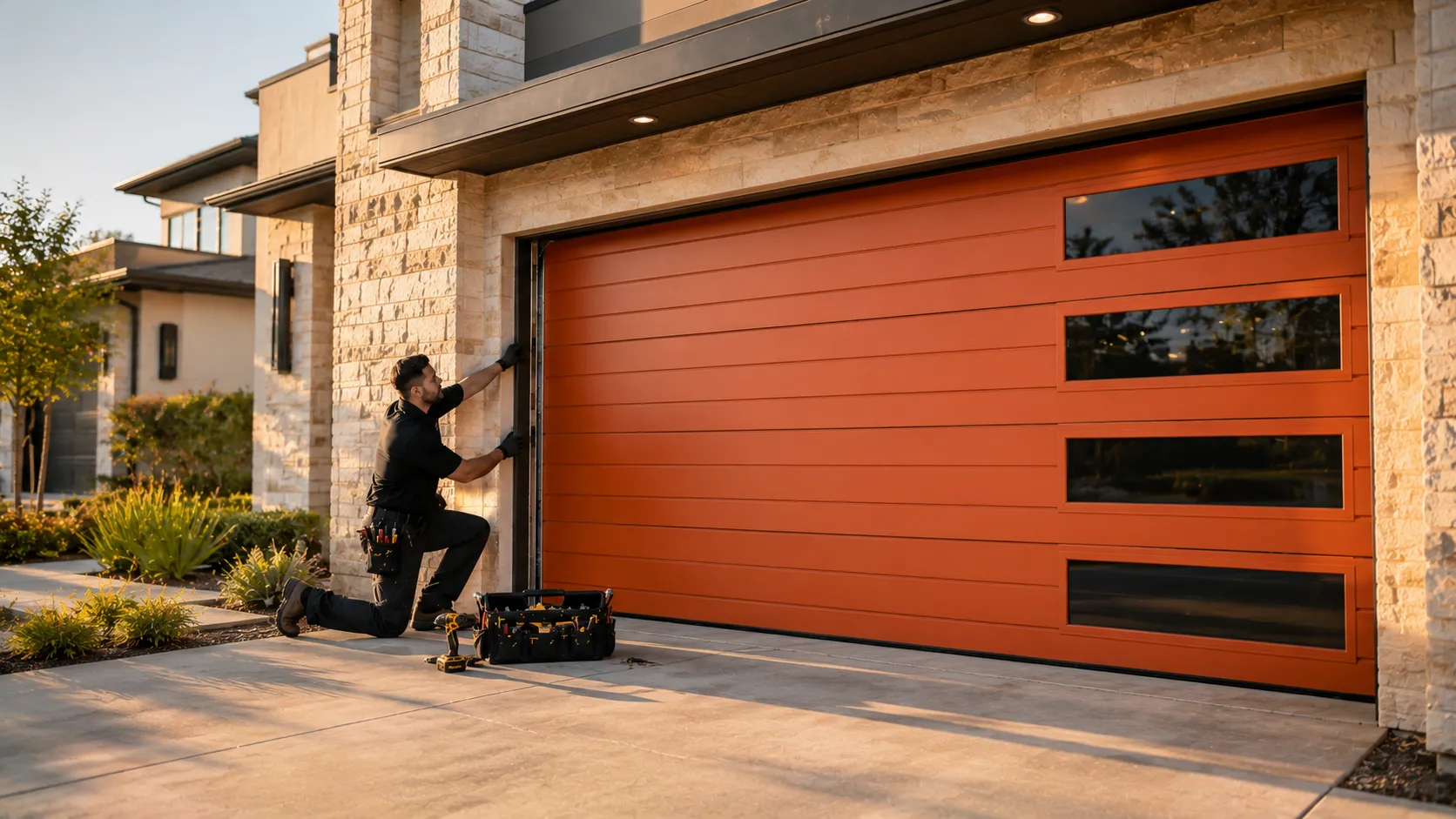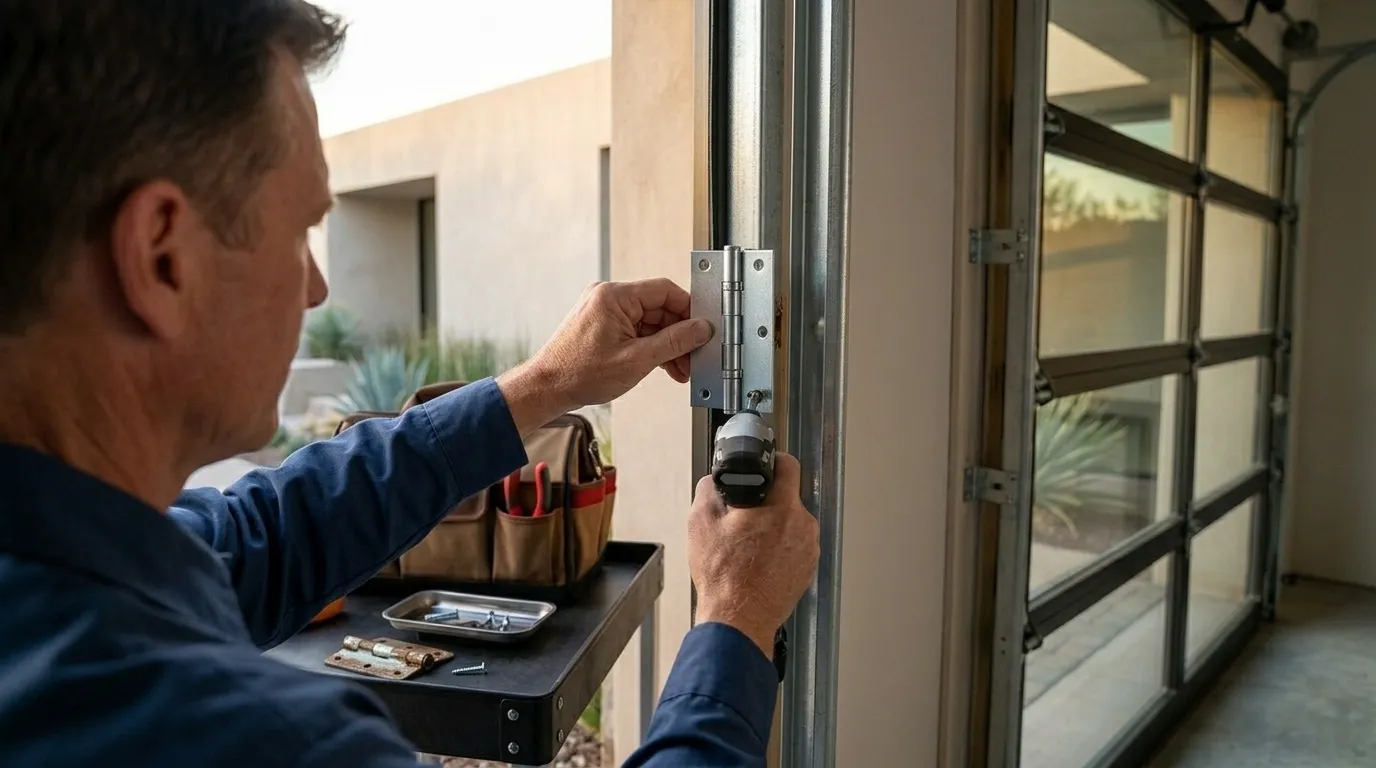
How to Book
Call and tell us the opener brand if you can see it on the housing (Chamberlain, LiftMaster, Genie, Craftsman - most of what's out there) and what it's doing: dead silent, humming but not moving, running but the door won't budge, or opening fine but not closing all the way. That last one is almost always the safety sensors, and it's worth mentioning up front because it changes what we bring on the truck.
We'll ask your address to place you against the rest of the service area - homes near Rochester proper, out toward Auburn Hills, or up near tend to have different opener ages depending on when that pocket was built out, and it helps us guess the part before we're on site.
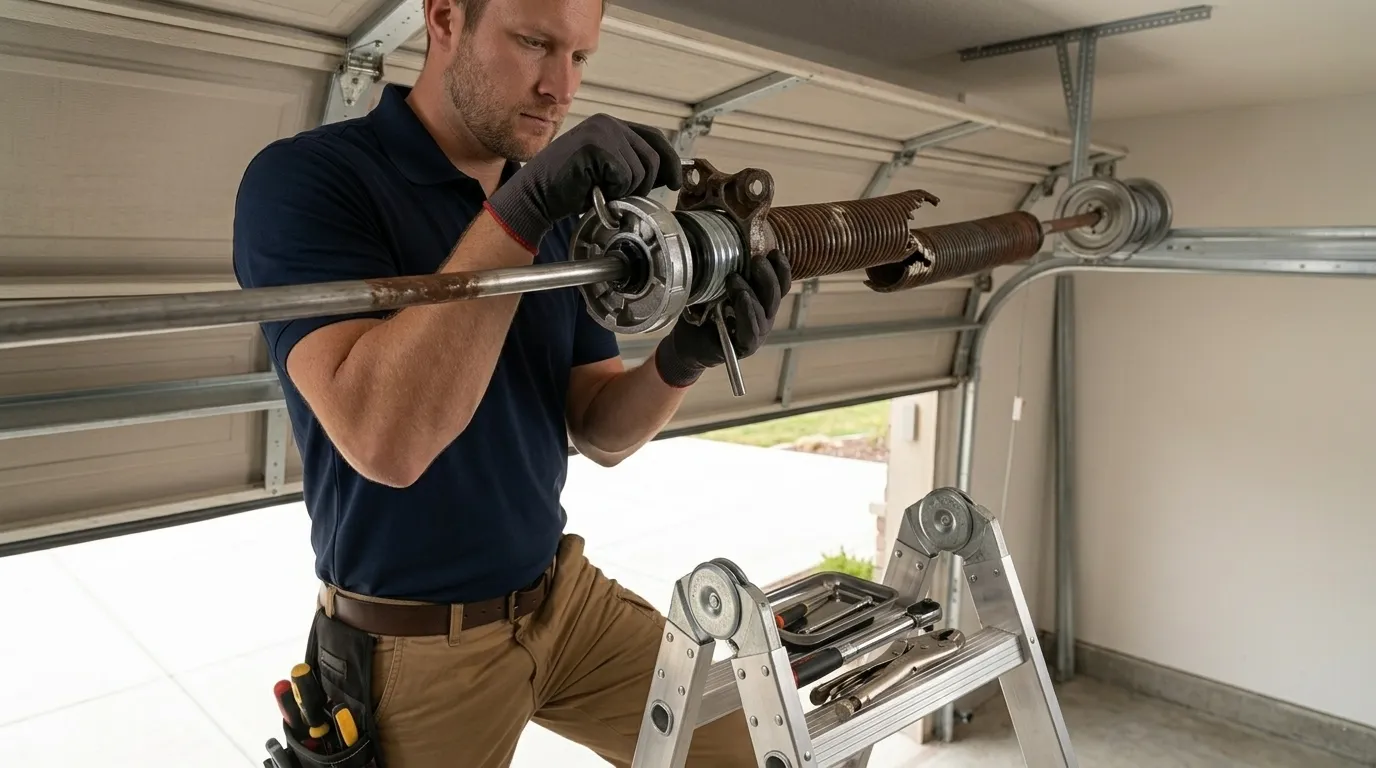
If the opener is completely dead and the door won't move by hand either, don't force it. Pull the emergency release cord, see if the door moves freely on its own, and tell us that when you call - it tells us in thirty seconds whether we're looking at the opener or something upstream of it like a spring or cable.
Why This Fails Locally
Housing in this service area runs from 1938 up through 2002, with the median build year sitting around 1960, and most of the stock across the 42 named areas we work in dates to the 1960s and 70s. That matters for openers specifically: a house built in that window has usually had at least one, often two, opener swaps since original construction, and the mounting bracket, header clearance, and door weight it was built for don't always match what a big-box replacement unit assumes when it's installed without adjustment.
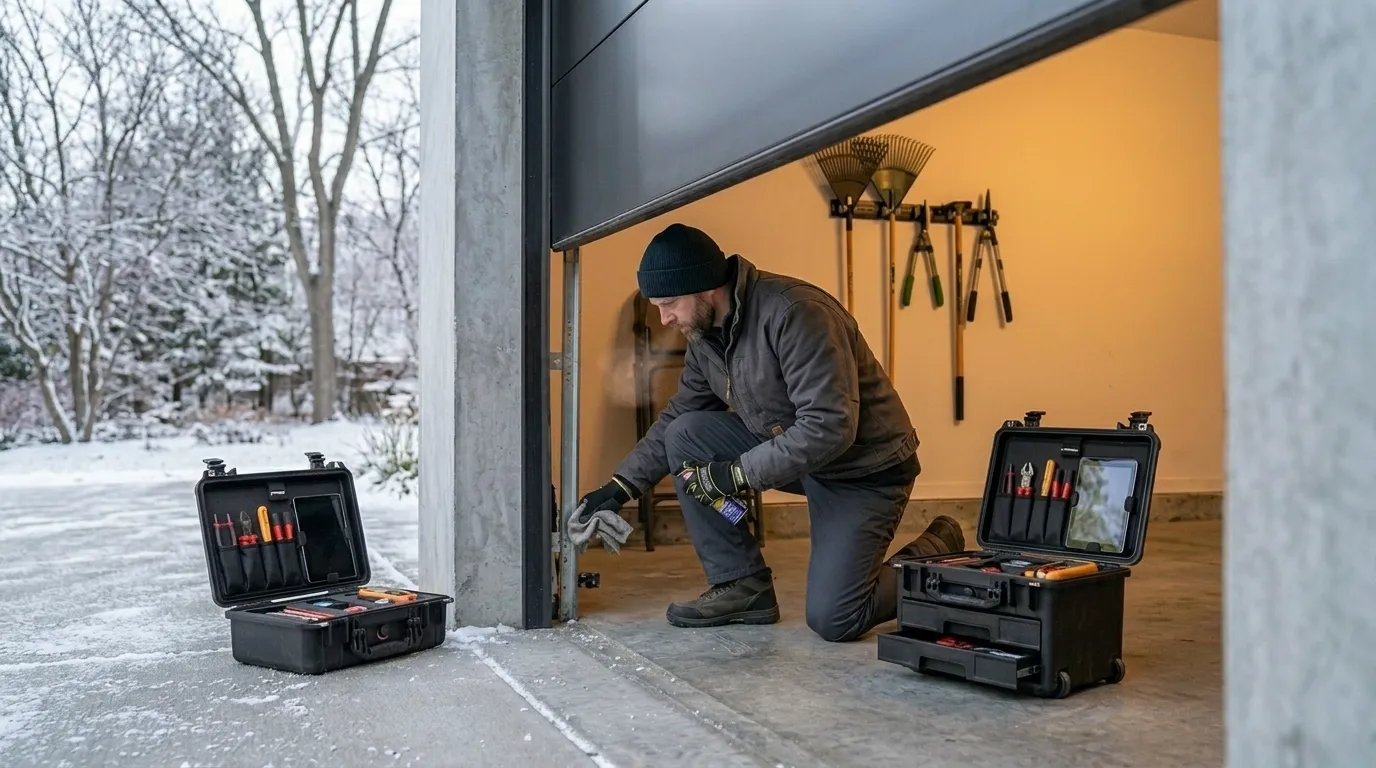
The other factor is the climate band, which is classified cold-severe here. Openers work harder in winter - the logic board, the drive gear, and especially the travel limits all get pushed by temperature swings that a mild-climate opener spec sheet doesn't account for. Nylon drive gears crack in cold garages. Chain openers that were fine in October start binding in January because the chain contracted and the tension was never rechecked.
So the failure pattern here isn't random. It's older mounting hardware paired with openers rated for gentler weather, in a service area where the median household income of $84,862 across 233,489 households means most owners replace the opener once, not twice, and expect it to last.
The DIY Question
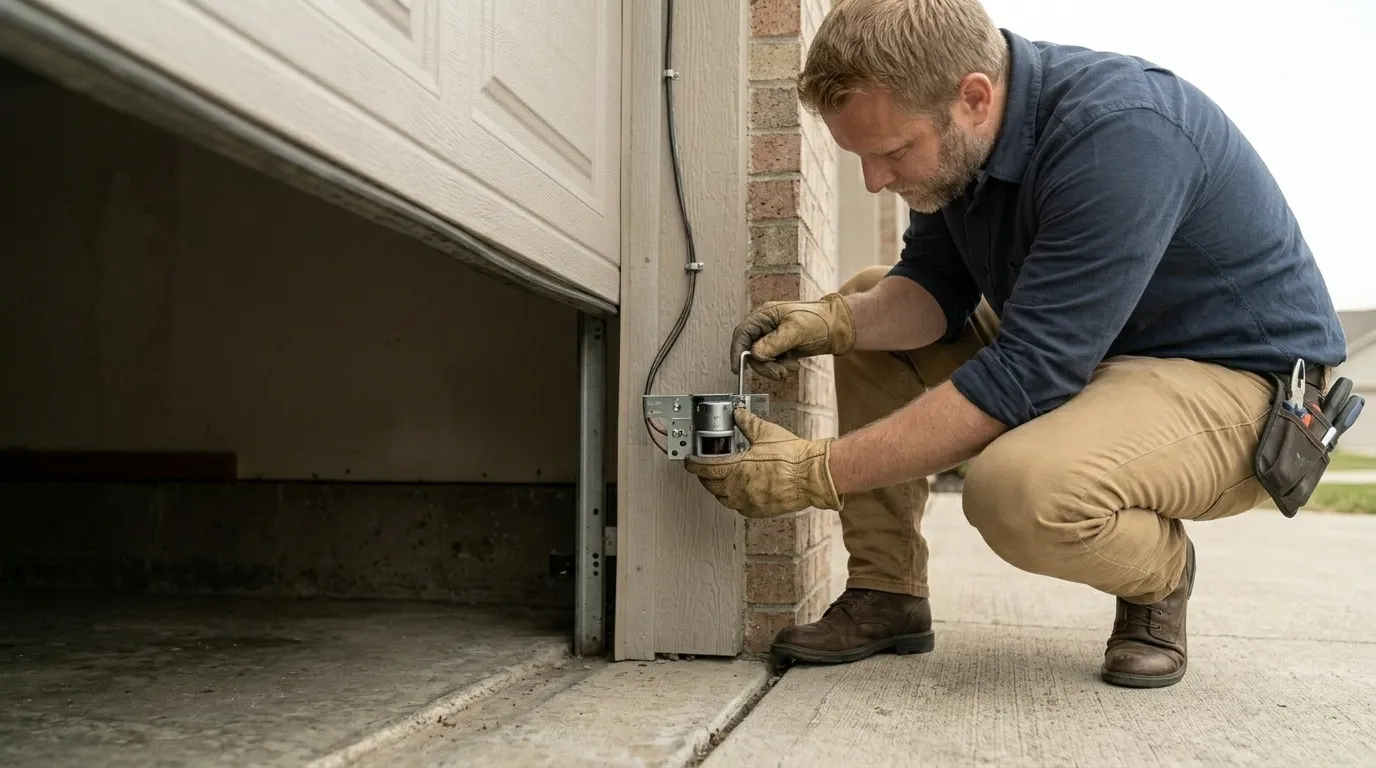
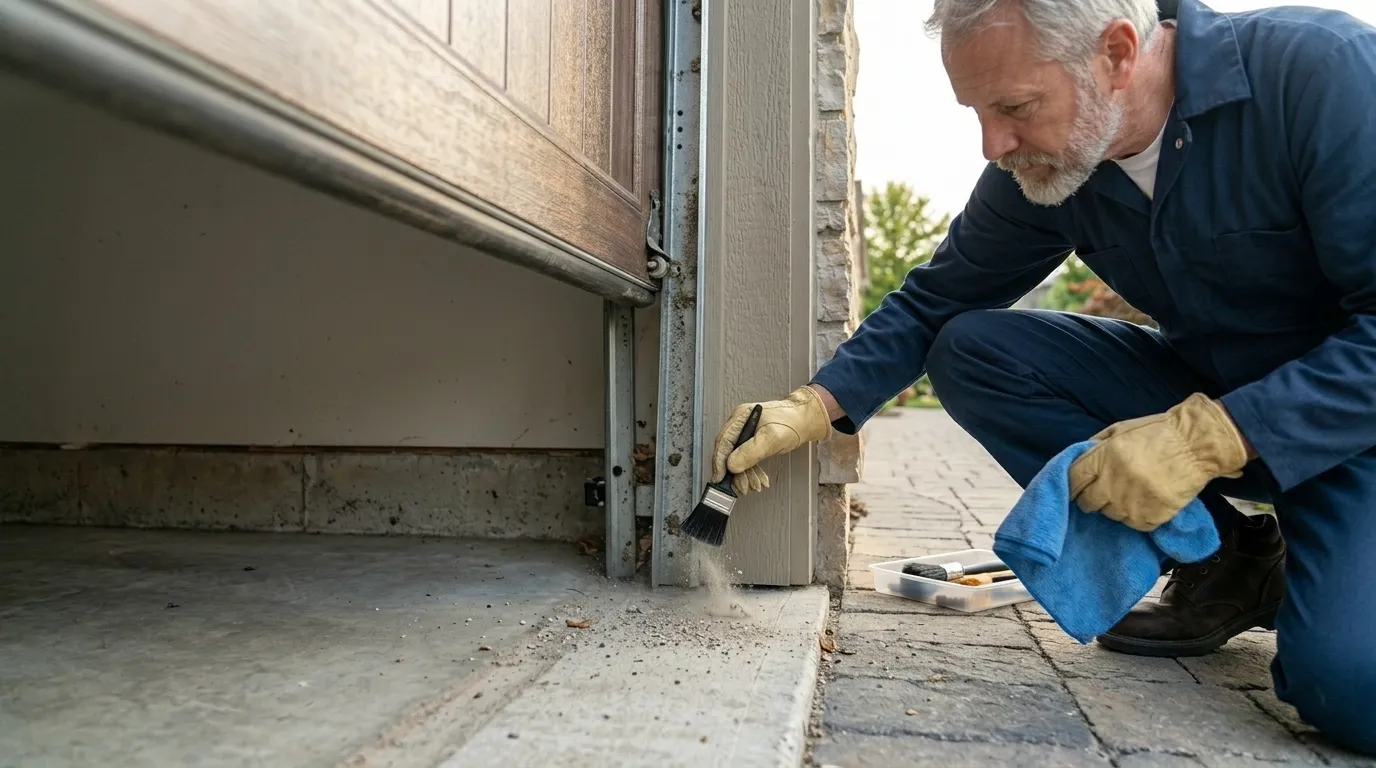
Swapping remote batteries, wiping down the sensor eyes, and checking that nothing is blocking the sensor beam - all fair game, and all worth trying before you call. If the door reverses immediately when closing, that's usually a five-minute fix you can do yourself.
Where we'd tell you to stop: anything involving the drive gear, the chain or belt tension, or the logic board. Openers carry spring-loaded and electrical components that aren't forgiving of guesswork, and a gear stripped further by a wrong-size replacement part costs more to fix than if it had been left alone. We also won't tell you a repair is worth it when it isn't - if the opener is old enough that the manufacturer no longer makes the circuit board, replacement is usually the honest answer, not a patch job that fails again in a year.
One limit on our end: if the opener model is discontinued and the part has to be special-ordered, we can't always get it same week. We'll tell you that up front rather than have you wait and wonder.