The DIY Question
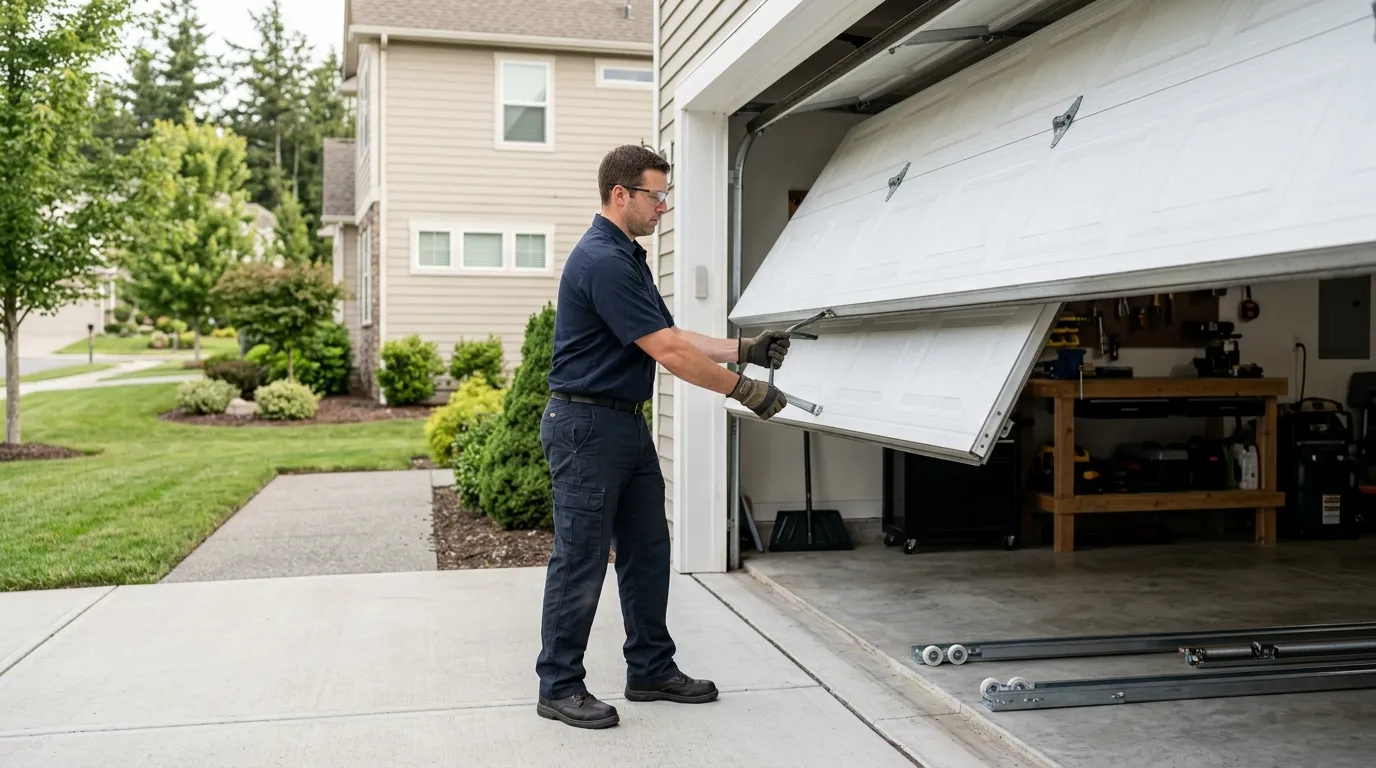
Eighteen miles is the number that shapes this job before a truck ever leaves Rochester Hills. That's the drive out to St. Clair Shores, and it means a same-day call has to be planned, not improvised - nobody is swinging by on the way to another stop. If your door has jumped the track and one panel is hanging crooked, you can usually tell whether it's safe to leave alone: if the door still closes flat and the cable isn't visibly slack or frayed, it can wait for a scheduled visit. If a roller has popped clean out of the track, or the door is racked at an angle in the opening, don't force it back with the opener - that's how a track gets bent instead of just knocked loose, and a bent track costs more to fix than a dislodged one. Don't try to muscle the door back into the track yourself if a cable is involved; a cable under tension is not a DIY fix, full stop. Given the distance on this one, it's worth a phone call first to describe what you're seeing - sagging on one side, a gap at the bottom, a grinding sound when it moves - so the trip out is loaded with the right parts the first time.
What the Repair Takes
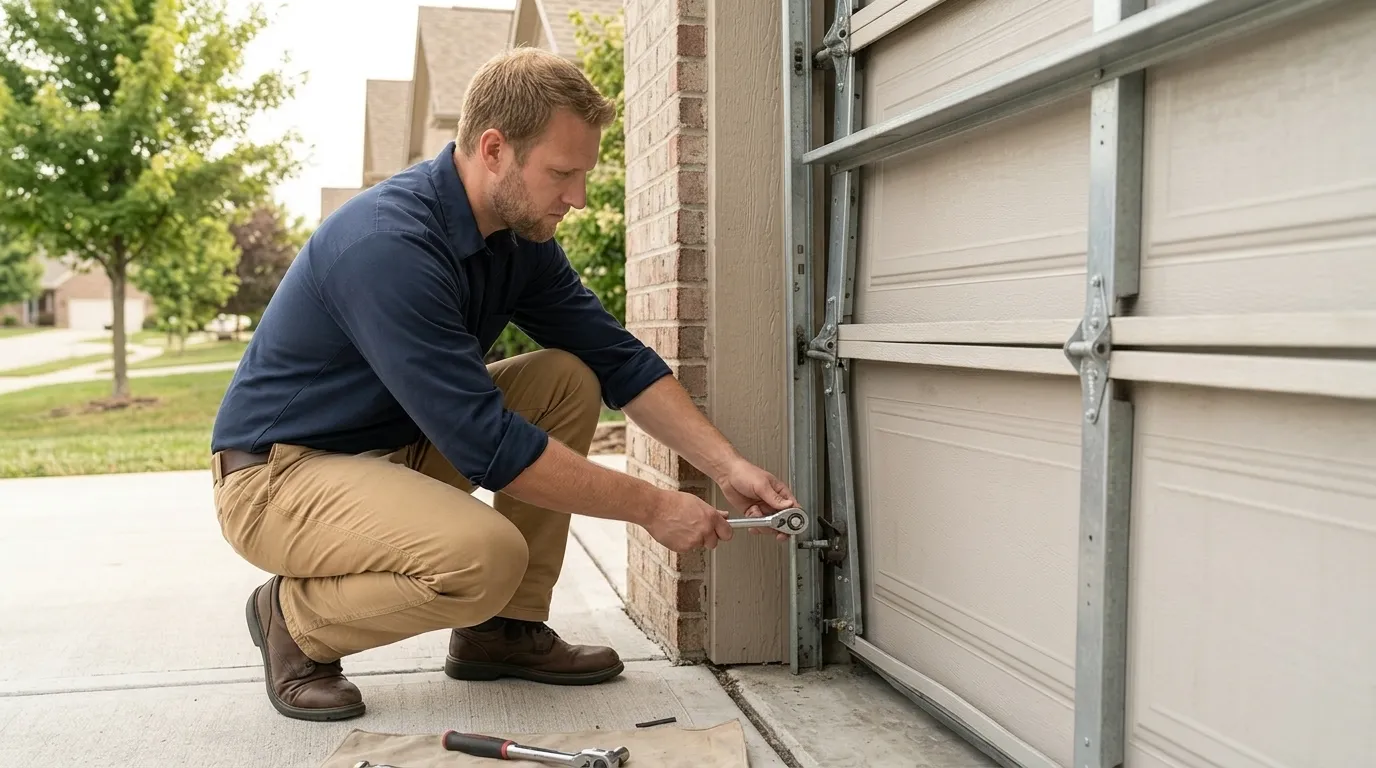
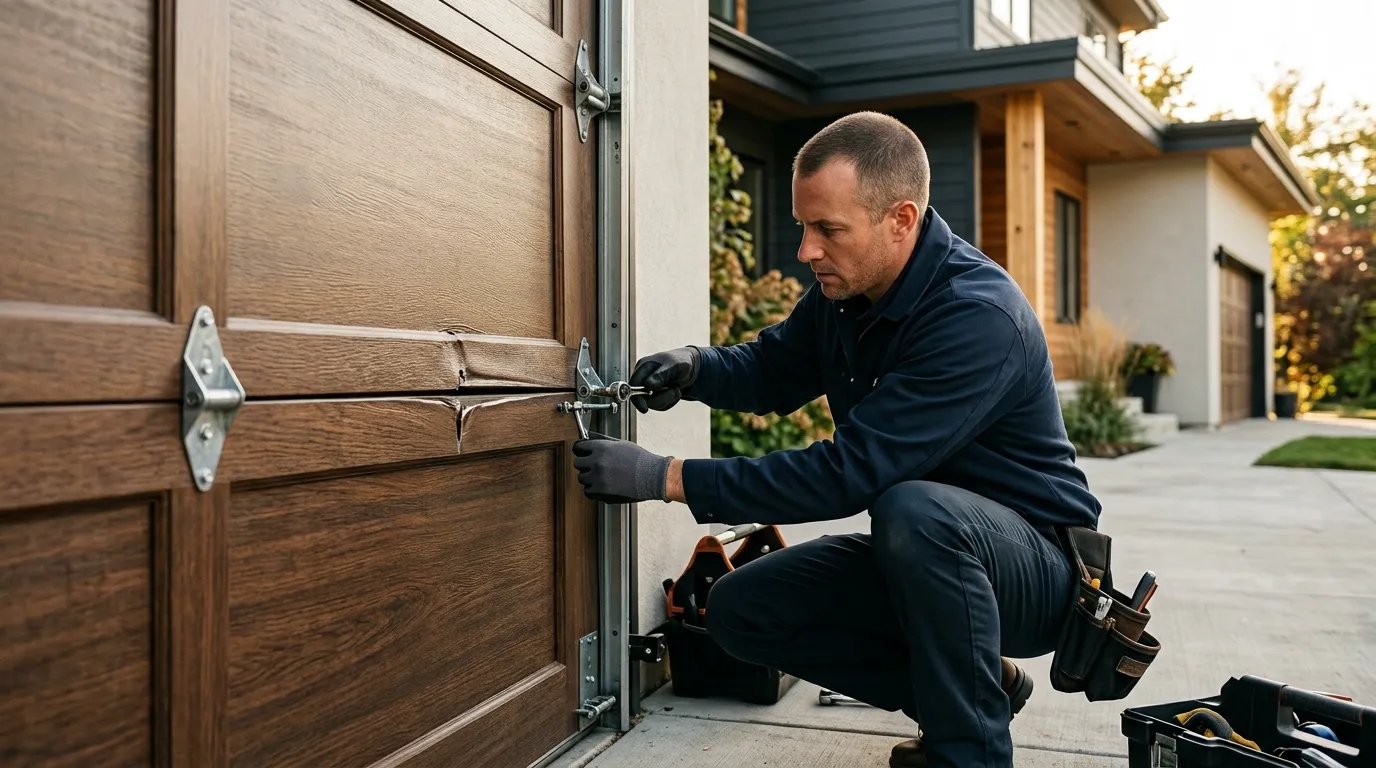
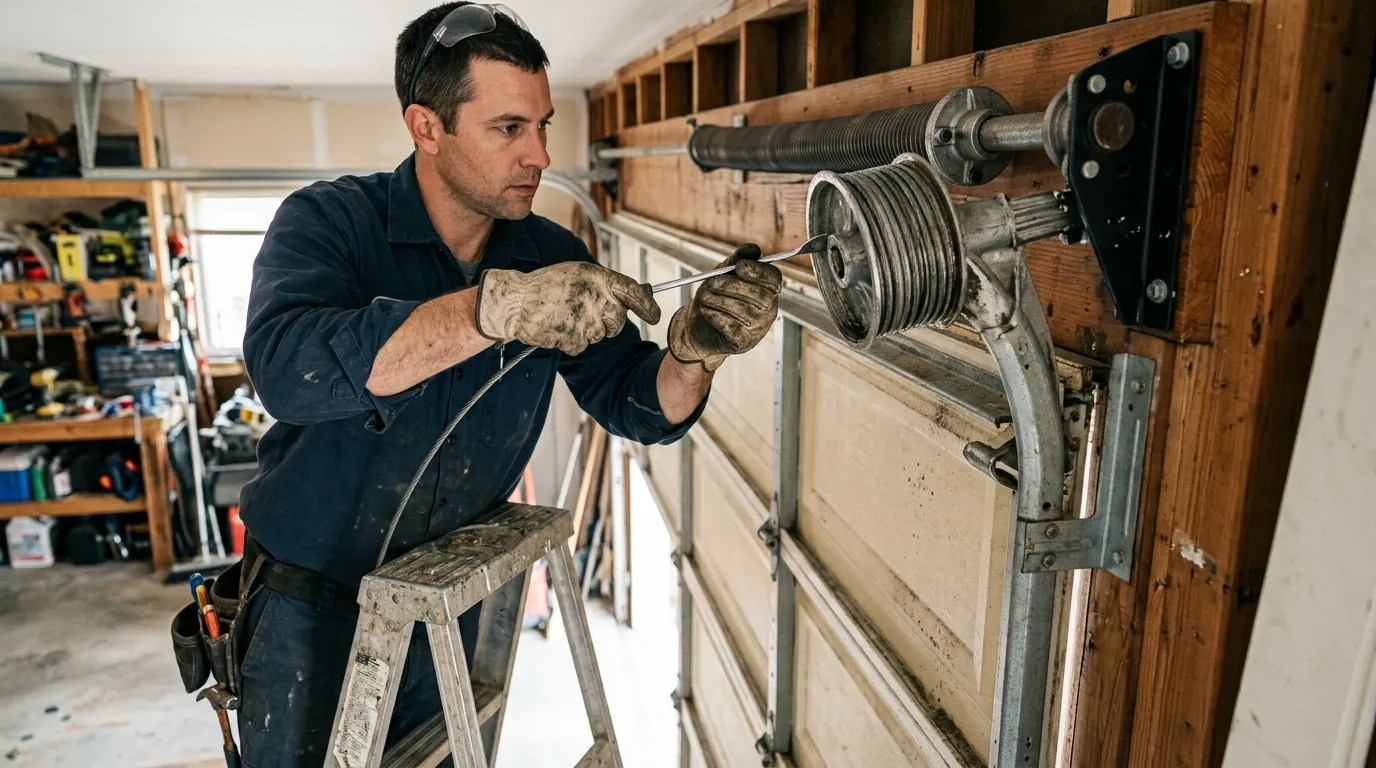
An off-track repair starts with figuring out why the door left the track, not just pushing it back on. On houses built around 1957 - which is roughly the median year for this area - the track brackets are often the original gauge, and decades of expansion and contraction from Michigan winters can leave them slightly bowed even before a roller jumps. The fix is usually one of three things: re-securing a bent track section, replacing a worn roller that's been riding rough for months before it finally let go, or resetting cable tension that's slipped enough to pull the door off-line on one side. None of that is a five-minute job if the bracket itself needs re-anchoring into old framing. The honest limitation here: if the track is bent badly enough, or the opening has settled unevenly over sixty-some years, straightening it can cost close to what a new track section runs, and at that point replacement is the better call rather than a repeated patch.
Why This Fails Locally
Household income in this pocket runs lower than the wider service area - around $72,693 here against roughly $84,862 across the territory as a whole - which matters less for the fault itself and more for the repair-versus-replace call: a track repair on a 1957-era door is almost always the cheaper path if the panel and hardware are otherwise sound. What does matter for the fault is the climate. This region sits in a severe cold band, and repeated freeze-thaw cycles work on old track brackets the same way they work on foundations - tiny shifts, year after year, until a bracket that held fine for decades finally lets a roller ride out of the channel. Houses from this build era, going up well before today's stamped-steel track hardware became standard, are the ones most likely to show this pattern. It's not a St. Clair Shores-specific defect - it's a build-era-and-climate combination showing up here because that's where the older stock sits.
How to Book
Calls for St. Clair Shores get scheduled out of Rochester Hills, so the more detail you can give up front - which side of the door is off, whether the opener still runs it, whether a cable looks loose or frayed - the better the truck is loaded before it makes the 18-mile drive. You can see more on how service works for this area on the St. Clair Shores service page, and if what you're dealing with turns out to be broader than a track issue, the full off-track write-up for the home service area is here: garage door off-track repair, Rochester Hills.