The DIY Question
Before you spend an afternoon under the rail with a socket wrench, look at the number that actually matters: median household income here runs $72,693, noticeably below the $84,862 median across the wider service area. That gap is what decides whether a repair is worth doing yourself or worth calling in. A $30 sensor or a $15 remote battery, sure, swap it. But a dead logic board on an opener built before smart-home tie-ins, or a motor that hums and won't lift, is a different math problem. St. Clair Shores' median build year sits around 1957, which means a lot of these openers aren't the original unit at all - they're the second or third one somebody bolted onto brackets that are older than the opener itself. Guessing at a part number on hardware like that wastes more money than it saves. If the opener is under ten years old and the fix is a sensor, a remote, or a worn drive belt, doing it yourself is reasonable. If you're chasing a grinding gear or a board that won't hold a code, that's a call, not a project.
What the Repair Takes
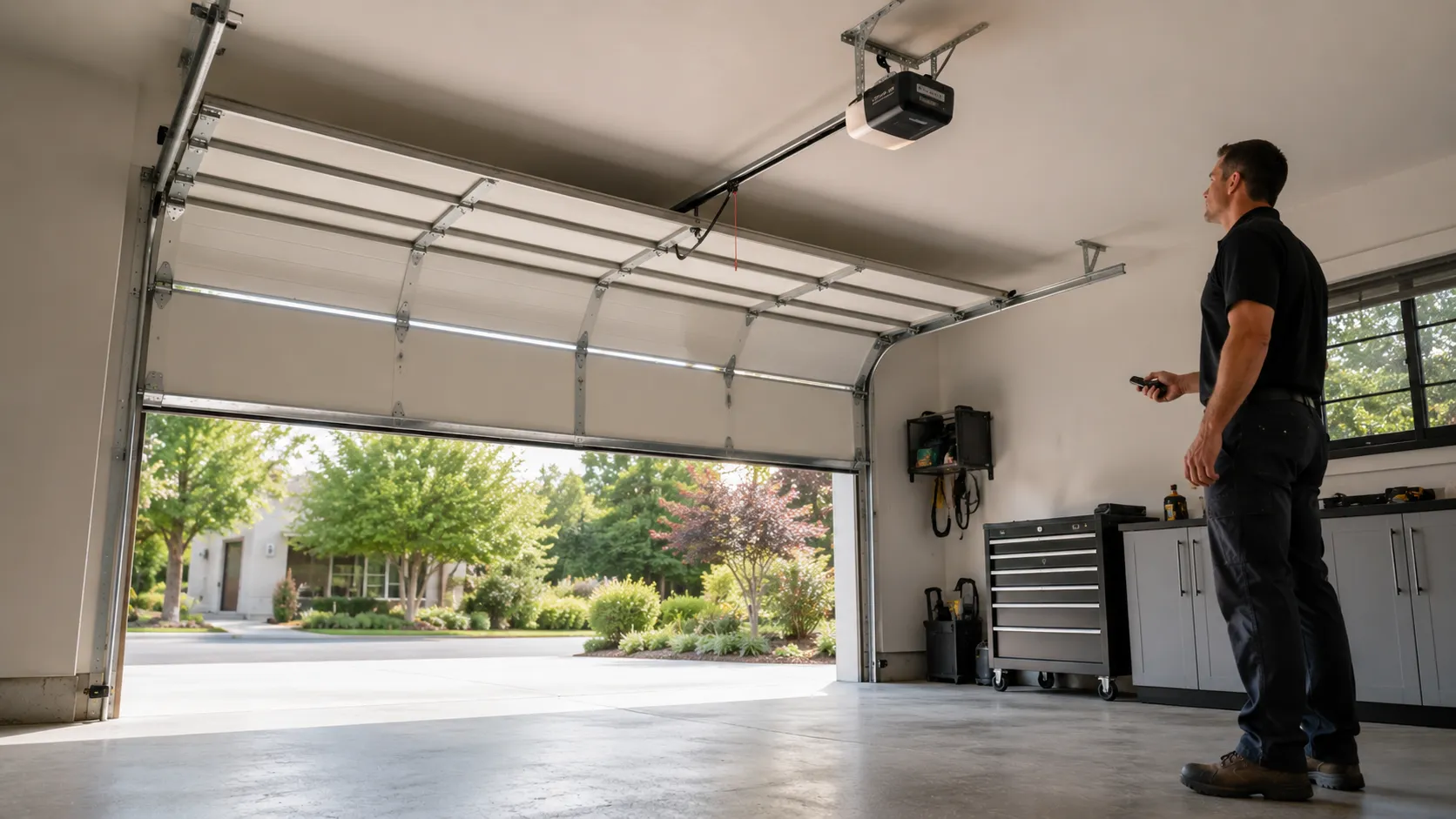
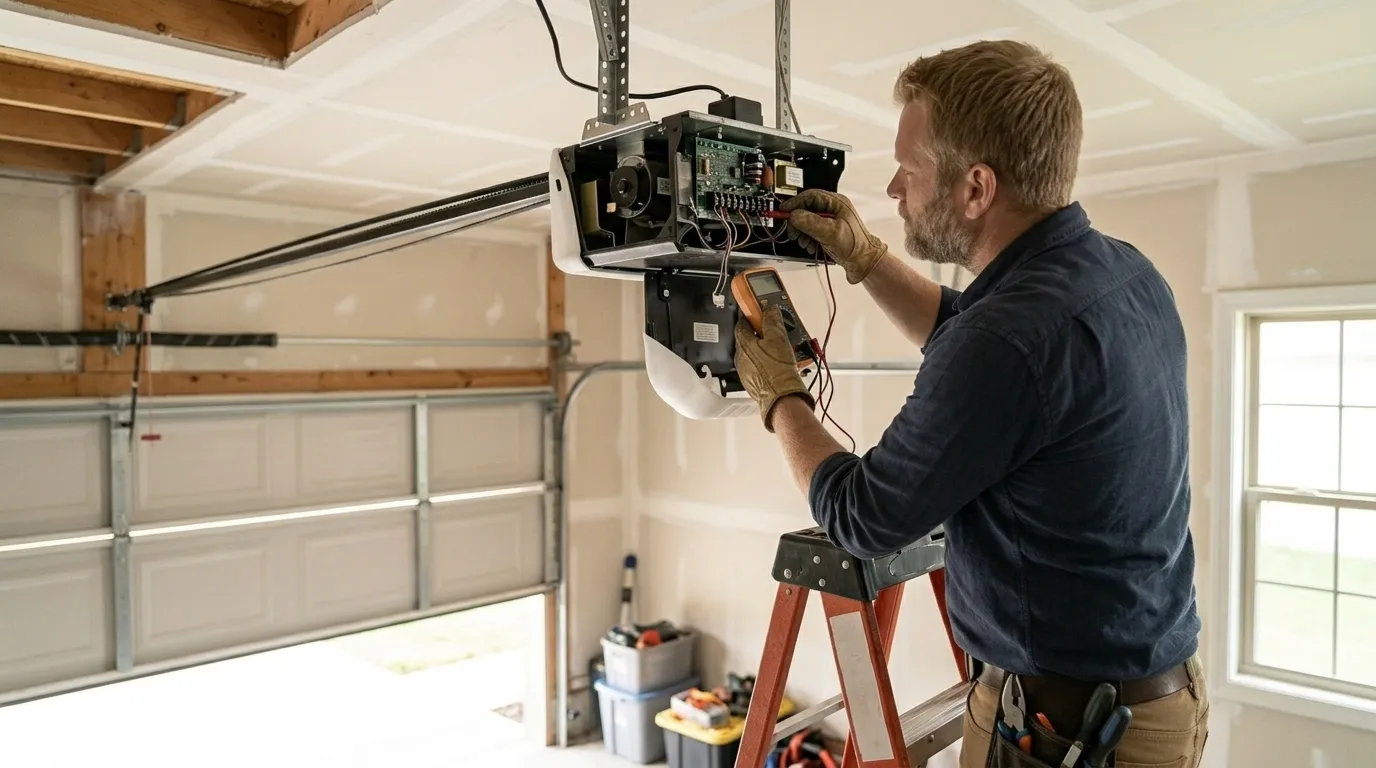
Most opener calls break down the same way regardless of brand: check the safety sensors first, since a knocked-out eye or a sun-glared lens looks exactly like a dead motor from the homeowner's side. Next comes the logic board and the capacitor - the two parts that fail quietest and get blamed least. Then the drive itself: chain, belt, or screw, each wearing differently depending on how the door's been balanced over the years. On houses from the 1957 era, we're often dealing with openers mounted to joists that have shifted slightly over six decades, so the rail alignment gets checked before anything electrical gets touched. A repair that skips that step and just swaps the board is a callback waiting to happen. We don't guess at parts on-site with hardware this old - if the board isn't a stock item, that's a return trip, not a same-visit fix.
Why This Fails Locally
This region sits in a cold-severe climate band, and winter is hard on opener hardware in specific ways: chain-drive units stiffen and skip teeth in deep cold, belt drives that have dry-rotted crack rather than stretch, and gear sets lubricated with old grease bind up on the first sub-zero morning. Housing across the broader service area was built mostly between 1938 and 2002, with a median around 1960, and St. Clair Shores tracks close to that at 1957 - old enough that a good share of openers here are on their second or third motor, not their first. With 27,495 households in this town alone, that's a lot of aging units running through winters that punish worn belts and tired capacitors harder than a mild climate would. None of that is unique to any one street here, but it's why an opener call in this town skews toward drive failure and cold-seized gears rather than the electronics-only faults you'd see in newer construction.
How to Book
We run this job out of Rochester Hills, and St. Clair Shores sits about 18 miles out, one of the longer legs on the route. That doesn't change the repair itself, but it's worth knowing scheduling depends on what's already loaded on the truck for openers of this vintage. Tell us the opener brand if you can find it stamped on the motor housing, when it stopped working, and whether the door itself moves freely by hand with the opener disconnected - that one detail alone often tells us whether we're bringing an opener kit or spring tools. You can see the towns we cover on this side of the county at our St. Clair Shores service area page, and if the job turns out to be broader than opener repair, our Rochester Hills opener repair page covers the base service in full.