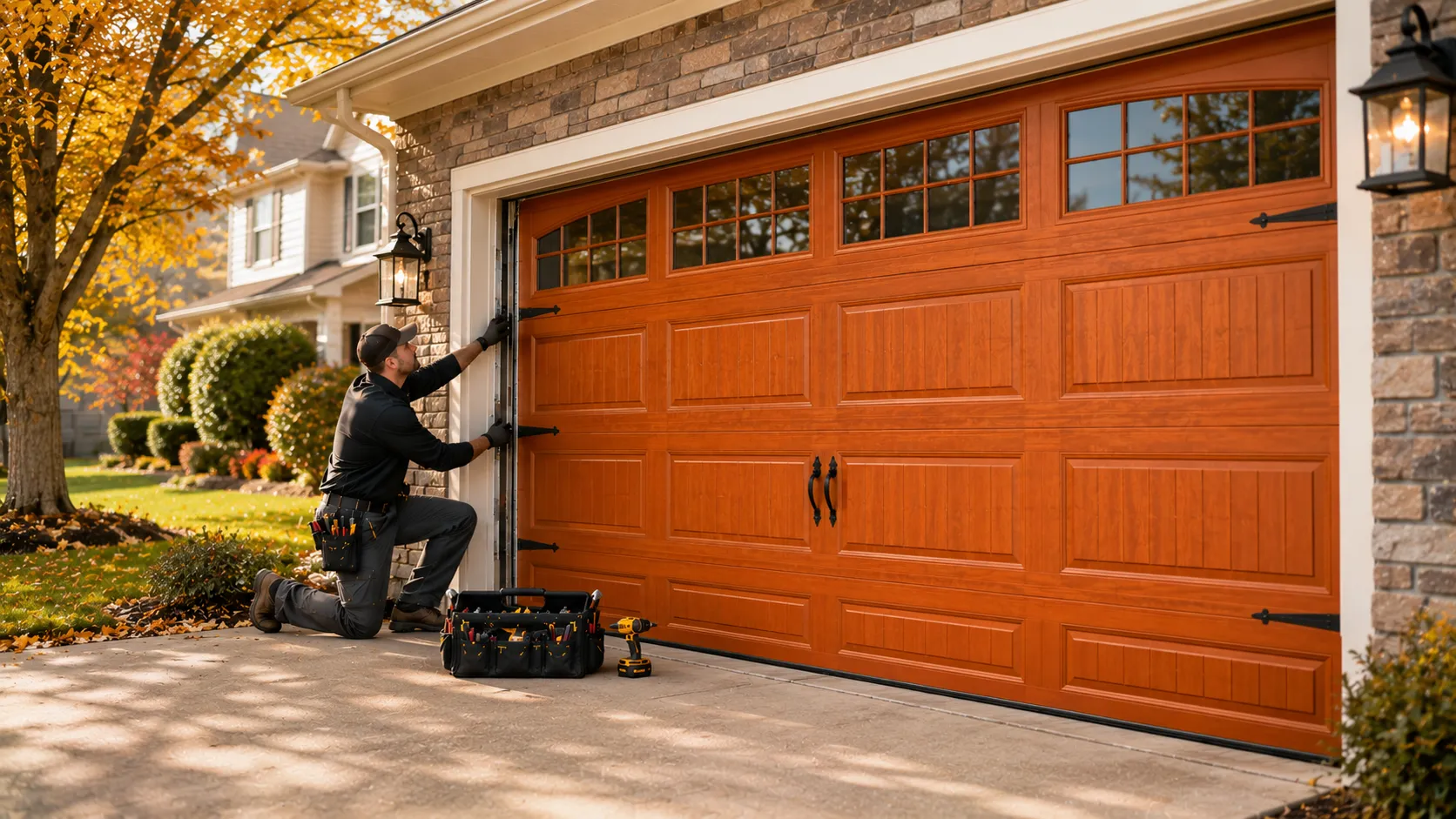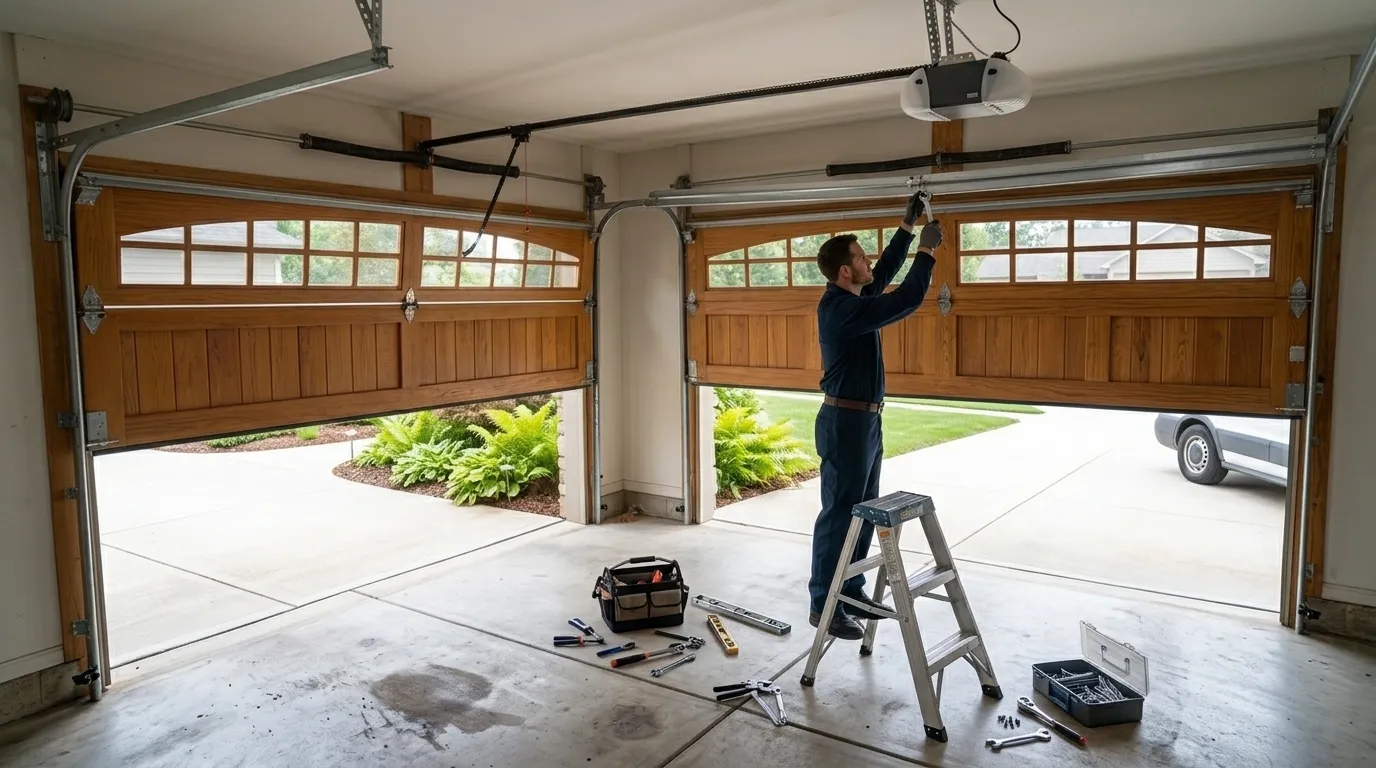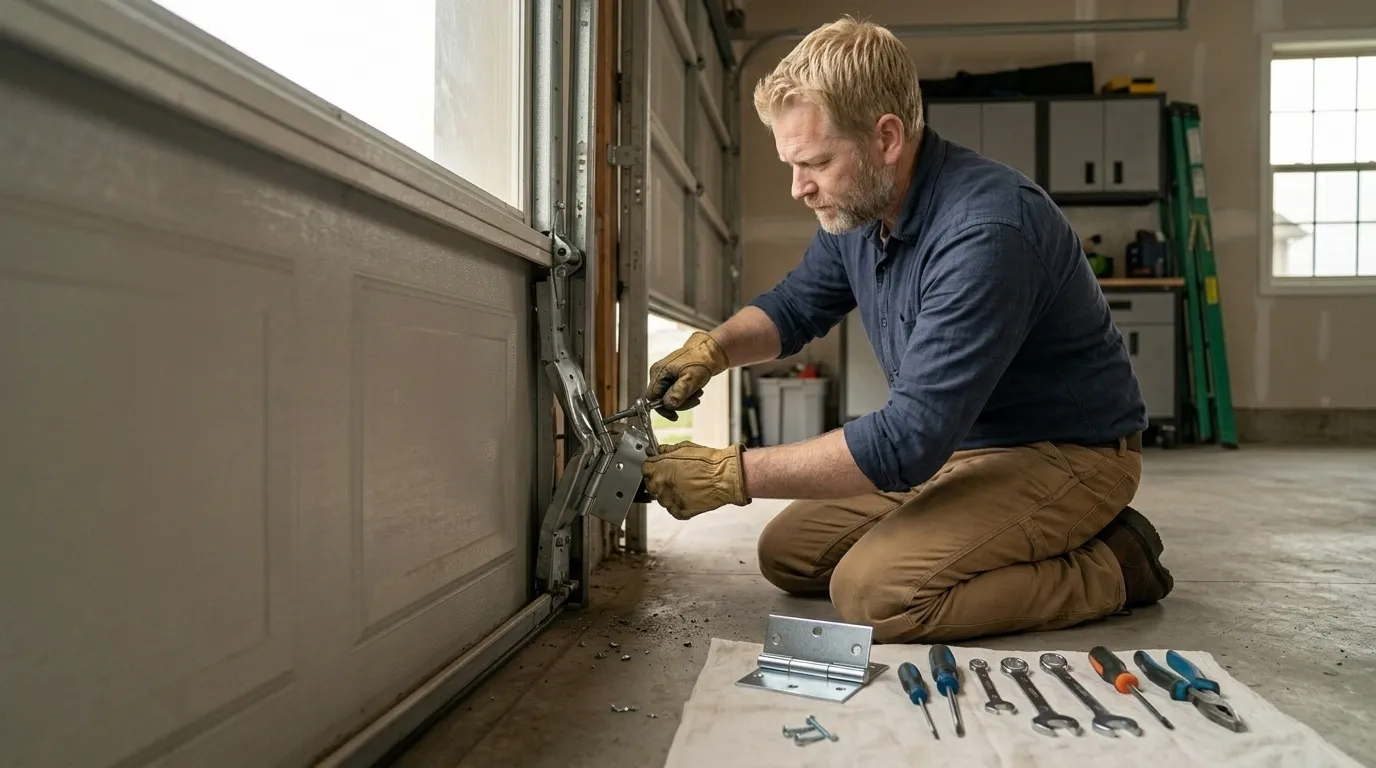
Why This Fails Locally
Birmingham is a small town by household count - about 9,326 of them - which means the opener calls we get here cluster tightly instead of spreading across every decade of equipment. Most of those houses went up around 1960, part of the broader 1938-2002 build-out across this service area, so a lot of Birmingham garages still run openers mounted to the same original wood jambs and header boards from that era. Add a house whose median income sits at $153,125, and you get a pattern: owners who replaced the opener itself a decade or two ago but never touched the track, the header bracket, or the sensor wiring underneath it. That mismatch is the actual failure. A newer chain-drive or belt-drive head unit bolted to a header that's sagged half an inch over sixty years throws the door out of square, and the opener takes the blame for what the framing is doing. We see the burned-out gear or the stripped sprocket and have to explain that the real fix is behind it, not in the box on the ceiling. It's a smaller, denser town, so we're not guessing at housing stock the way we might elsewhere - the fault pattern repeats house to house.
The DIY Question
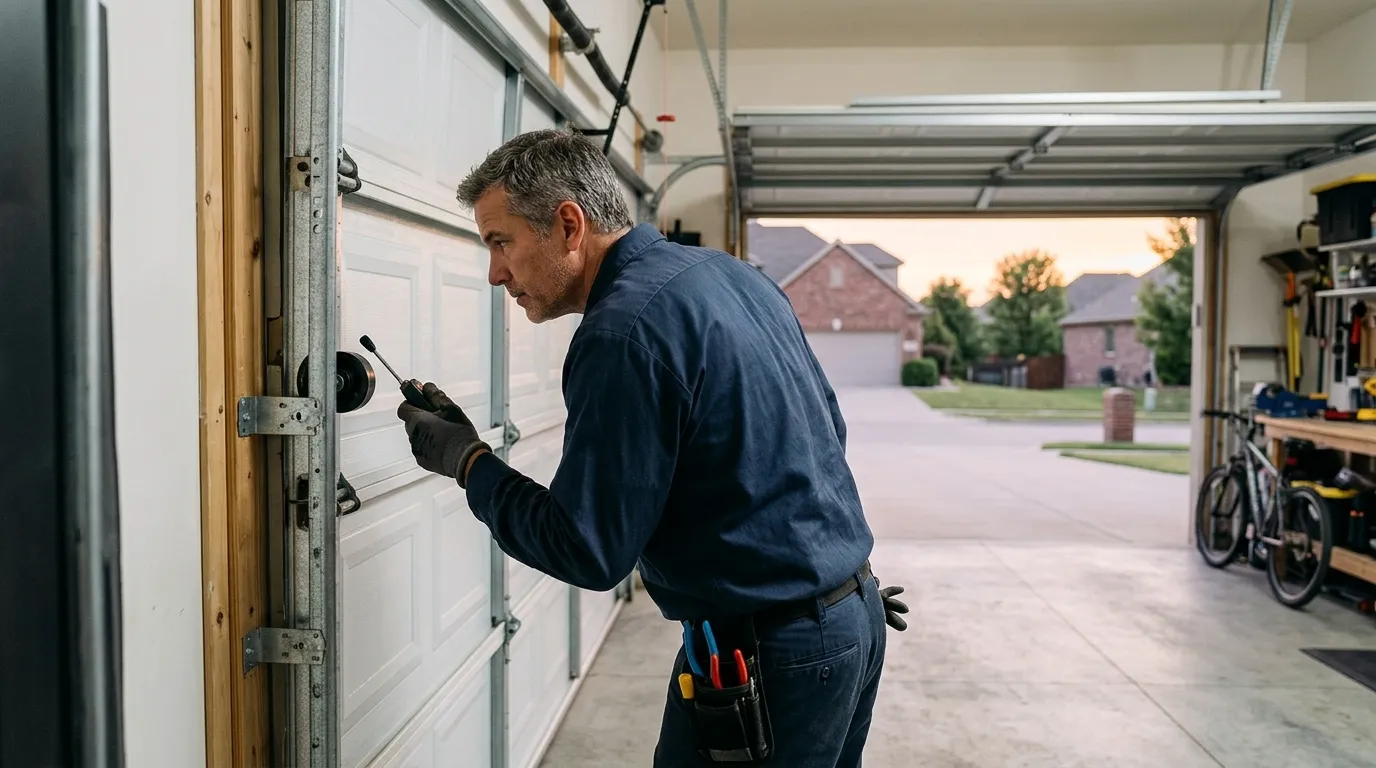
If your opener hums but the door doesn't move, check the obvious first: the wall switch, the breaker, and whether the safety sensors at the bottom of the track are aligned and unobstructed. That's a five-minute check anyone can do. Past that, we'd rather you didn't. On a house built around 1960, the header the opener bolts to has usually had at least one modification over sixty years - a second bracket, a shim, a repair nobody documented - and pulling the head unit down to chase a gear or capacitor problem without knowing what's holding it up is how a homeowner ends up with a door on the floor. We're honest about the limit here: if the opener is under five years old and the fix is a logic board or a remote pairing issue, plenty of owners handle that themselves with the manual. If it's older, or if the trouble started after a cold snap and the door binds partway, that's a hardware and alignment problem, not a swap-the-part problem, and it's worth having someone look at the whole system before it strips something expensive.
What You Pay
We don't have a posted price list for Birmingham specifically, and we're not going to invent one - every opener job depends on what's actually broken and whether the header or track needs work alongside it. What we can say is that this is a town where income levels ($153,125 median) skew toward owners choosing full opener replacement over patchwork repair once a unit is more than a few years past its warranty, rather than nursing an old motor along. That's a homeowner decision, not a sales pitch from us - a repaired fifteen-year-old opener can fail again within a year, and sometimes replacement is the better math. We'll tell you plainly which side of that line your job falls on before we start, not after.
What Is on the Truck
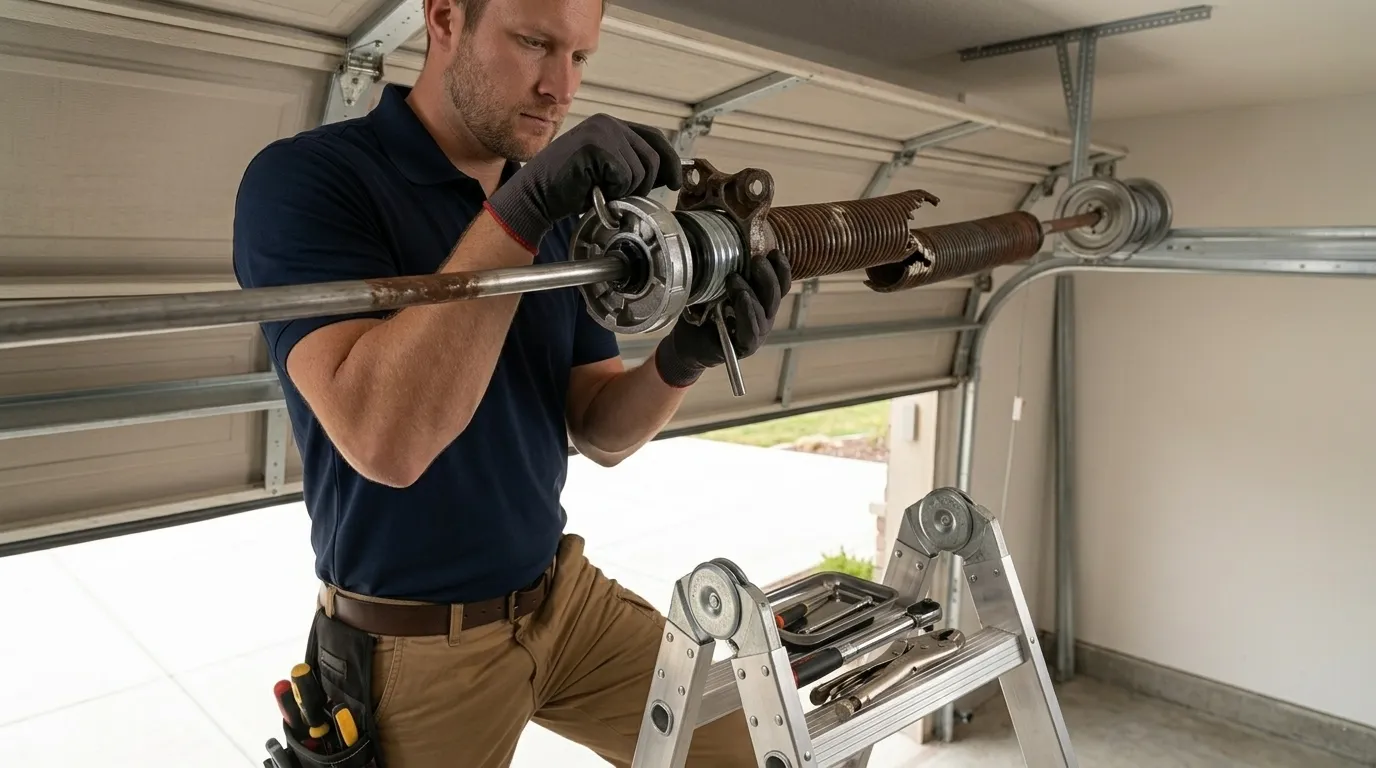
The truck stocks the parts that fail most on openers in this climate band - cold and severe by federal classification - where temperature swings stress plastic gears, contract lubricant, and stiffen belt-drive units until they slip. That means spare drive gears, capacitors, limit switches, and replacement safety sensors are standard stock, along with common belt and chain-drive parts for the head units most common on 1960s-era homes retrofitted with newer openers. What we don't carry is every proprietary logic board for every opener brand ever sold - some of those are special-order parts with a lead time we can't shorten, and we'll tell you upfront if your unit needs one instead of promising a same-visit fix we can't back up.