What Is on the Truck
Rochester's housing stock skews newer than most of the towns around it. The median build year here lands around 1982, while the wider service area is still dominated by 1960s and 70s construction. That gap matters because it changes what's actually failing inside the garage. A 1982 build is past the era of single-piece doors and side-mounted torsion units, and into the window where sectional doors with center torsion springs and chain-drive openers became standard. The truck headed to a Rochester call carries torsion springs in the sizes those doors actually use, along with the steel rollers and lift cables that wear out on 40-year-old sectional hardware. It's not the same kit you'd load for a house built in 1961. Rochester sits about 3 miles from Rochester Hills, close enough that a tech can carry both eras' parts on the same run when a street has a mix of ages, but the newer median here means torsion-spring failures and worn nylon rollers show up more than the older extension-spring setups you'd expect two decades earlier.
What the Repair Takes
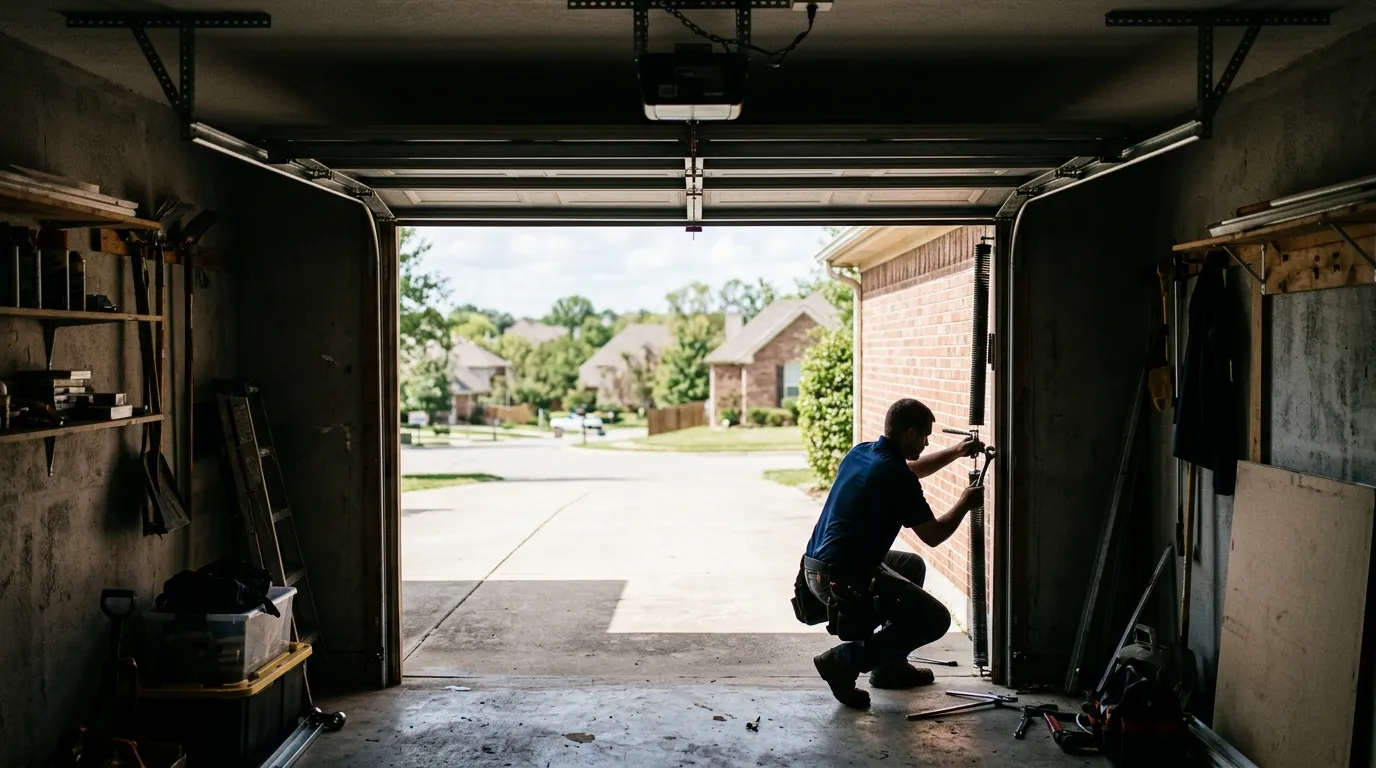
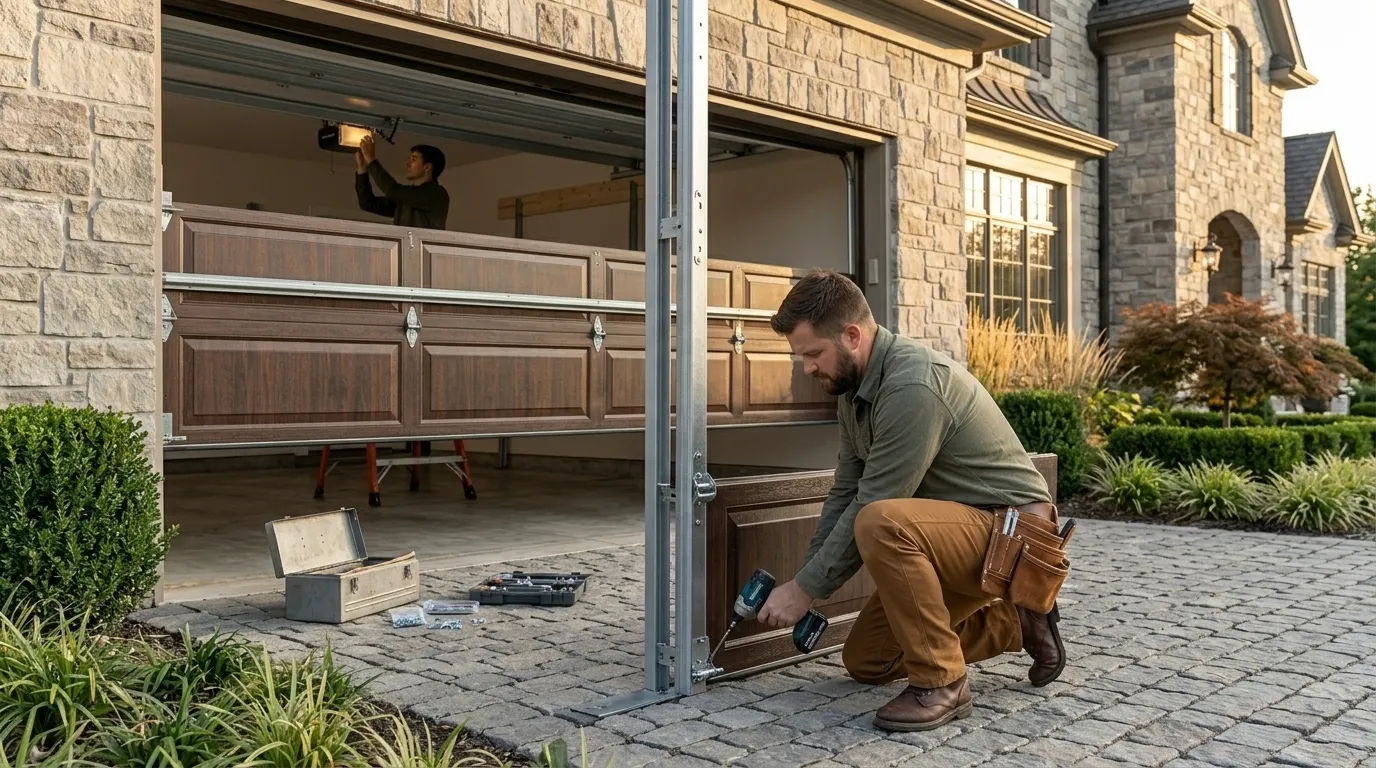
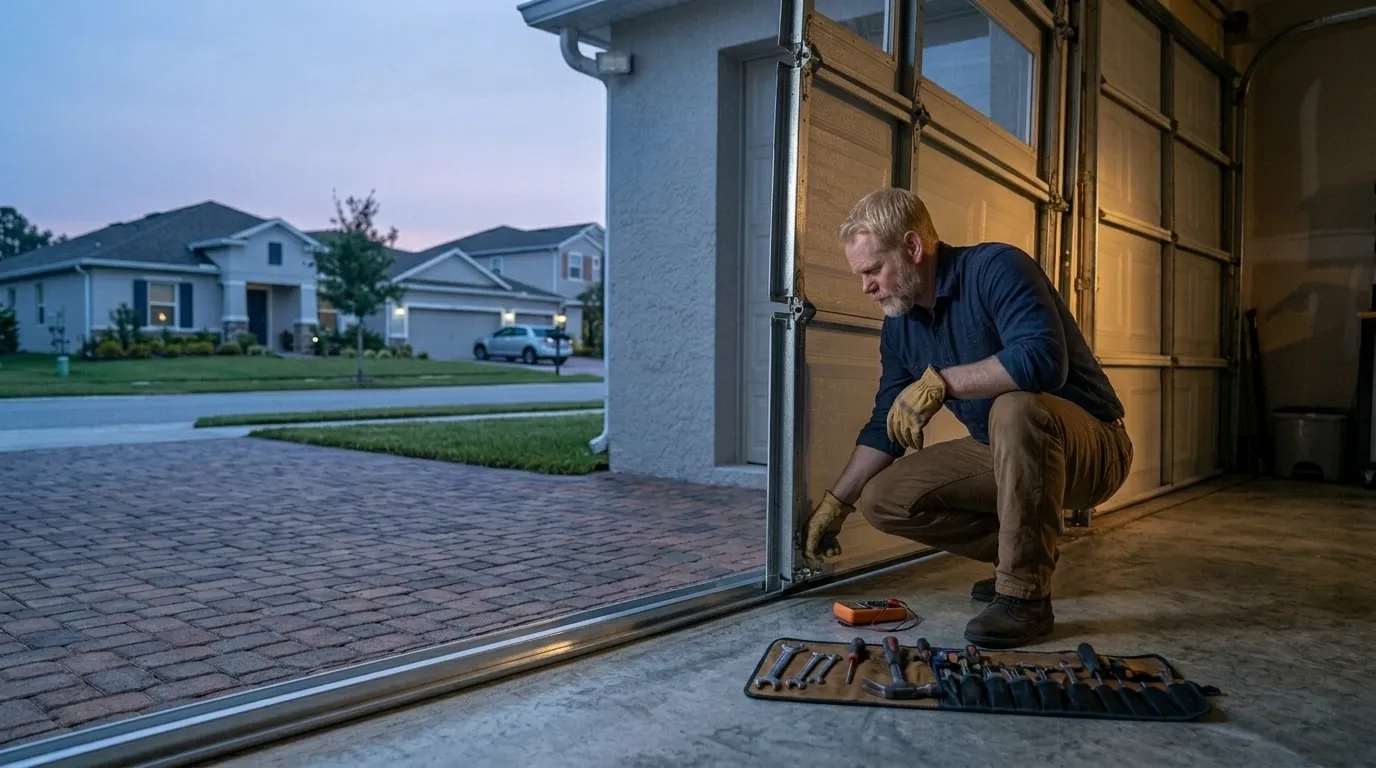
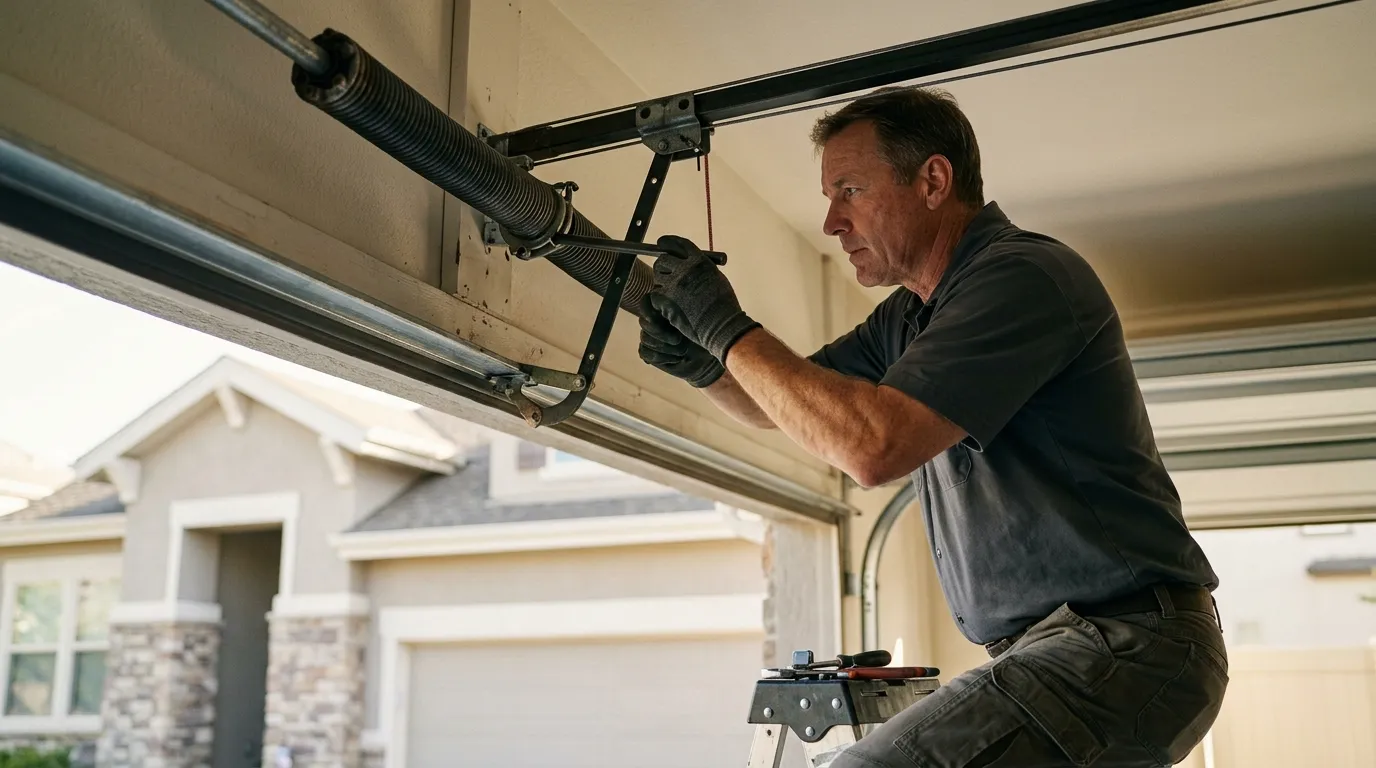
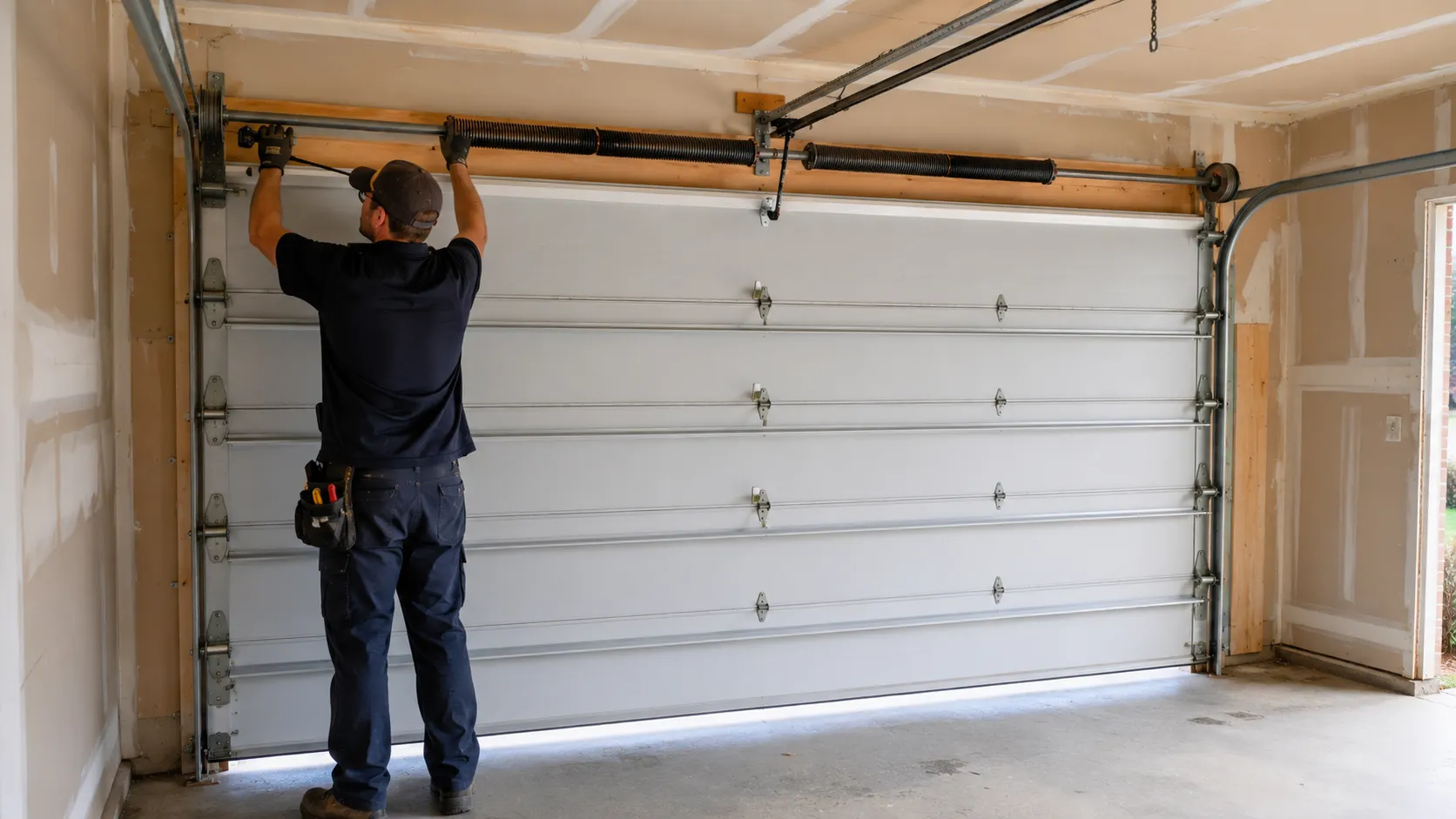
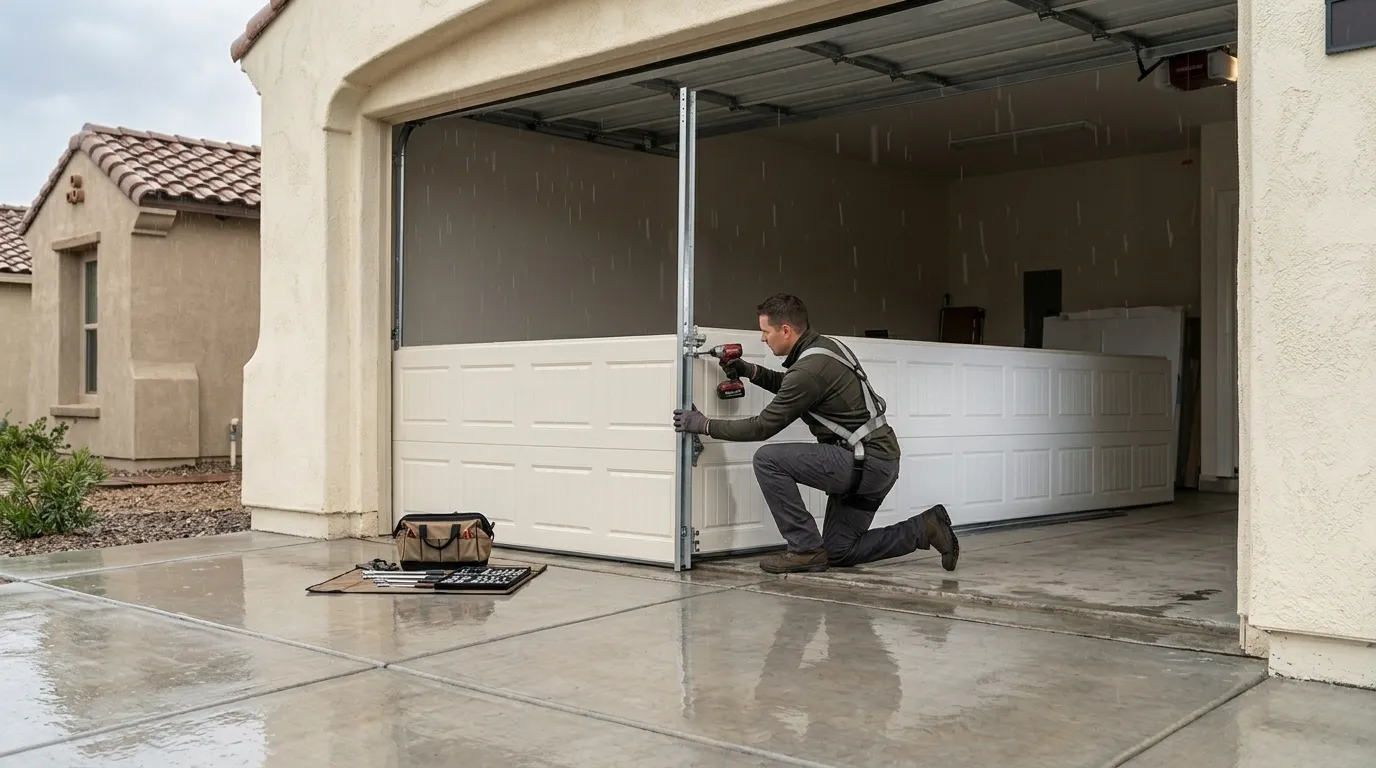
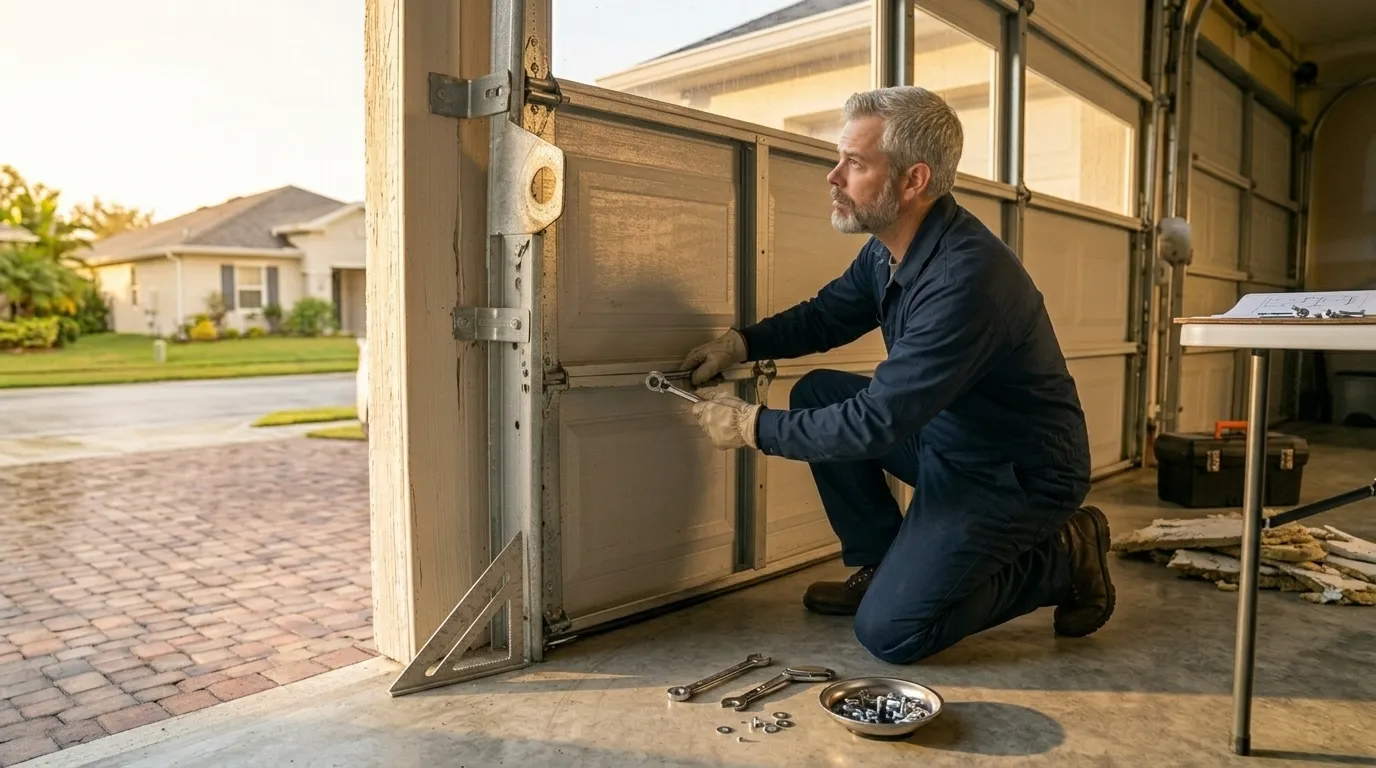
A torsion spring job on a sectional door means winding bars, a properly sized spring for the door's weight, and enough clearance to work the cone off the shaft safely. On a house from the early 1980s, the opener is usually a chain-drive unit from a later replacement cycle than what you'd find in older stock nearby, which means the logic board and safety sensors are a different generation too. Rollers on doors this age are often the original steel wheels, loud and pitted, and swapping them for nylon is a straightforward part of most service calls. Track alignment is the other common culprit - 40 years of seasonal expansion can walk a track out of plumb by enough to cause binding. None of this requires demo work or drywall repair; it's hardware-level. The one thing worth saying plainly: if a spring has failed and the opener has been run against it repeatedly, the gearbox can strip. That's a separate repair, and it's not always obvious until the tech has the door open and can hear it.
Where This Job Goes Sideways
The mistake on a house this age is treating the opener as the problem when the spring is. A chain-drive opener straining against a dying torsion spring will eventually burn out its gear or drive capacitor, and by the time that happens, a homeowner may end up paying to replace an opener that would have been fine if the spring had been caught earlier. The other place it goes sideways is track alignment - a door that's been binding for months on an out-of-plumb track can wear the rollers unevenly, and swapping rollers without correcting the track just buys another few months. Rochester's newer median build year (1982) means most of these doors are still on their first or second opener, not their third, so when something does fail here it's often the original torsion spring simply reaching the end of its cycle count rather than a mismatched or jury-rigged system.
What You Pay
I don't have pricing figures I can quote for this specific service, so I won't put a number here that isn't backed by anything. What I can say is that Rochester's median household income, $104,920, runs well above the wider service area's $84,862, and across roughly 5,570 households here, most garage doors are sectional units on torsion springs rather than the older extension-spring setups still common in some of the surrounding 1960s-era neighborhoods. That distinction affects the type of spring and the labor involved more than it affects any flat price. If a quote matters more than square footage here, it's worth asking directly what parts the tech expects to use before the truck leaves Rochester Hills.