What Is on the Truck
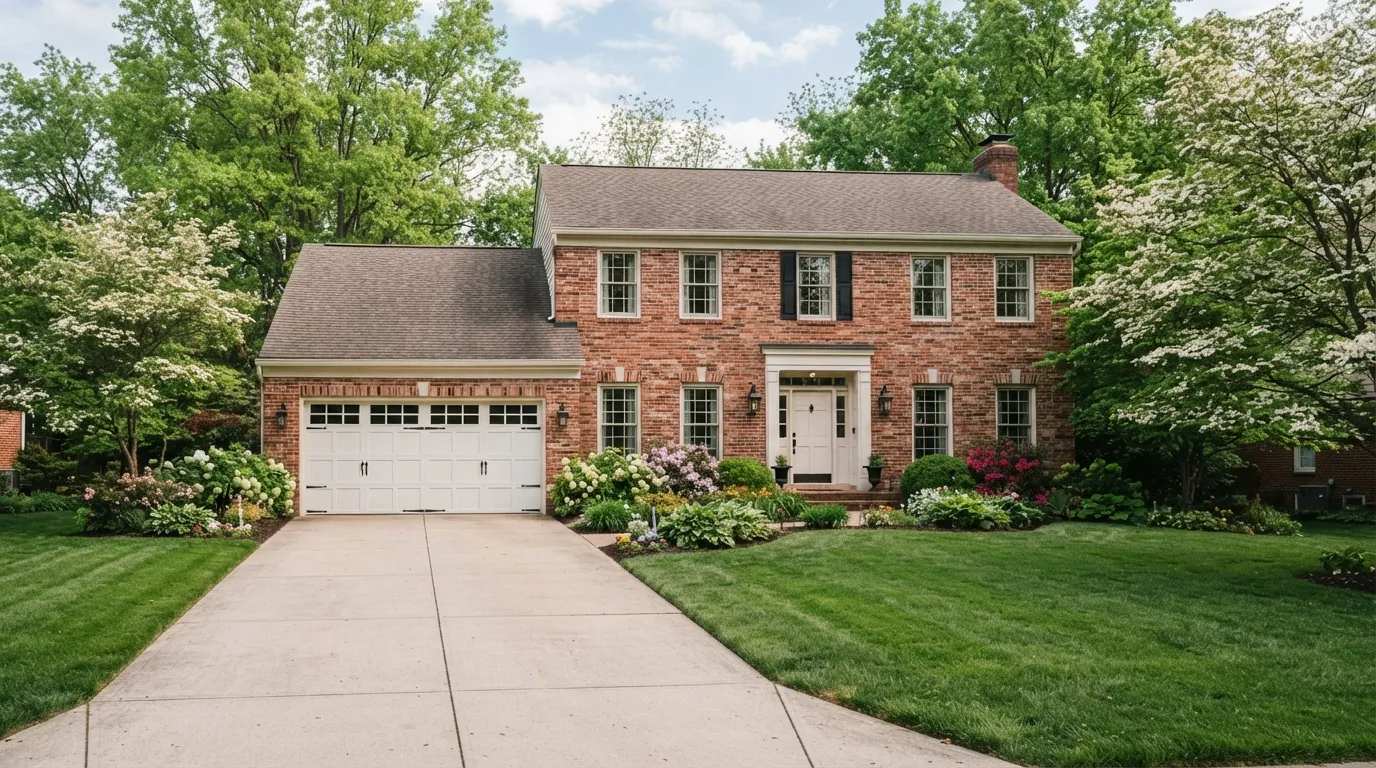
Most of Rochester went up around 1982, which puts the original hardware on a lot of these doors well past 40 years old. That's a different problem than the 1960s stock that makes up most of the wider service area - those houses got their springs and openers swapped out once already by owner number two or three. Rochester's houses are newer, so a fair share still carry whatever came with the house: steel raised-panel doors on torsion springs sized for the original panel weight, galvanized rollers that have never been greased, and in some cases the first-generation chain-drive opener bolted to the same joist since the house was framed.
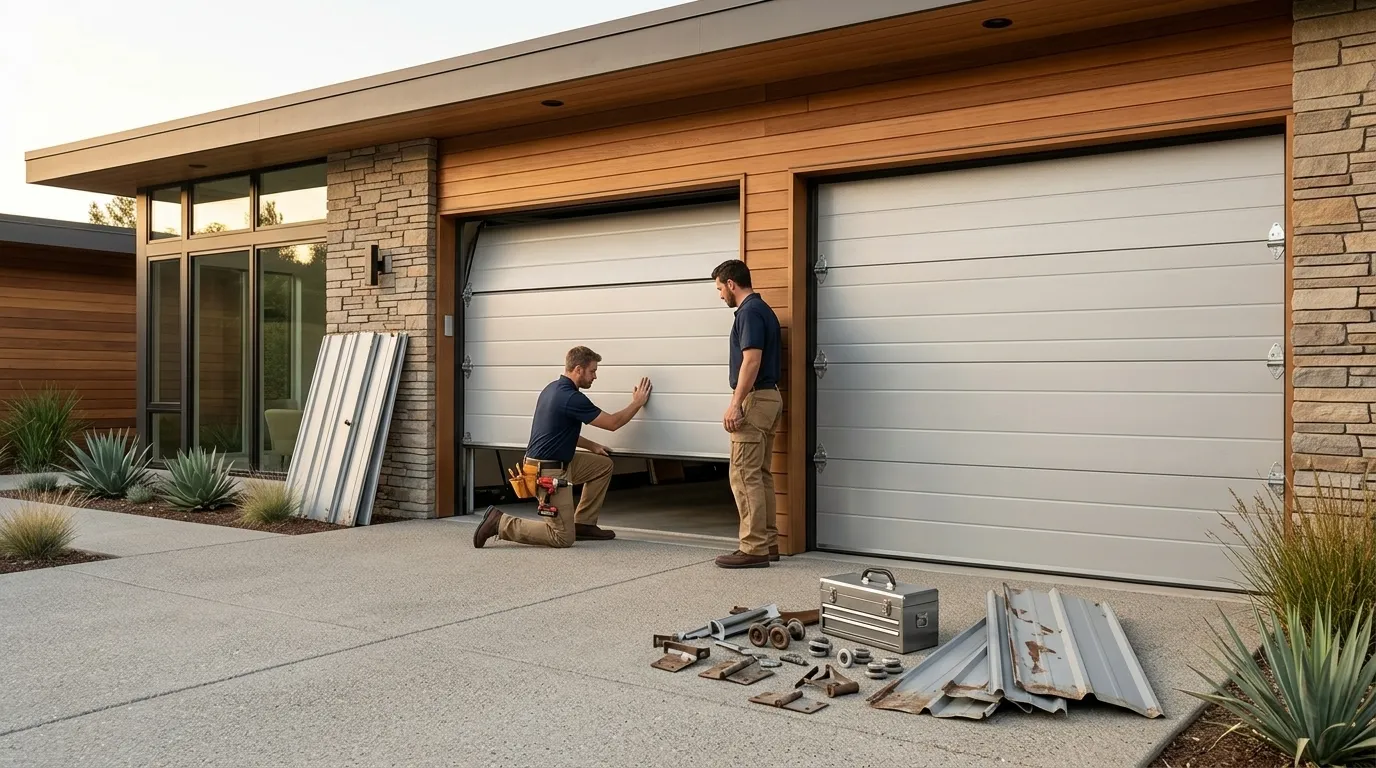
We carry torsion springs in the wind sizes that fit 1980s door weights, standard-lift cable, ball-bearing roller sets, and universal opener logic boards for the mid-range residential brands that were common in that build era. We don't stock every obsolete opener circuit board - some 1980s units used proprietary parts that haven't been made in decades, and if yours is one of them, replacement is usually the honest answer, not a repair we'll spend two hours chasing.
What the Repair Takes
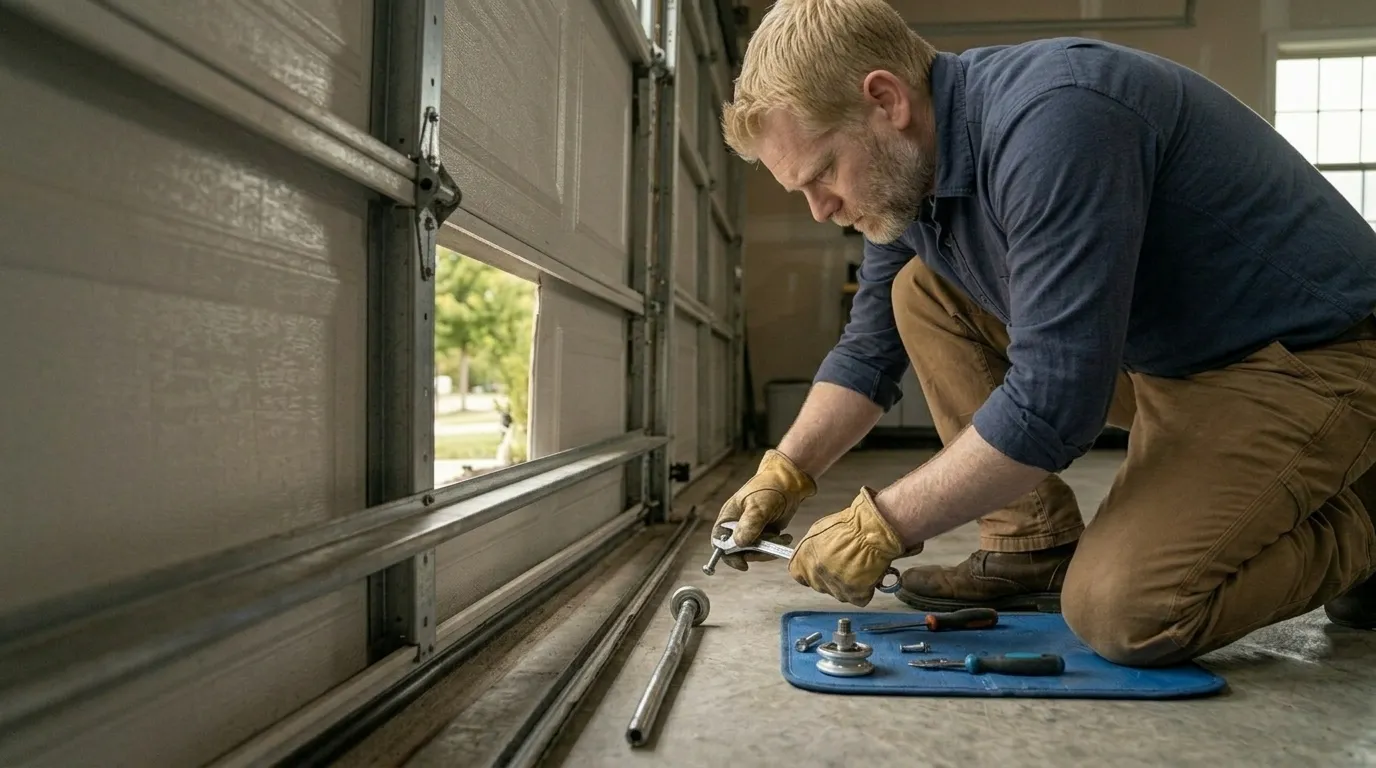
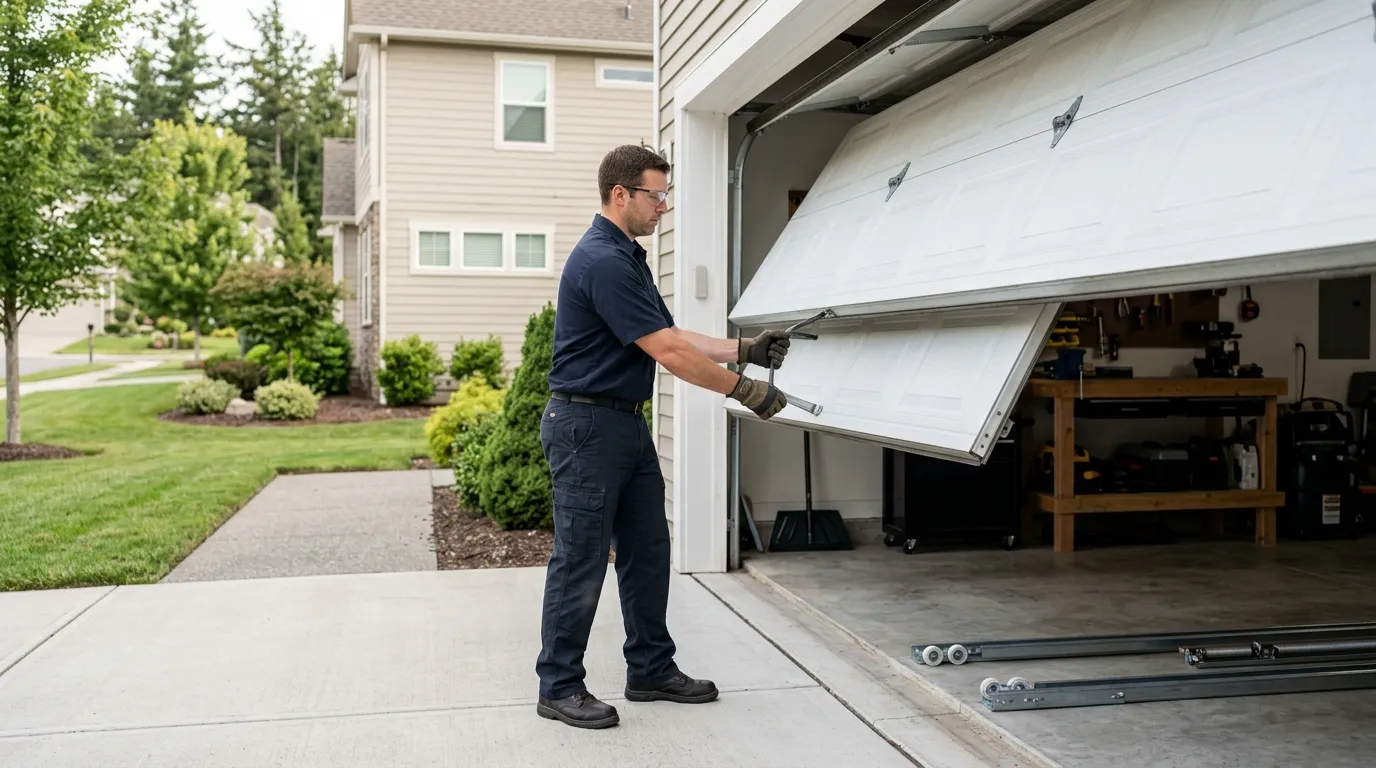
A torsion spring on a door this age has almost always never been replaced, so the job starts with matching wire size and wind direction to what's already on the shaft rather than assuming a standard part fits. Cold-climate lubricant matters here - this area sits in a severe cold band, and the grease that shipped with a 1982 opener has long since gone stiff, which shows up as a door that struggles on the first cold morning of the year and then seems fine by afternoon.
Roller replacement on these doors is usually a full-set job, not a one-off, because the wear is even across all the rollers when they're all original. Cable is cheap and we replace it on the same visit as a spring, since re-tensioning a system with worn cable is a callback waiting to happen. Opener work splits two ways: a logic board or sensor swap on a unit that's otherwise sound, or a full opener replacement when the motor itself is the failure and parts for that specific model no longer exist.
Where This Job Goes Sideways
The failure mode we see most in Rochester isn't a snapped spring - it's a homeowner who's replaced the opener once already, sometime in the last 20 years, but left the original torsion spring and cable underneath it. New opener, old spring, and the spring finally lets go under a motor that's stronger than the one it replaced. That mismatch is common enough on 1982-built stock that it's worth checking both at once rather than assuming a newer opener means newer hardware everywhere.
The other spot this goes wrong is bearing plates. On a door this age, the end bearing plates wear at the same rate as the rollers, and if a repair only swaps the spring and rollers without checking the plates, the door comes back within a year with a new noise. We check plates on every spring call here, because skipping that step on original hardware is how a two-hour fix turns into a second visit.
What You Pay
We don't have a published price list to quote here - every door's spring size, opener model, and roller count differs enough that a number on a page would be wrong more often than right. What we can say is that Rochester's median household income, at $104,920, runs well above the $84,862 median across the rest of the area we cover, and that shows up in the calls: more owners here choose full opener replacement over a patch repair on a board that's likely to fail again within a year or two.
The honest limitation: if your opener is an original 1980s unit and the motor itself has failed, we're not going to spend an hour hunting for a part that stopped being manufactured before some of our crew were born. Replacement costs more up front but it's the number that actually holds.