What Is on the Truck
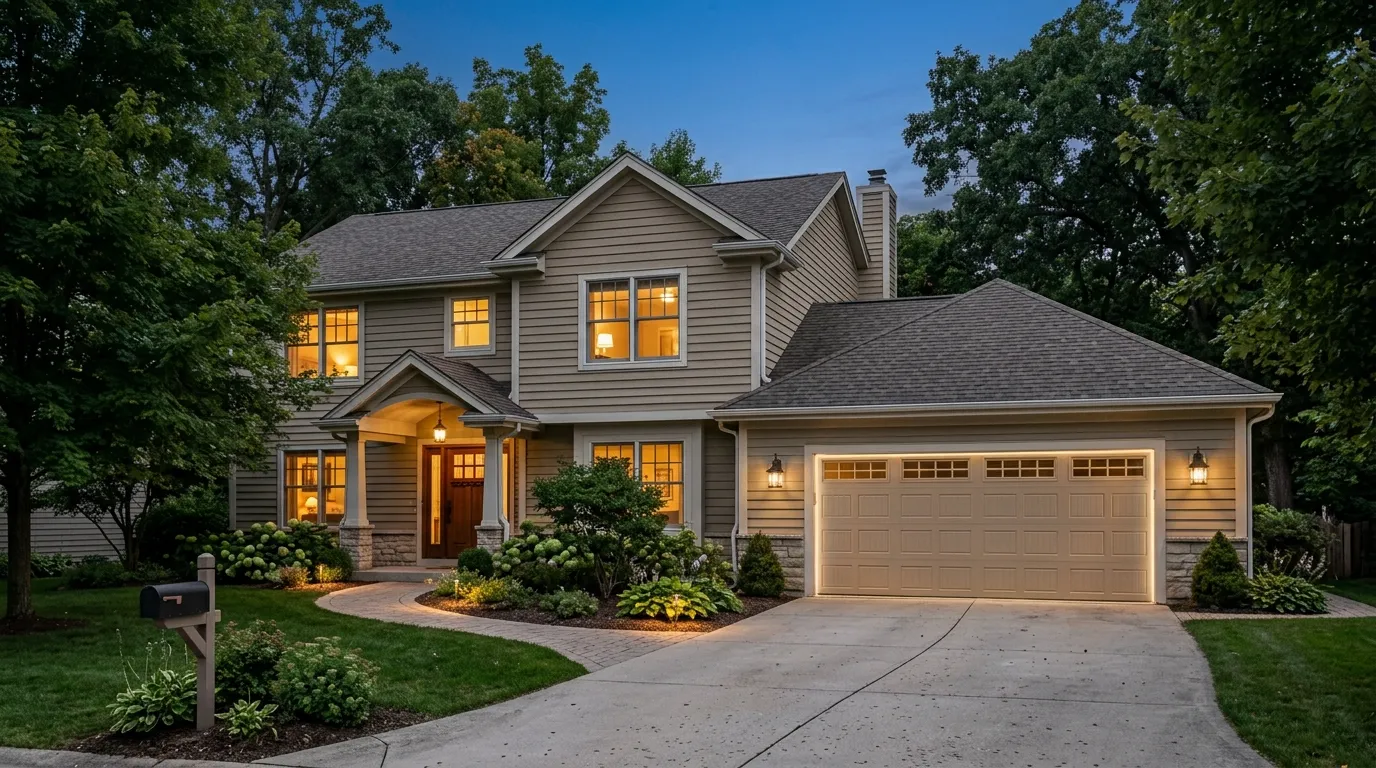
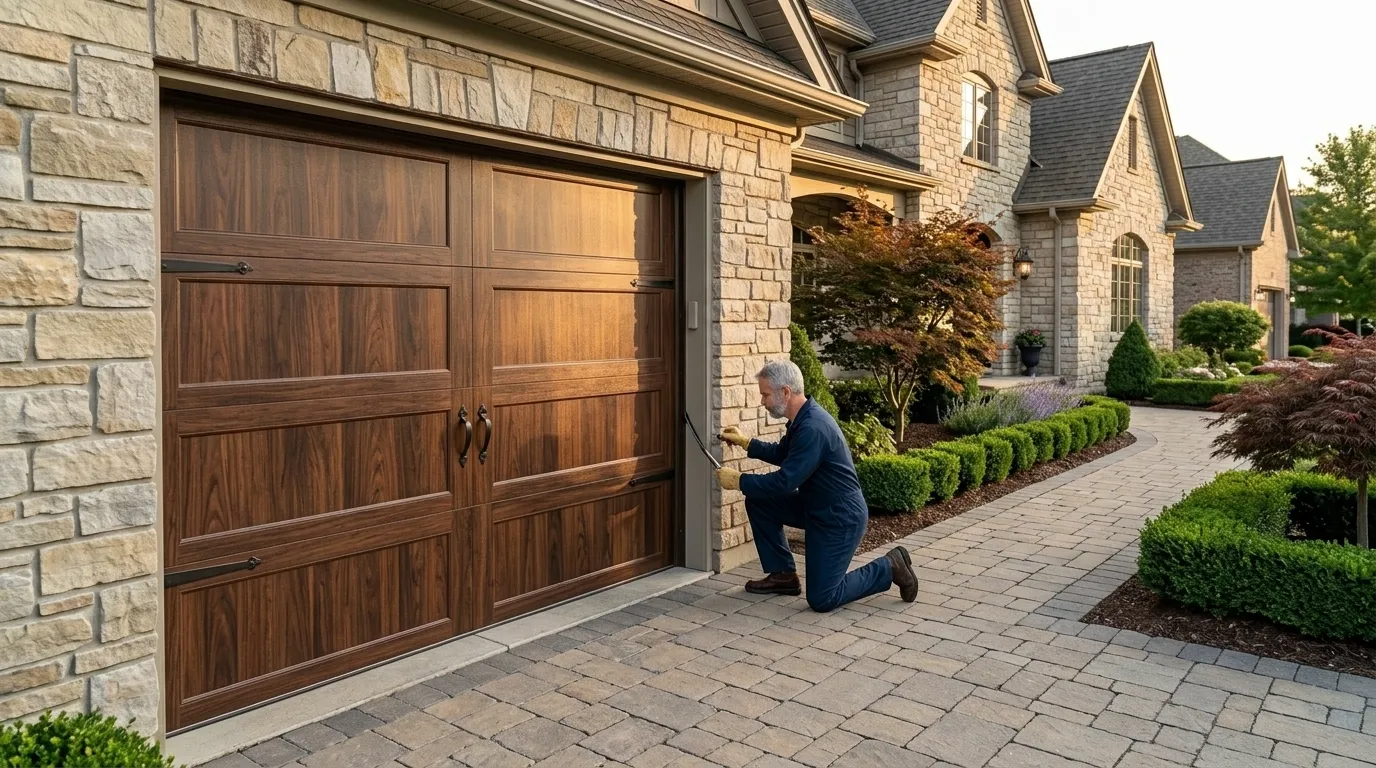
Most houses in Rochester went up after 1982, later than the 1960 median across the wider service area. That matters before we even talk fault or fix, because it changes what's already there. A house built in 1982 usually has a wider double-door opening than the older single-bay garages nearby suburbs are full of, framed for a 16-foot door rather than two separate 9-footers. The door itself is likely a steel sectional, not the older wood or aluminum panel you'd find on a 1960s build, and it was probably installed with a chain-drive opener bolted to ceiling joists that are still sound. On the truck for this town we carry wider door sections, longer torsion springs sized for that bigger span, and openers rated for the heavier door that a 16-footer becomes once it's insulated. We don't guess at width on-site - we measure the opening before we quote, because a stock 16x7 doesn't always fit a 1982 frame that's settled a half-inch out of square over four decades.
What the Repair Takes
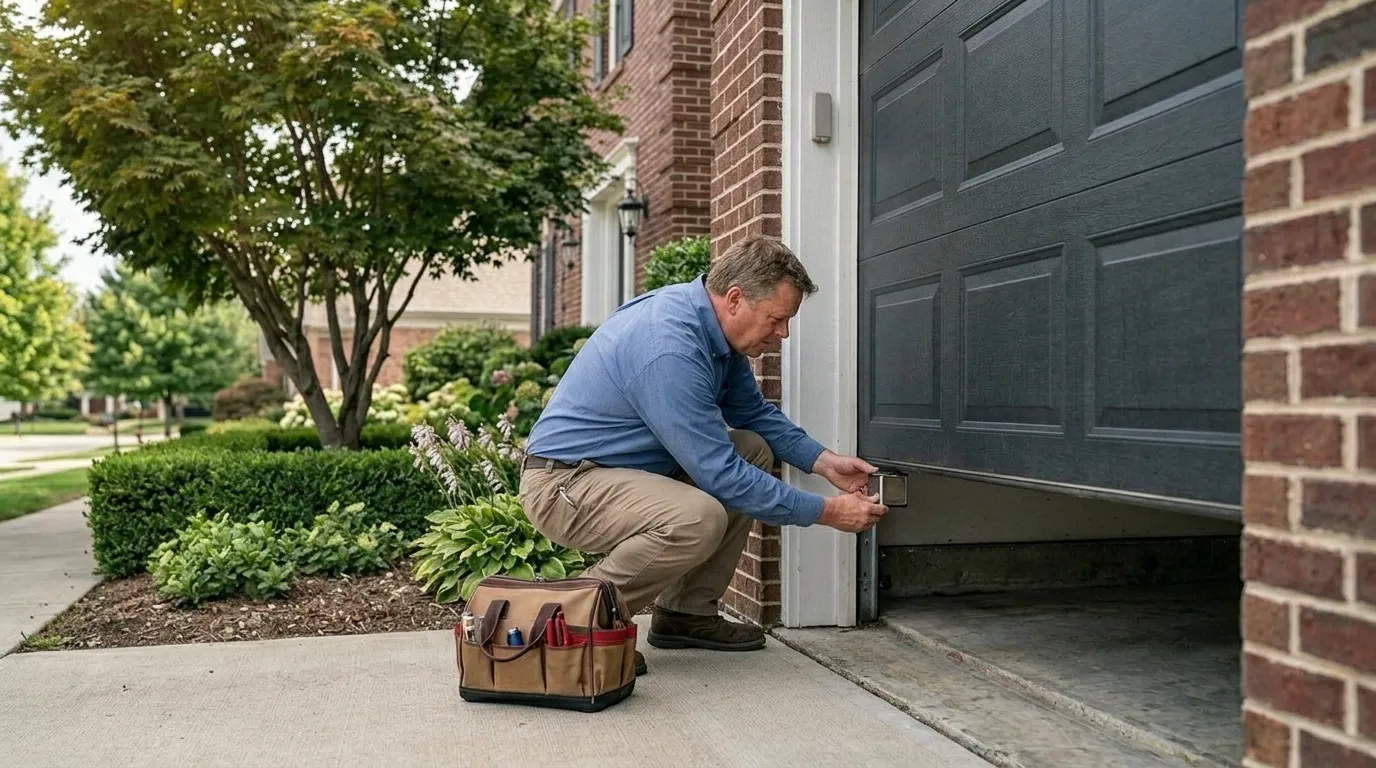
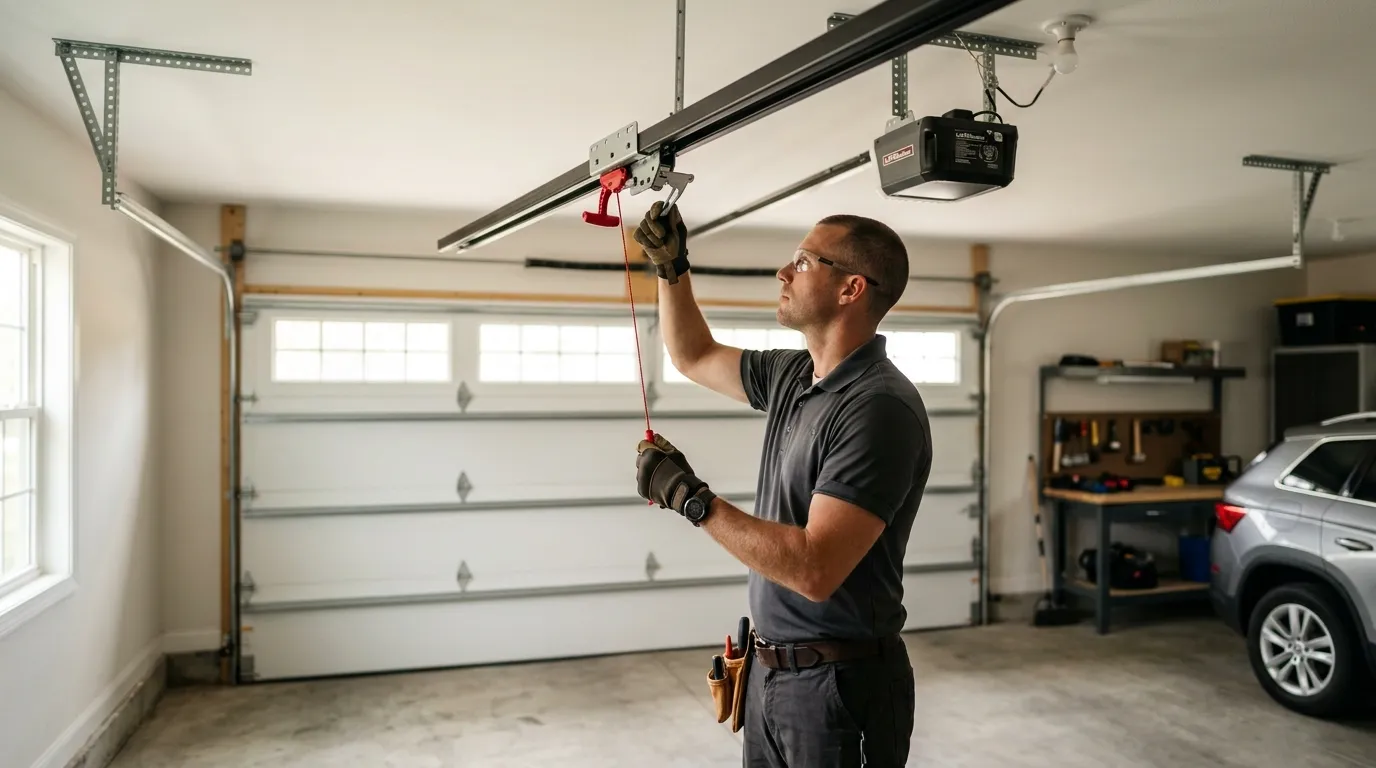
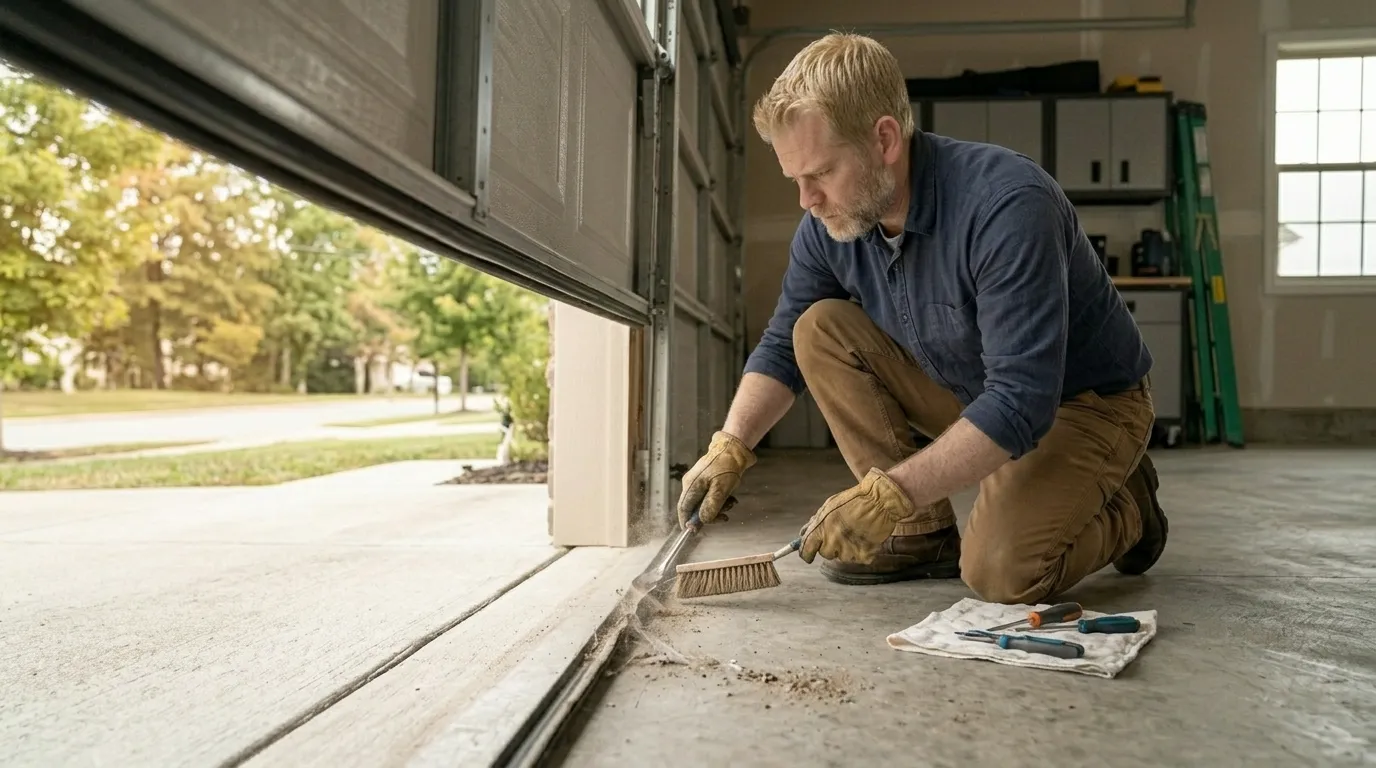
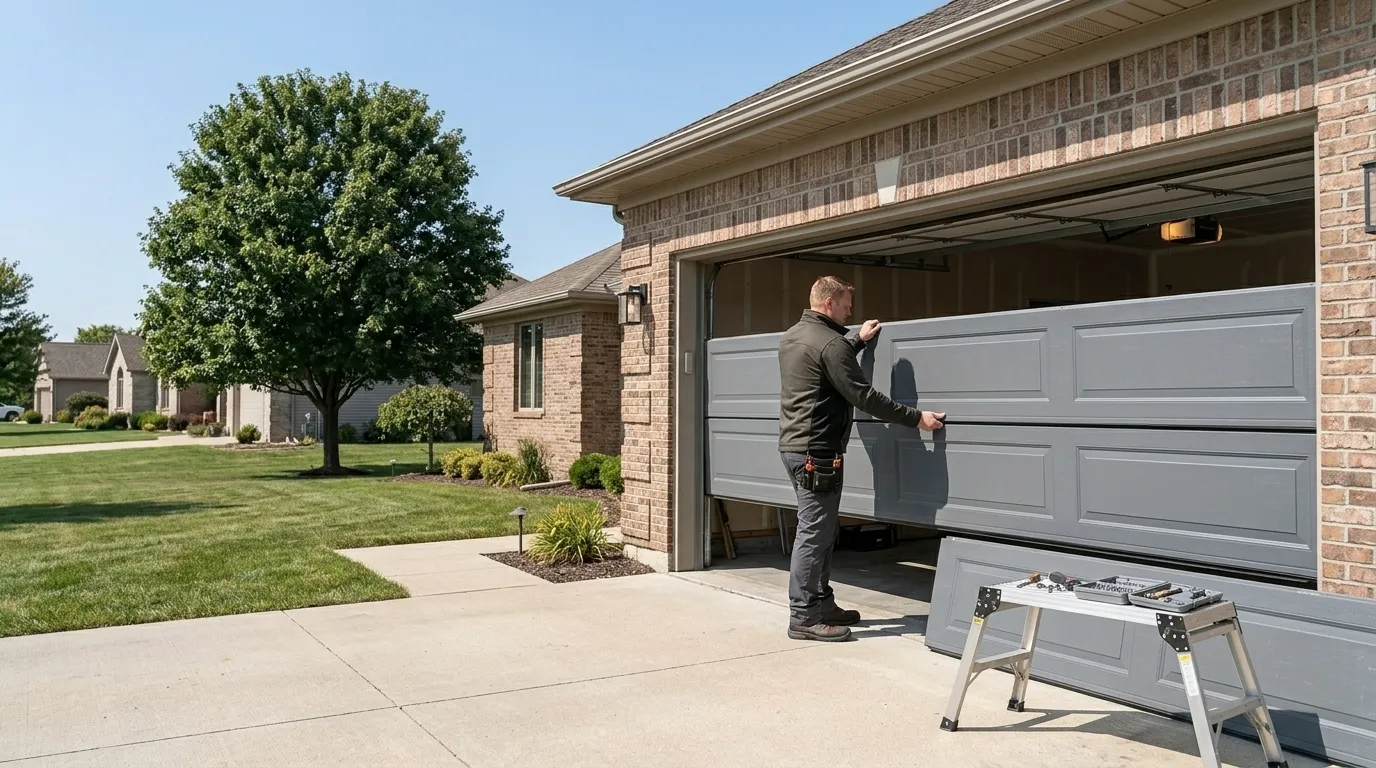
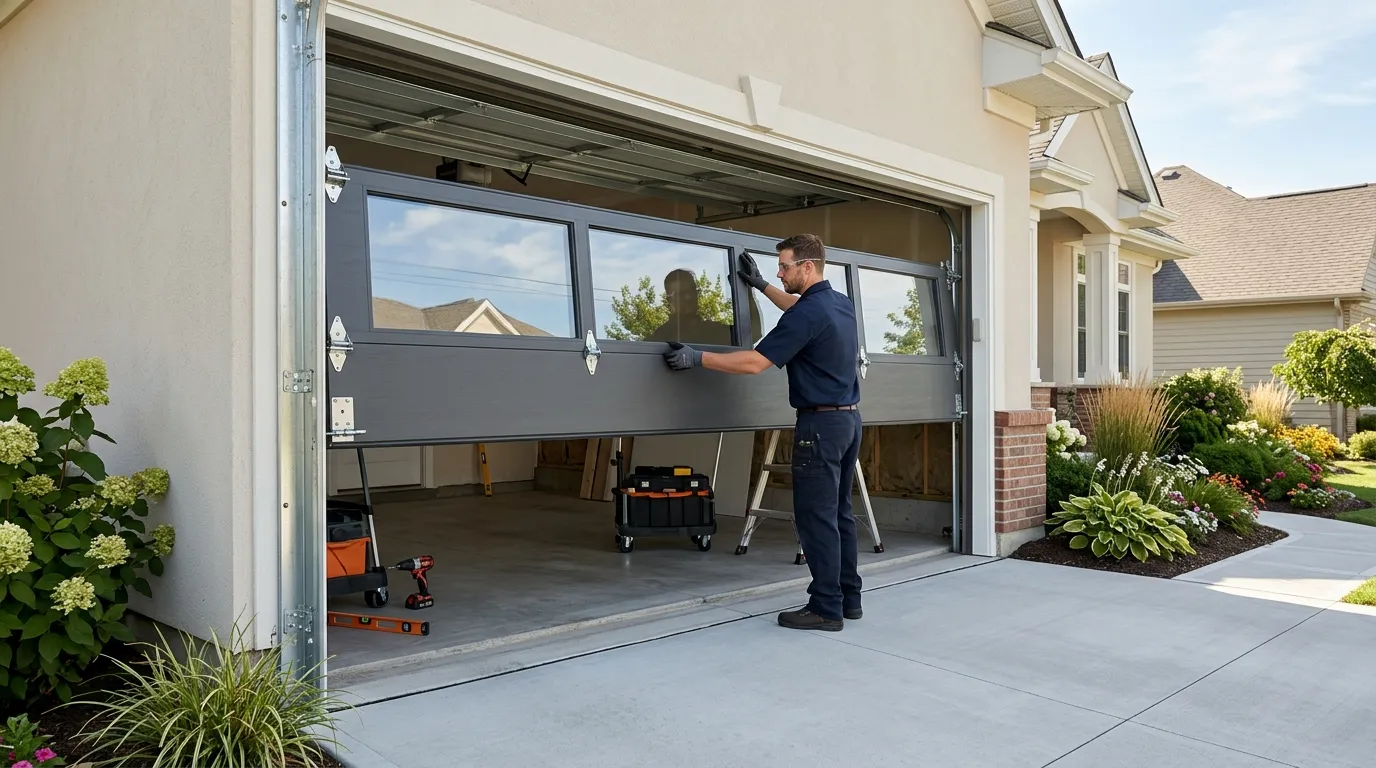
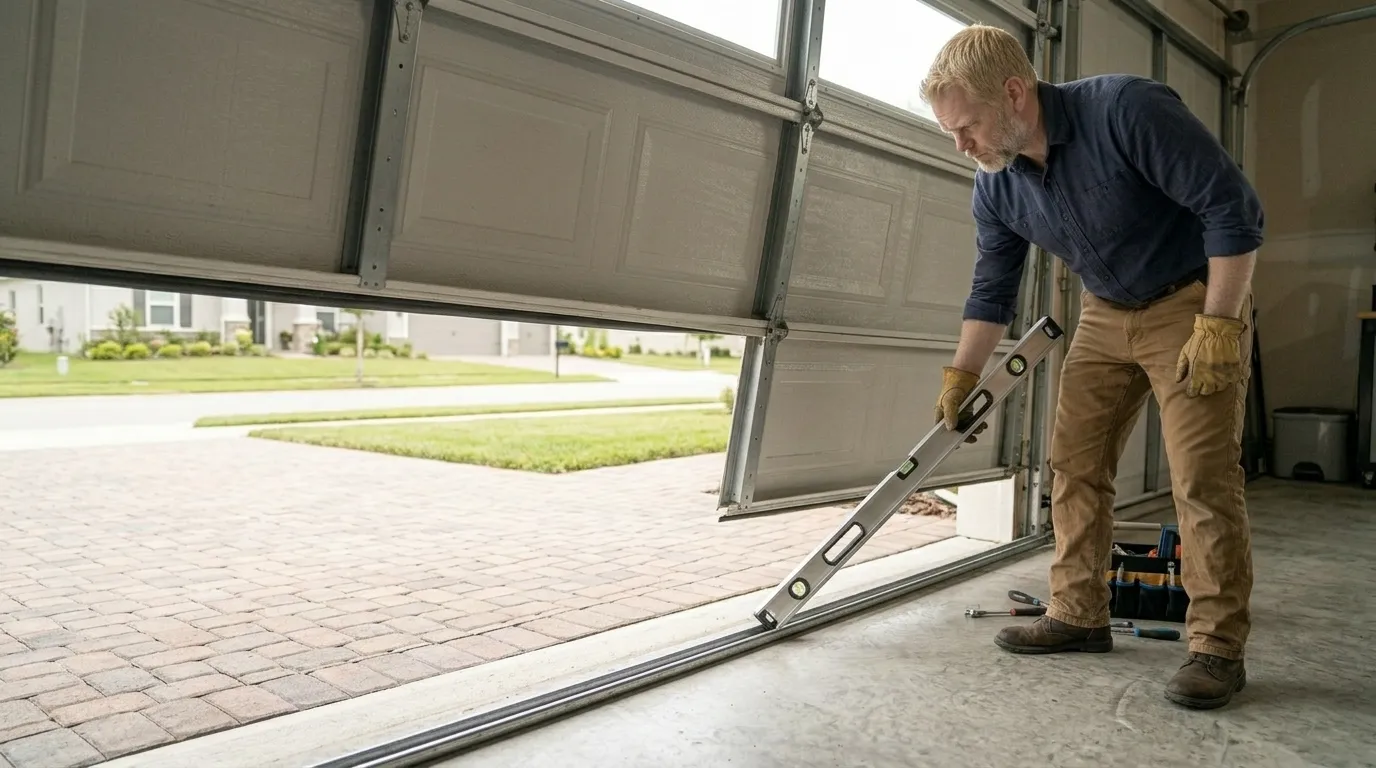
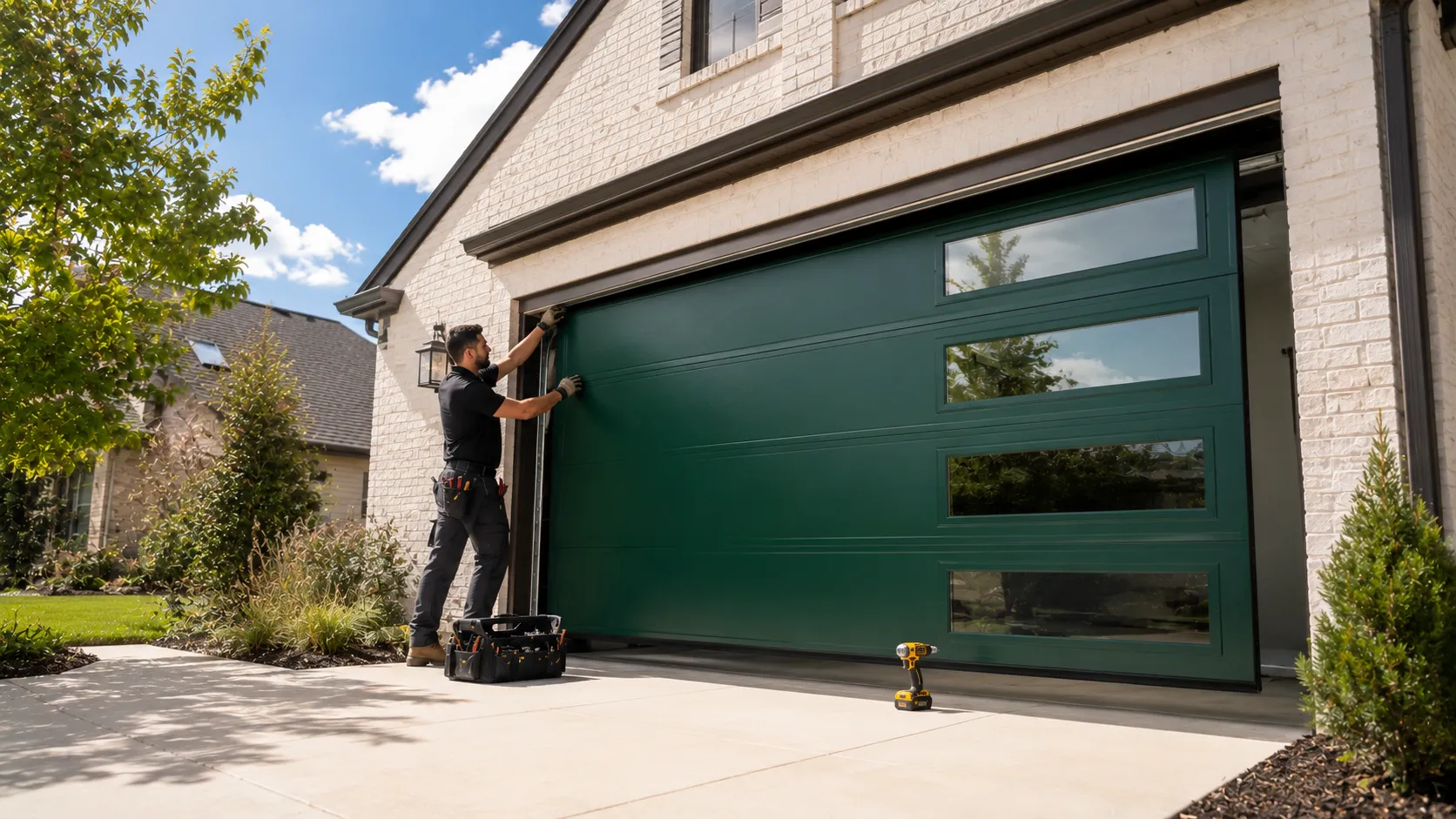
Swapping a door on a house this age is less about demolition and more about matching what the opening was actually built for. The original jambs and header in a 1982 house are usually still straight, which means we're not reframing - we're pulling the old door and track, checking the header for rot or gaps around the old fasteners, and setting new track plumb to a wall that's had forty years to shift slightly. Torsion springs get sized to the new door's weight, not the old one's, since insulated steel doors from a modern supplier weigh more than the light steel or hollow-core doors common when these houses were built. If the opener is original, we're not trying to save it - a chain drive from that era doesn't talk to a wall control or a phone app, and the safety reversal sensors on anything from before the mid-90s don't meet current code. That gets replaced as part of the job, not left for later.
Where This Job Goes Sideways
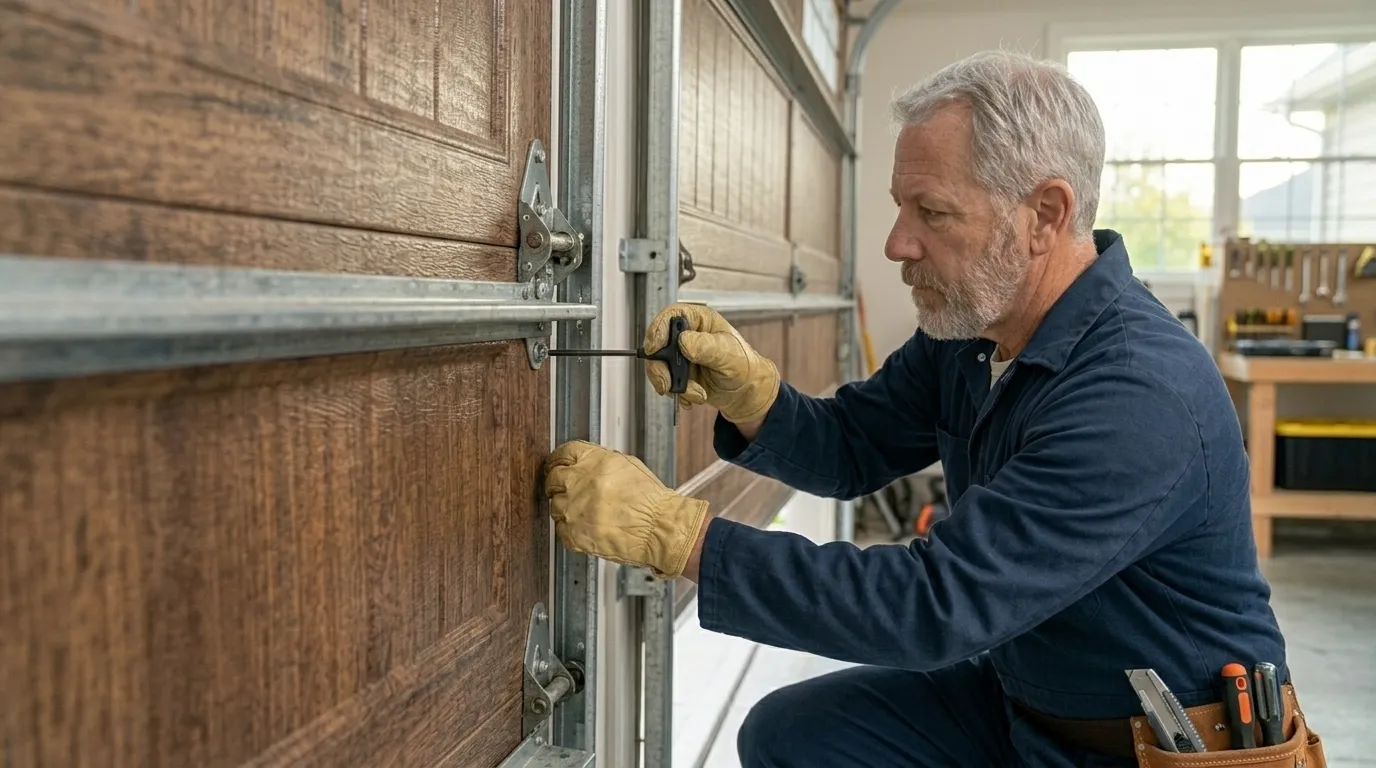
The failure point on a house like this isn't usually the opening - it's the assumption that a 16-foot double door is a simple swap because the size is common. It is common, but a heavier insulated door on old track hardware from 1982 can overload springs that were sized for a lighter panel forty years ago. If a homeowner just replaces the door skin and keeps the old springs and drum, the door either won't lift smoothly or it slams down on the second cycle. We size springs to the new door every time, not the old rating stamped on the shaft. The other place it goes wrong is the opener bracket - original ceiling mounts from this era were rated for the lighter door, and a heavier replacement needs the bracket reset, not just bolted through the same holes.
What You Pay
We don't have a published price list for this page, and giving you a number without seeing the opening would be a guess we're not willing to make. What we can tell you is what drives the cost on a house like this: door width (16-foot double openings cost more in material than a single 9-foot bay), insulation level, and whether the opener needs replacing alongside the door - which, on a house with the original chain drive, it usually does. Rochester's median household income sits well above the wider service area's $84,862, and we see that reflected in the doors people choose here - more insulated steel, more windows, more custom paint - not in what the labor costs to hang them.