What Is on the Truck
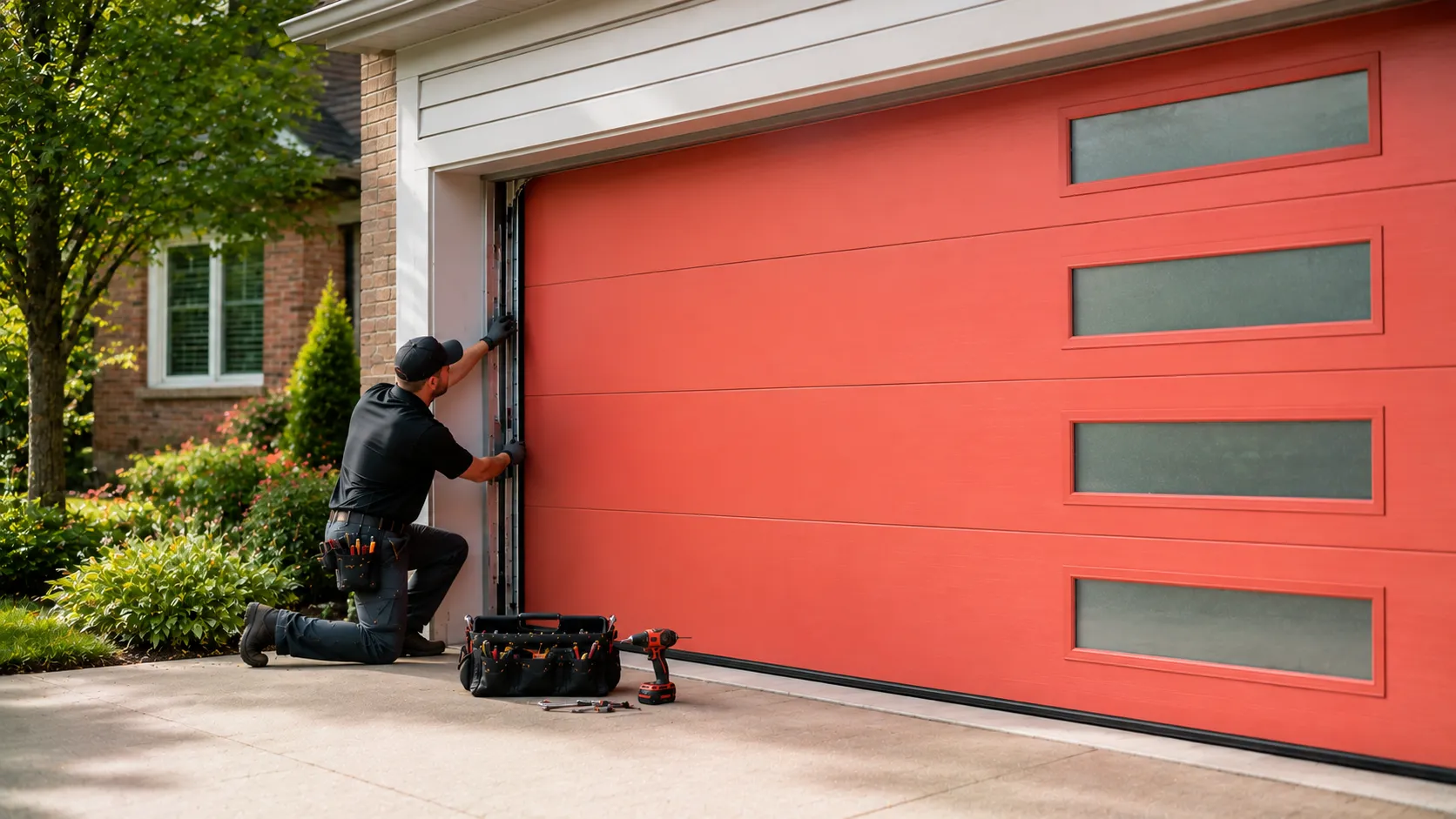
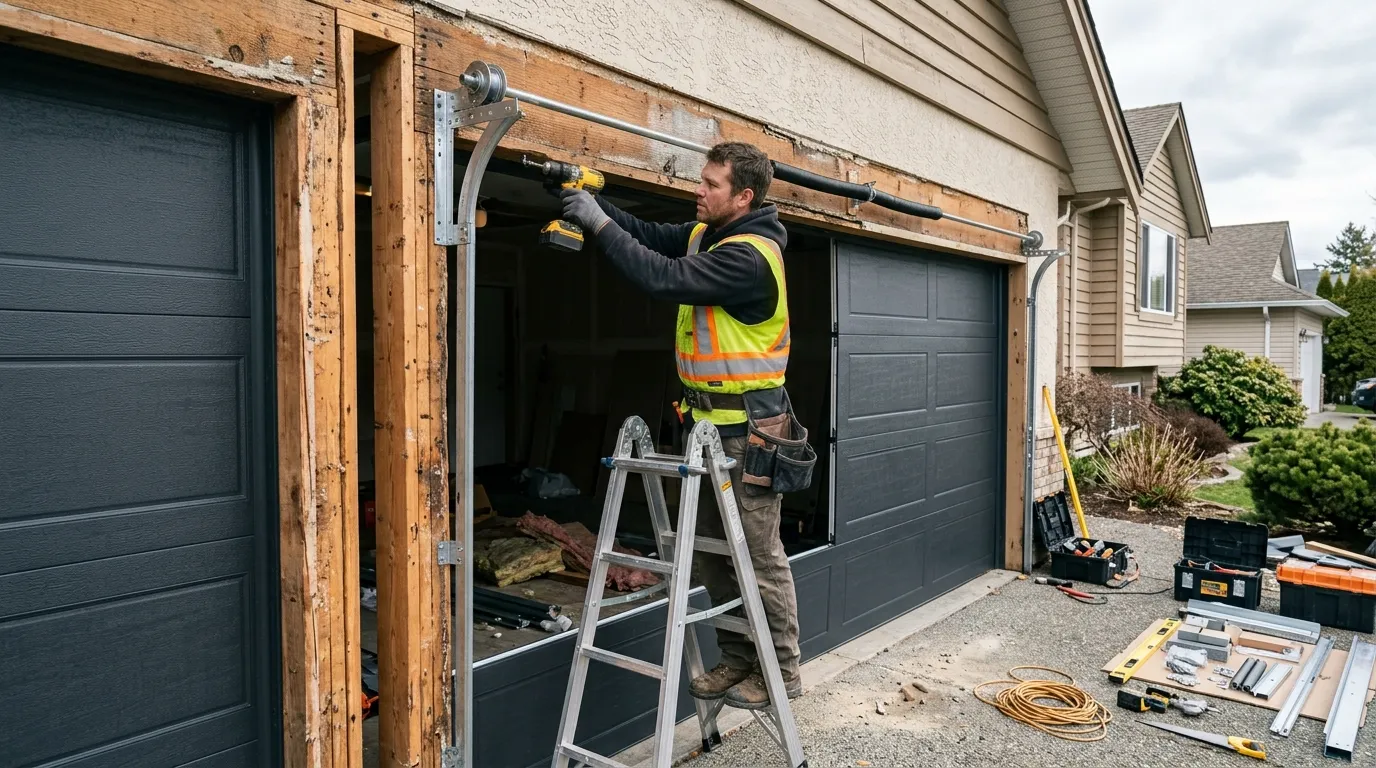
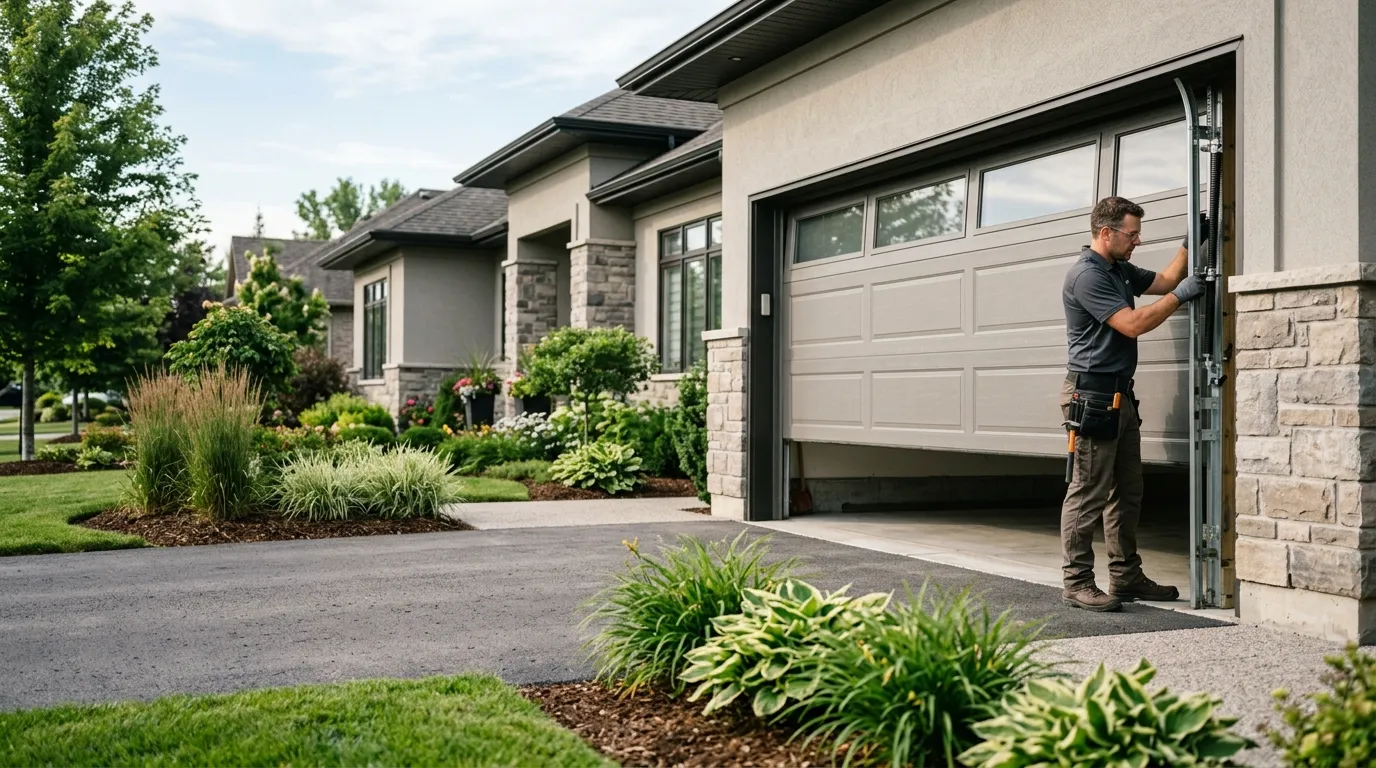
Rochester is a small piece of what we cover out of Rochester Hills, just 5,570 households, and that size matters more than it sounds like it should. A town this compact doesn't generate enough call volume for a truck to specialize in one door type, so what rides along has to cover a narrow but real range: replacement rollers (nylon and steel), track sections in the common widths, cable and cable drums, and the brackets that hold a horizontal track to the header. Rochester's housing centers on a 1982 median build year, later than the 1960s median across the rest of the area we serve, which means we're mostly meeting galvanized steel sectional doors on roller-and-track hardware from that same era rather than the older one-piece doors on side-mounted torsion setups you'll find in the neighborhoods that went up in the 1950s and 60s. That's a narrower parts list, which is good, but it's not zero parts - a bent track section from a car bumper still has to be measured and cut to the actual opening, not assumed from a chart. We carry stock lengths and cut on site rather than guess.
What the Repair Takes
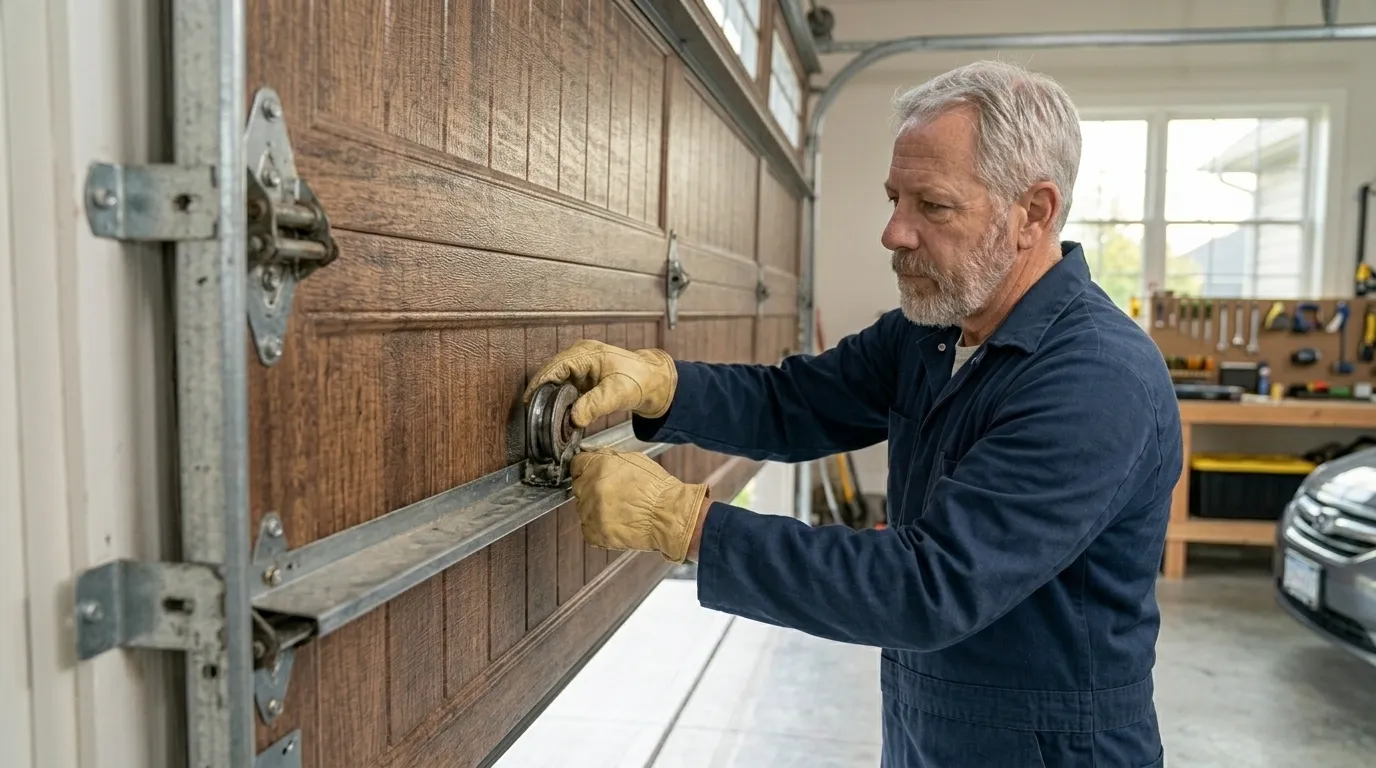
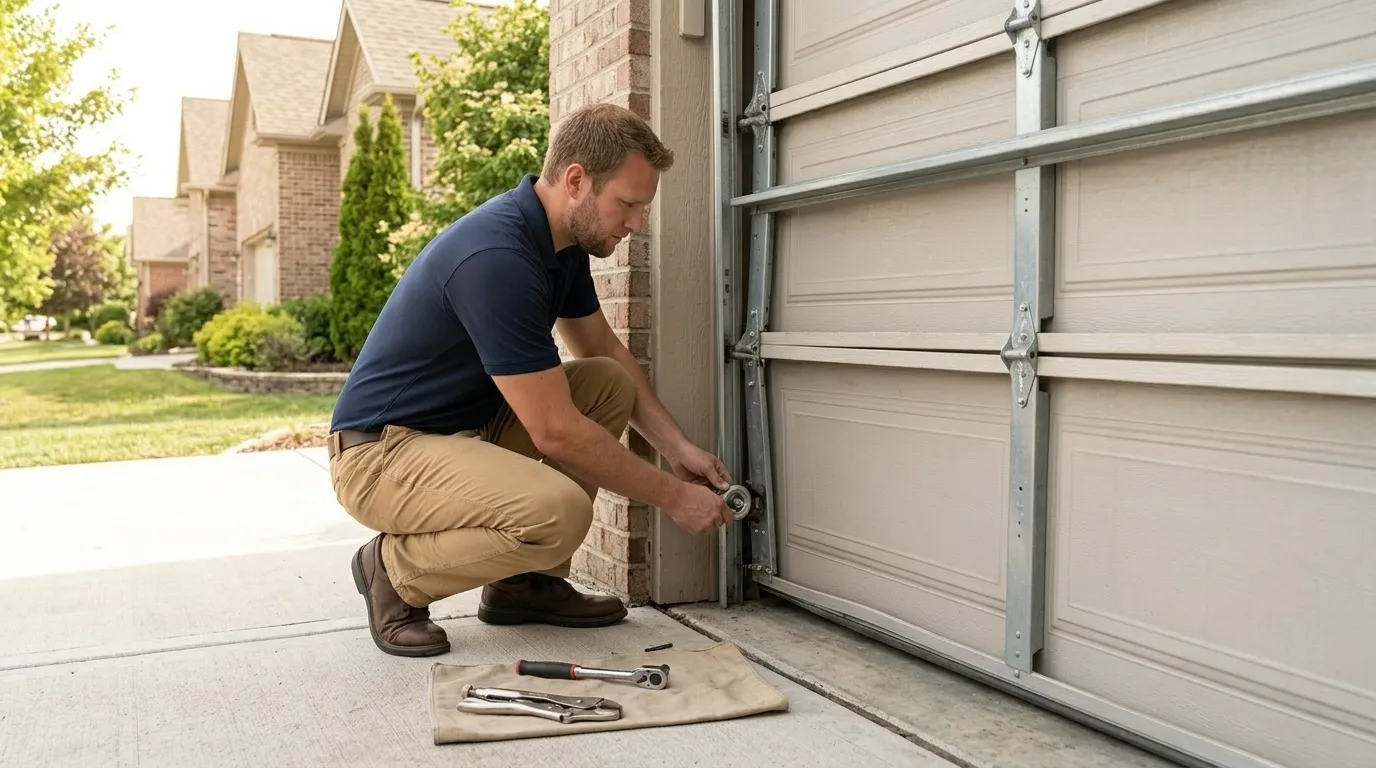
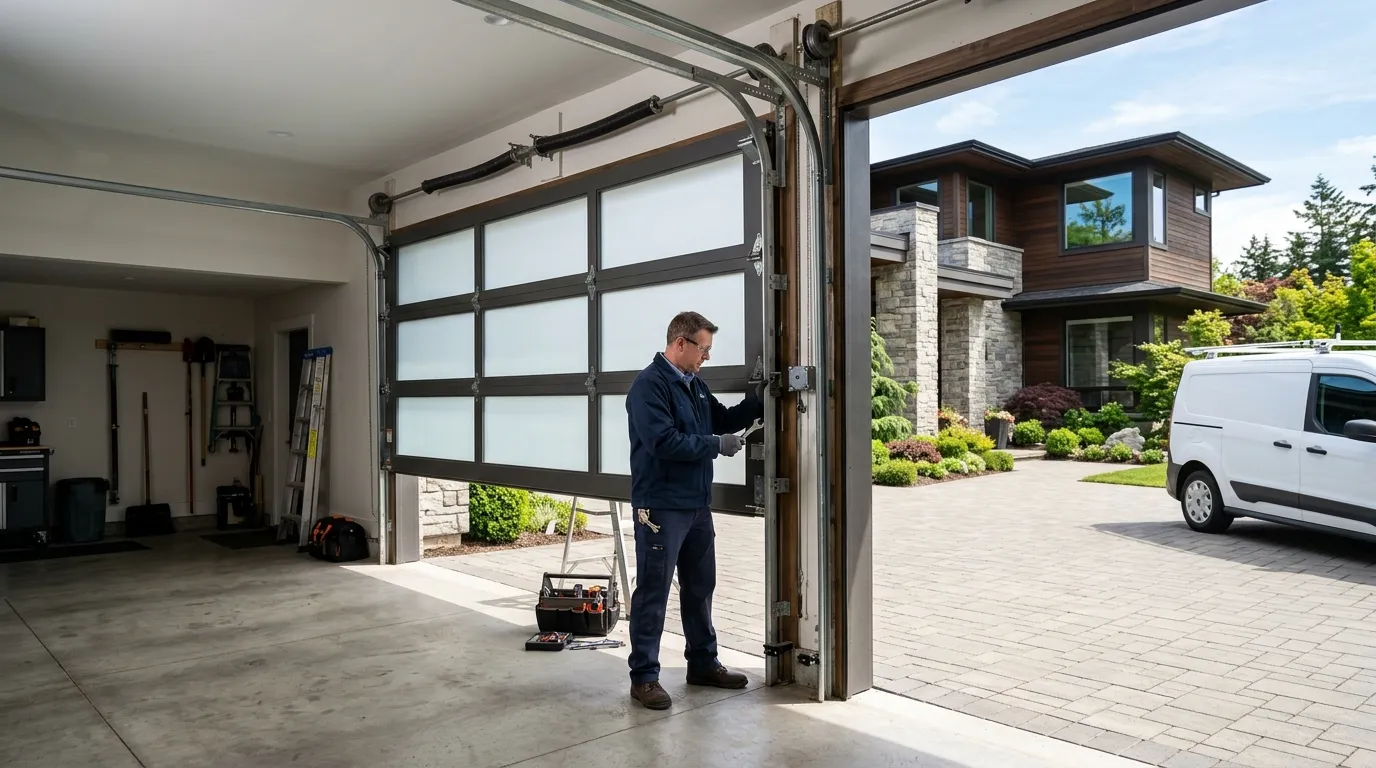
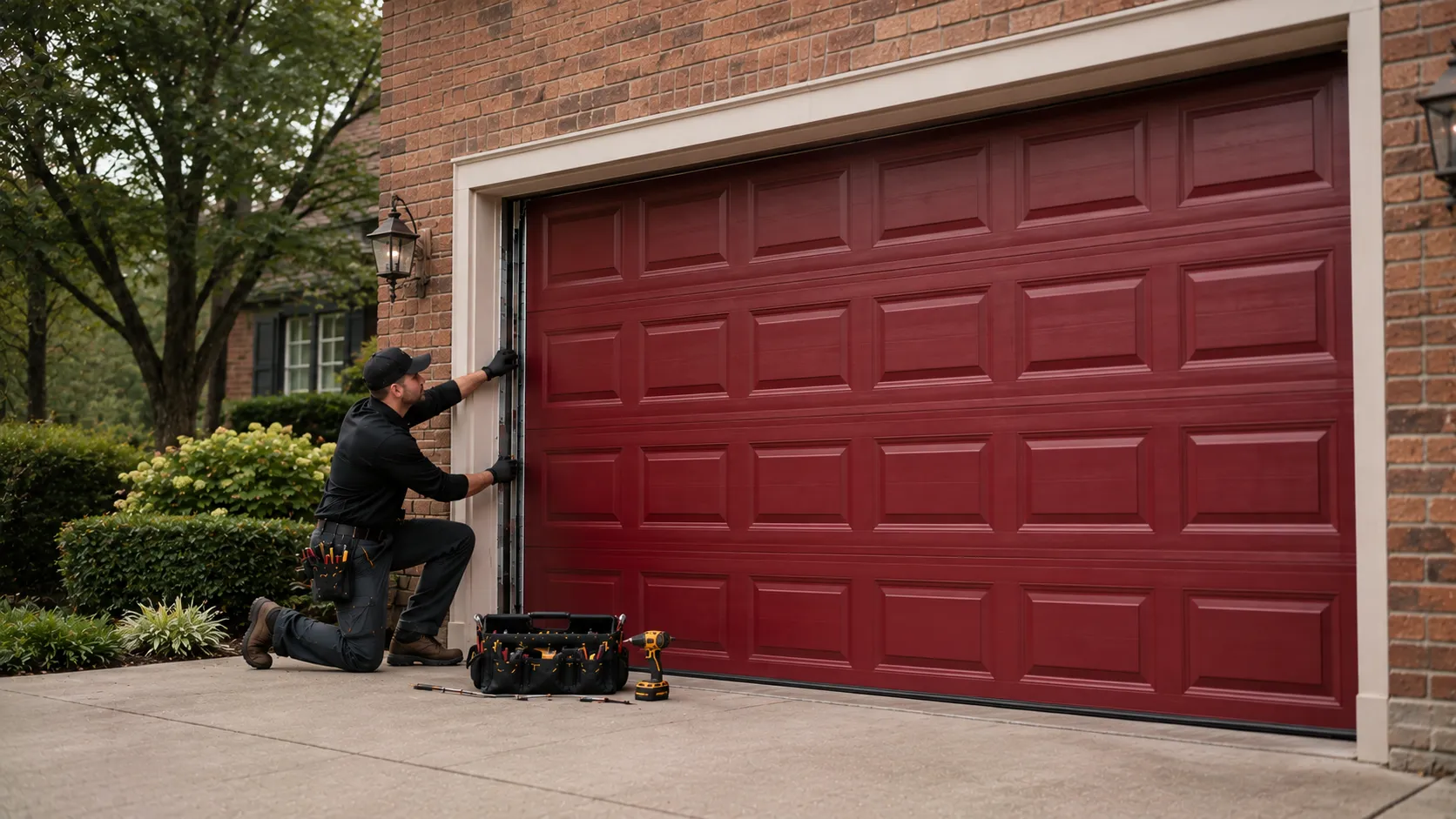
An off-track door almost always comes down to one of three things: a bent track, a snapped or frayed cable letting one side of the door drop, or roller brackets that have worked loose from decades of the door running on them. On the 1982-era doors common here, the roller brackets are riveted or bolted to the door section itself, and after forty-plus years those fasteners wear the holes oval before anything looks obviously broken. The fix is straightforward once the door is back in the track: reset the rollers, true up the track alignment against the header and the floor, and replace anything cracked or bent rather than bend it back. Bending a track back into shape is a temporary patch, not a repair - it fails again, usually sooner. We don't force a warped track straight and call it done; if the track is bent enough to have knocked the door off, it usually needs the section replaced. That's the one honest limit here: some tracks look salvageable and aren't.
Where This Job Goes Sideways
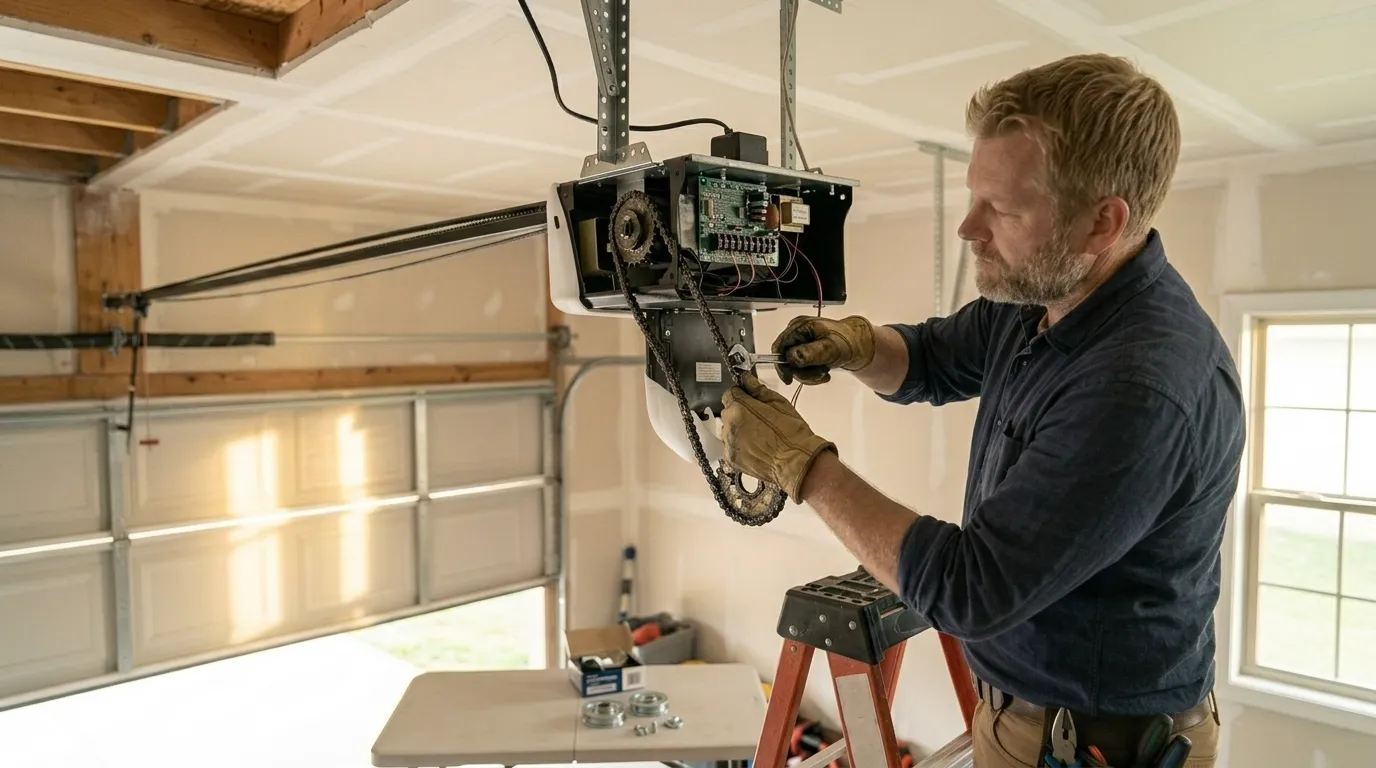
The door usually comes off track first, and the spring gets blamed second - but they're not always connected, and treating them as the same problem is where a repair goes wrong. A door that's jumped the track on one side can look like a spring failure because the door won't move, when the actual cause is a bent track pinching the rollers. Working on the spring first, with the door hung crooked in the track, is how a second, unrelated failure gets added to the first. The other place it goes sideways: a homeowner tries to force the door back onto the track by hand. On a double door especially, that's enough leverage to bend the track further or pull a cable off its drum, turning a twenty-minute roller reset into a track replacement. If a door is off track, the safest move is to stop operating it and leave it alone until it's looked at.
What You Pay
We don't have a set price to publish for this job, and giving one without seeing the door would be a guess dressed up as a quote. What drives the cost is whether the fix is a roller reset and realignment, or whether a track section, cable, or bracket set needs replacing along with it. Rochester's higher median household income in this part of the service area, $104,920 against a broader area median of $84,862, does show up in one pattern we see: more owners here choose to replace worn hardware on the spot rather than patch it and wait for the next failure. That's a homeowner's call either way, but if the track and rollers are original to a 1982-era door, it's worth asking to see the wear before deciding which way to go.