How It Shows Up
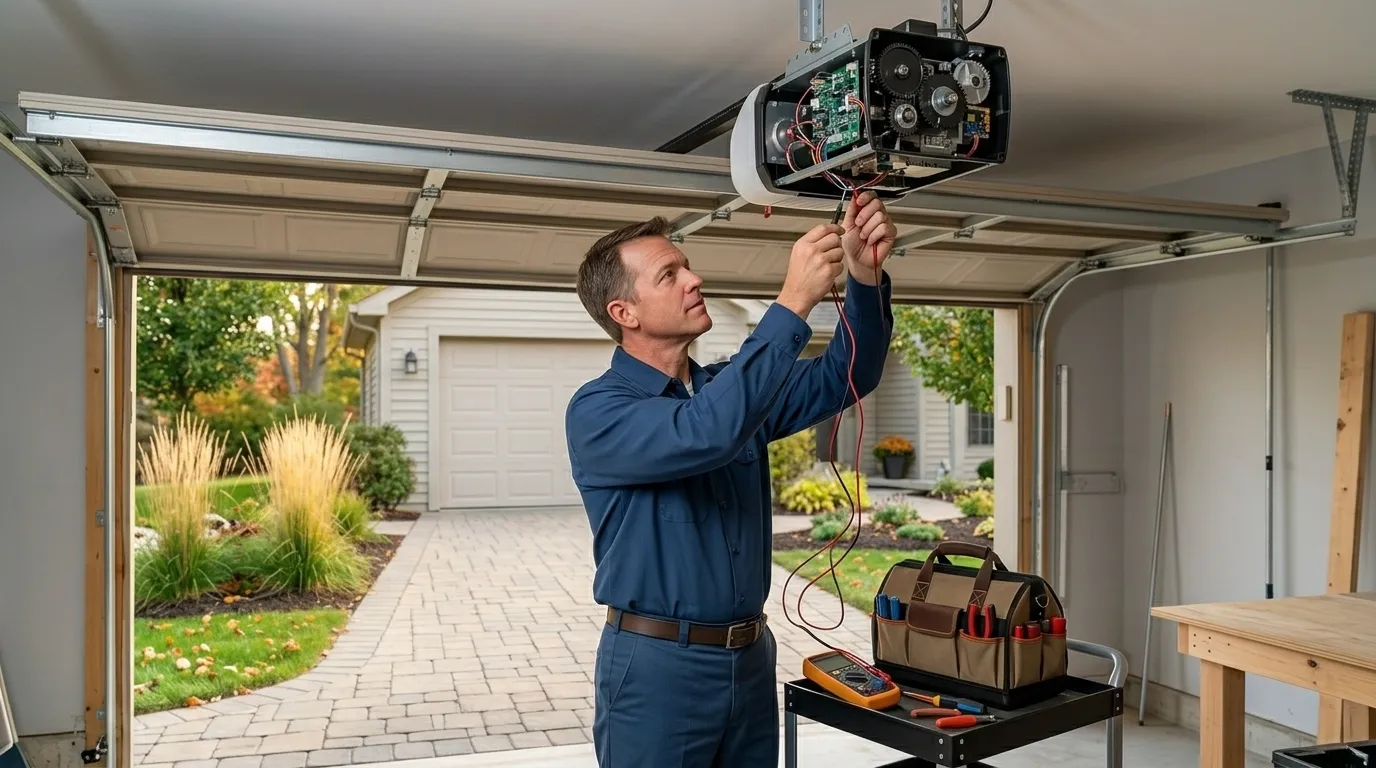
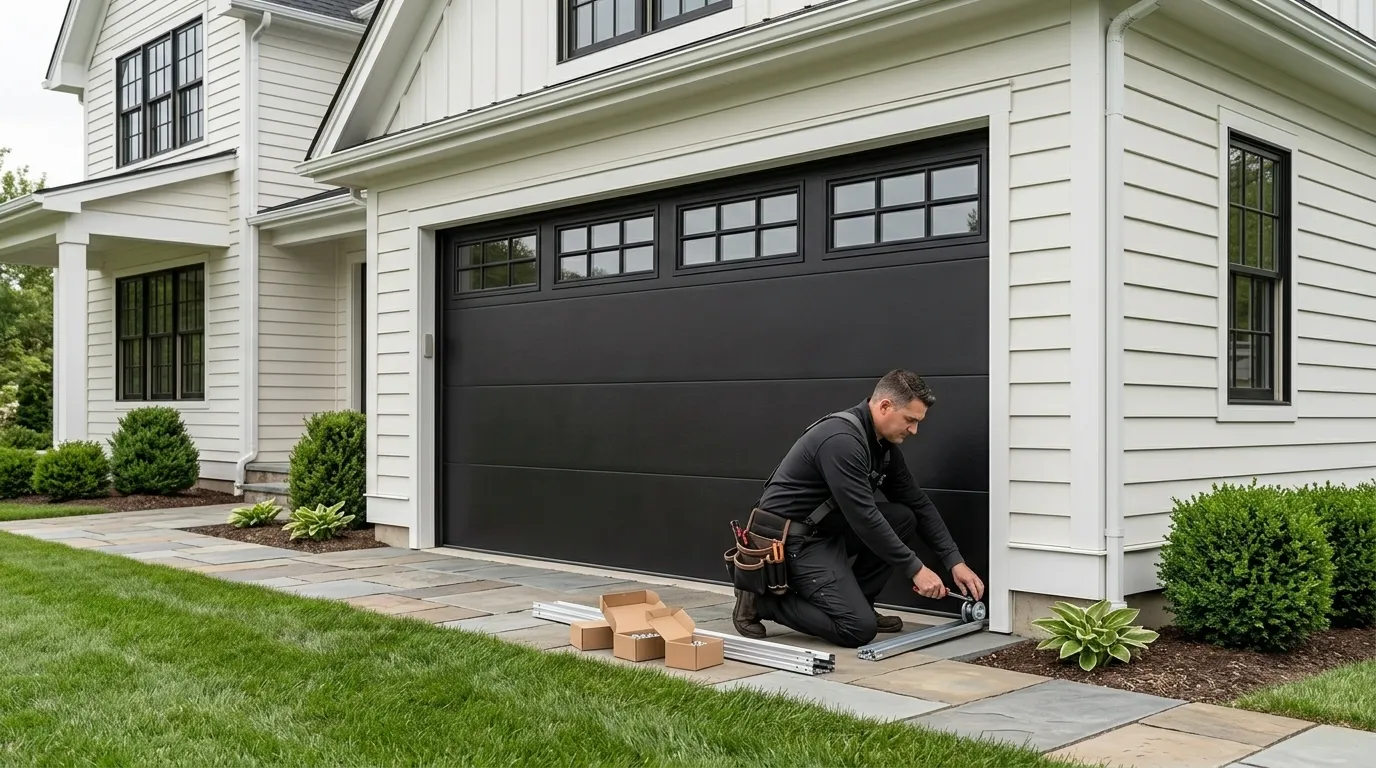
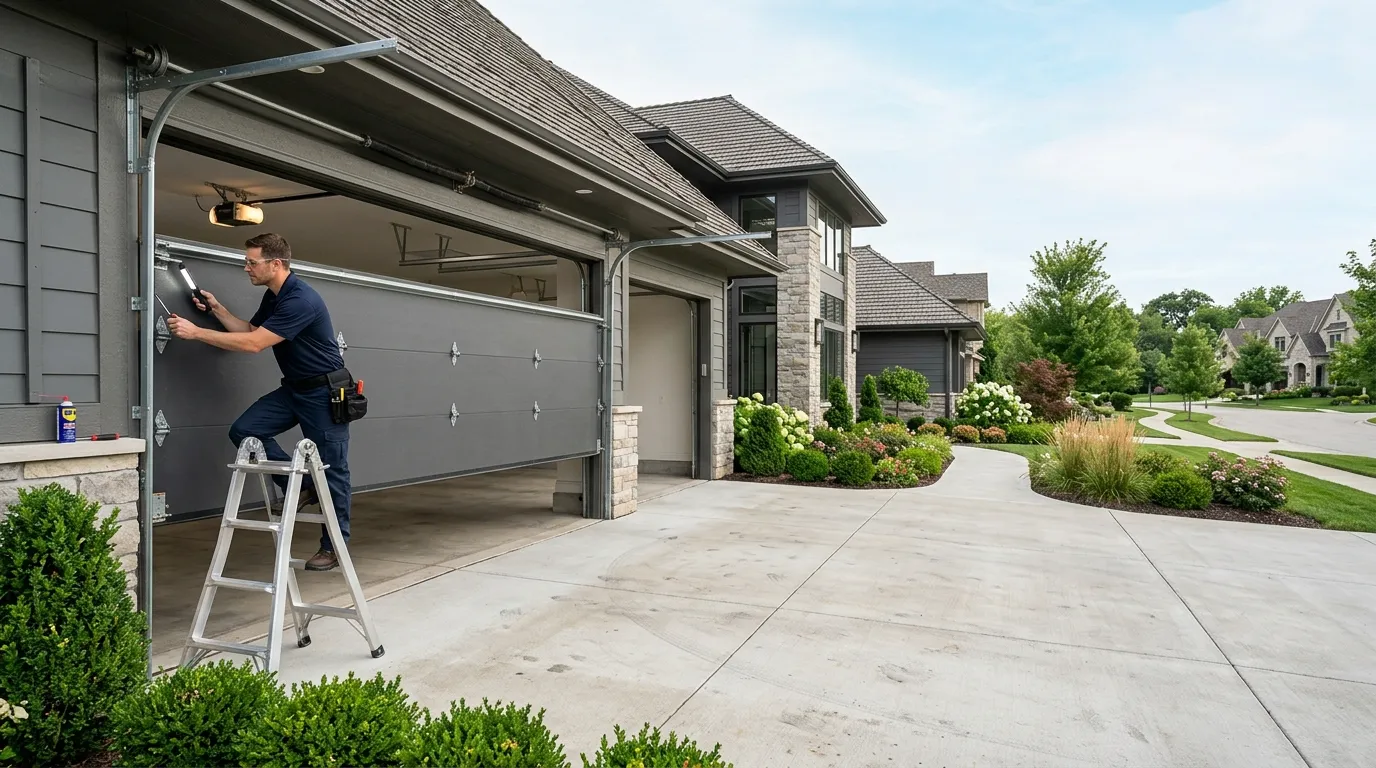
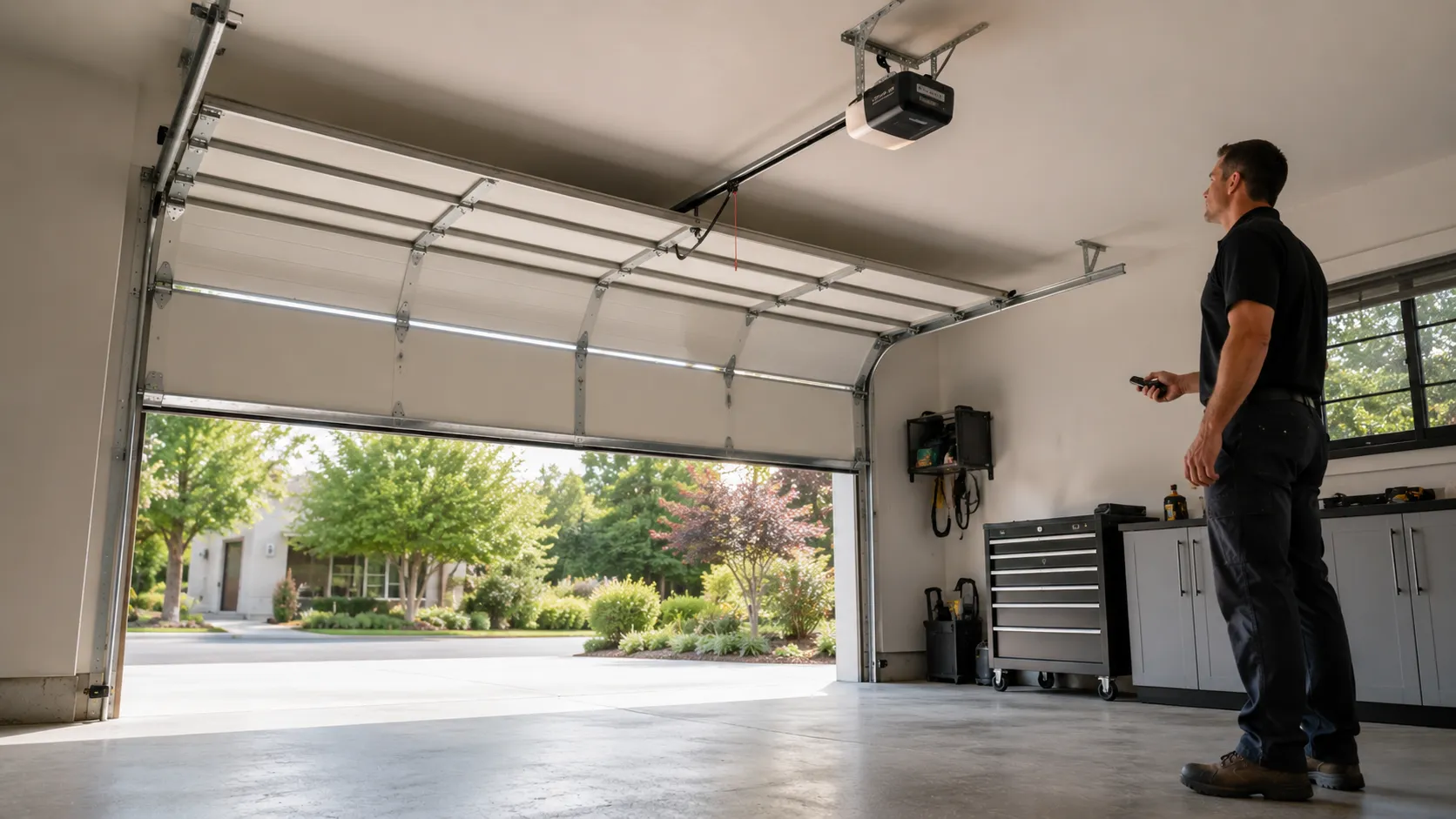
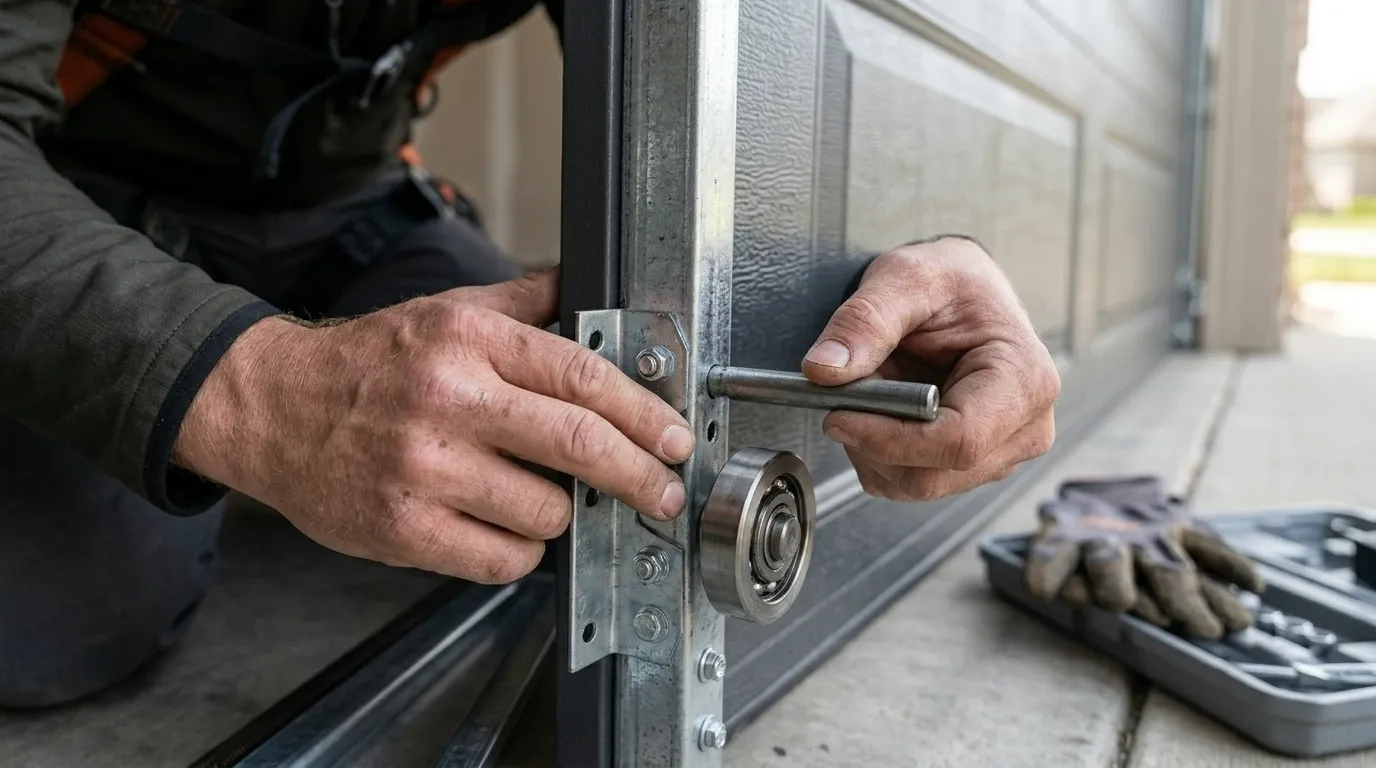
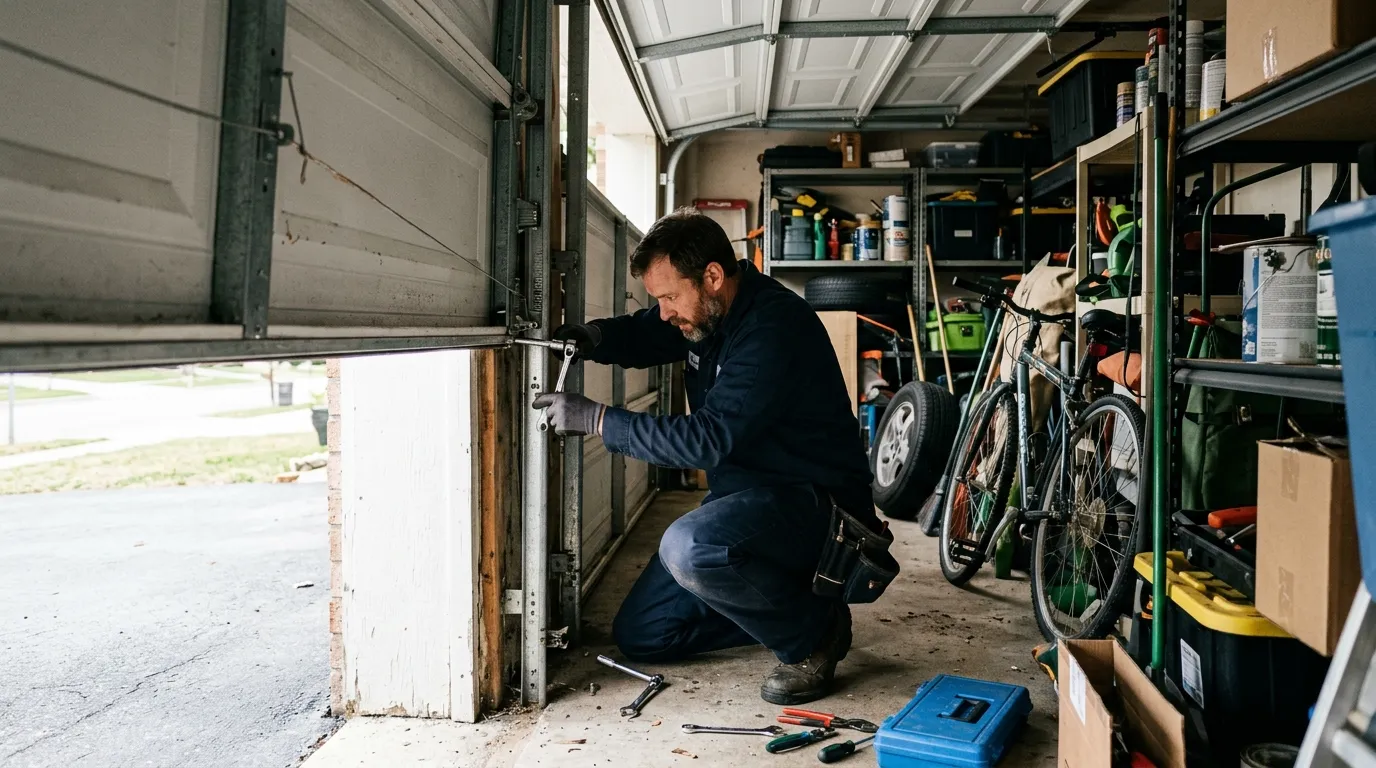
Most houses in Auburn Hills went up around 1990, a good three decades newer than the 1960s stock that dominates a lot of the wider service area. That later build date matters for what breaks. By 1990, builders had mostly moved off the old side-mounted torsion setups and onto lighter steel doors paired with chain-drive or belt openers and standard extension or torsion springs sized for those lighter panels. When something fails here, it's more often a worn opener gear, a snapped extension spring cable, or a sensor knocked out of alignment than the heavy original hardware you'd find on an older door. The door won't open, or it opens partway and reverses, or you hear a bang and the door won't budge at all. Different era, different failure pattern, and it changes what a tech brings on the truck before they even see the door.
Where This Job Goes Sideways
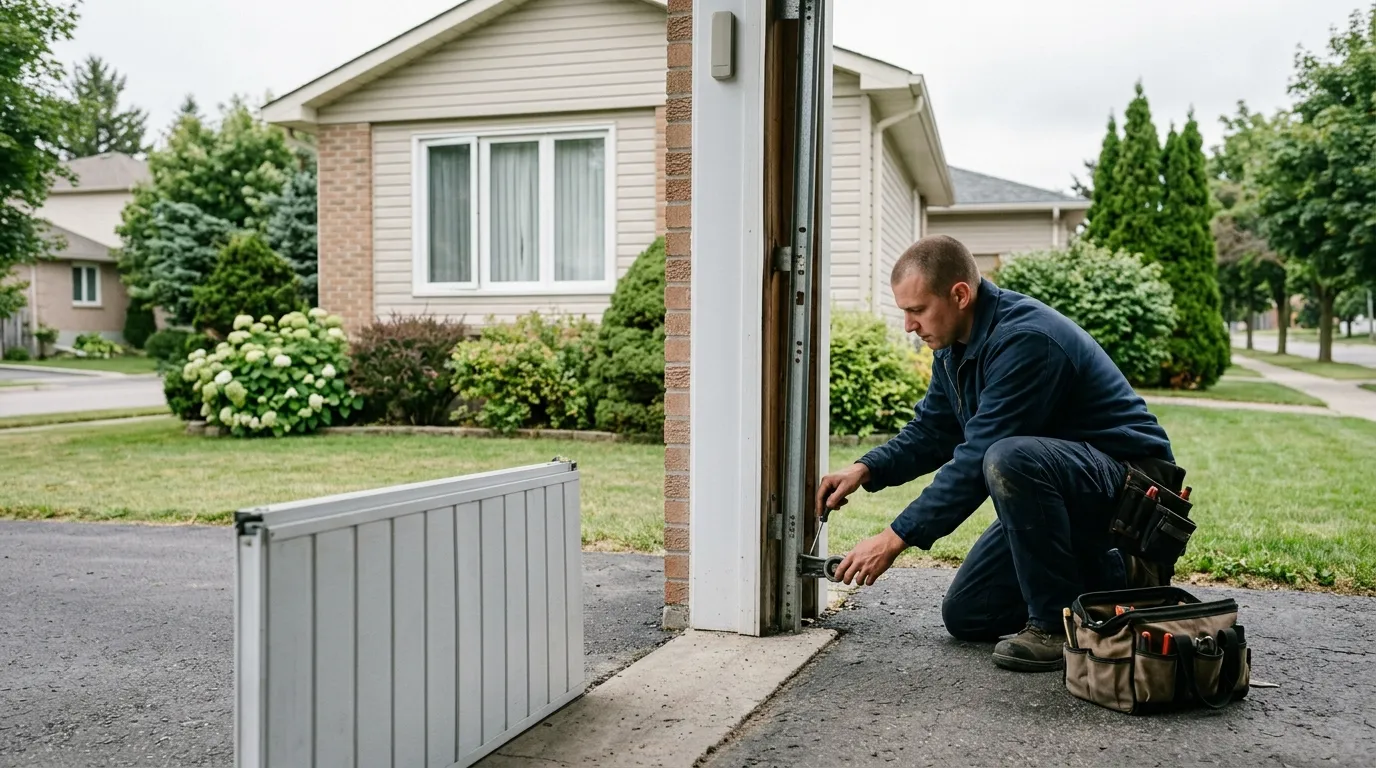
A door that's stuck halfway down over a car, or a spring that's let go with the door up, is not a wait-and-see problem. Cold snaps make it worse. This area sits in a climate band the federal data classifies as cold and severe, and steel contracts in the cold - a spring that was already fatigued from age can snap on a night when the temperature drops fast, often right when you need the door most. The other way it goes sideways: someone tries to force a stuck door by hand, straining the opener motor or bending a track, and turns a spring job into a spring-plus-track job. If the door won't move and something feels wrong, stop and call before you push on it.
Why This Fails Locally
Auburn Hills households run a median income of about $78,727, a bit below the roughly $84,862 median across the wider service area, and that gap shows up in how doors get maintained. Fewer households here are paying for annual spring or roller service, so failures tend to arrive as a full stop rather than a slow warning. Add the cold-climate factor and you get springs that were fine in August and gone in January. None of that is unique to any one street - it's just what a newer, price-conscious housing stock in a hard winter climate does to garage door hardware over time.
What the Repair Takes
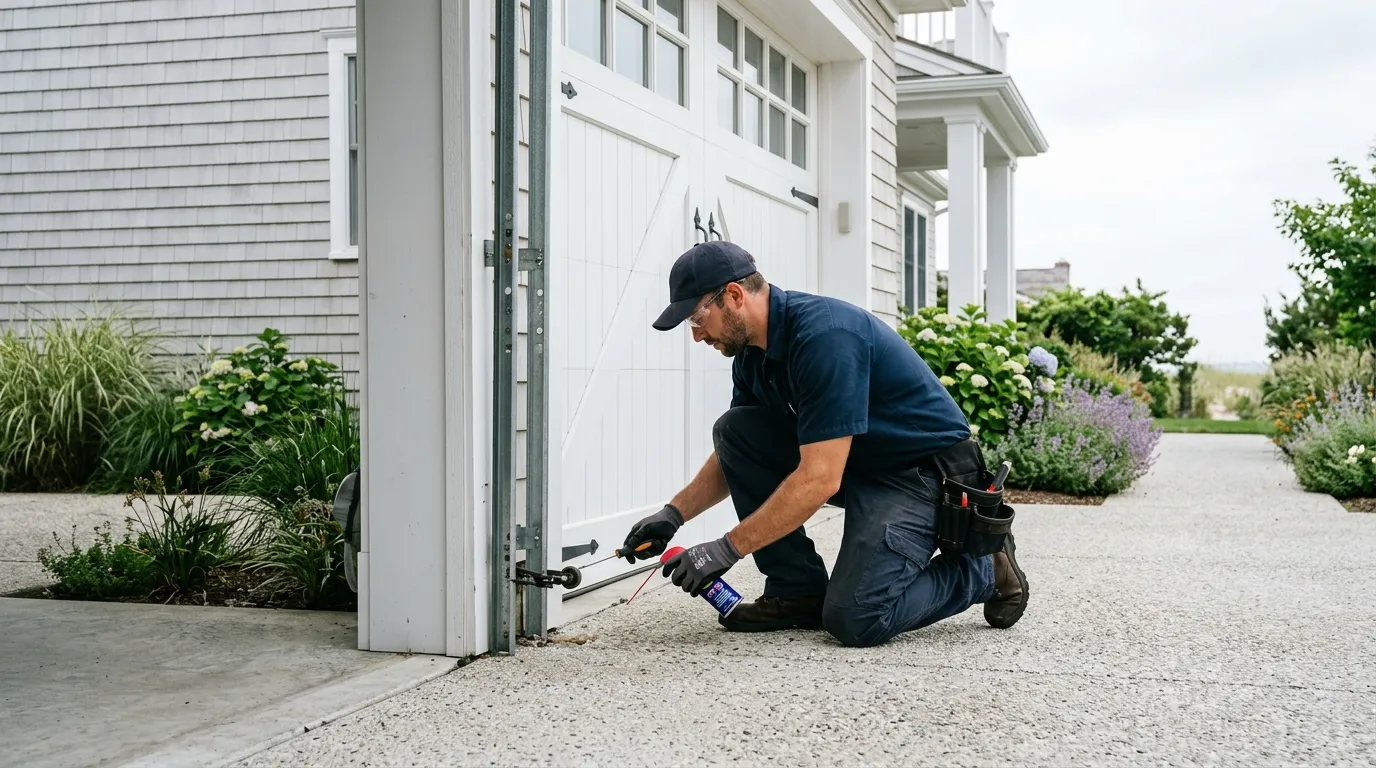
We come from Rochester Hills, about 4 miles out, so there's a short drive built into any call here - we don't have a branch in Auburn Hills and won't claim one. Once on site, most spring and opener repairs on this era of door are straightforward: the hardware is more standardized than what we see on 1960s stock, and parts are easier to source. Where it gets slower is a discontinued opener board or a specialty panel color, and we'll tell you upfront if that's the case rather than promise a same-visit fix we can't back up. Track and cable work is usually same-day; a full door replacement, less often needed here given the newer stock, takes longer to schedule around ordering.