How It Shows Up
Median household income in Auburn Hills runs $78,727, a bit under the $84,862 median across the wider Rochester Hills service area. That gap matters here because it's usually what decides whether a homeowner calls for a repair or starts pricing a full opener swap. At this income level, a $200-$400 repair on a working chain or belt drive almost always wins over a $600-plus replacement, unless the motor itself has burned out.
Most Auburn Hills garages were built around 1990, a full generation past the 1960 median for the broader service area. That means the openers giving people trouble now aren't the old mechanical relay units you'll find on older housing stock nearby - they're early logic-board models, some with the first generation of rolling-code remotes and photo-eye safety sensors bolted on as an afterthought. When one of these starts acting up, it's usually the circuit board or the sensor wiring, not the motor.
Where This Job Goes Sideways
The trouble with a 1990-era opener is that the board and the drive mechanism don't always fail together, so a homeowner replaces one and the symptom keeps showing up. A door that reverses halfway up looks like a sensor problem, and sometimes it is - a photo eye knocked out of alignment. But on these early boards it's just as often a logic board losing track of its travel limits, which no amount of eye realignment fixes.
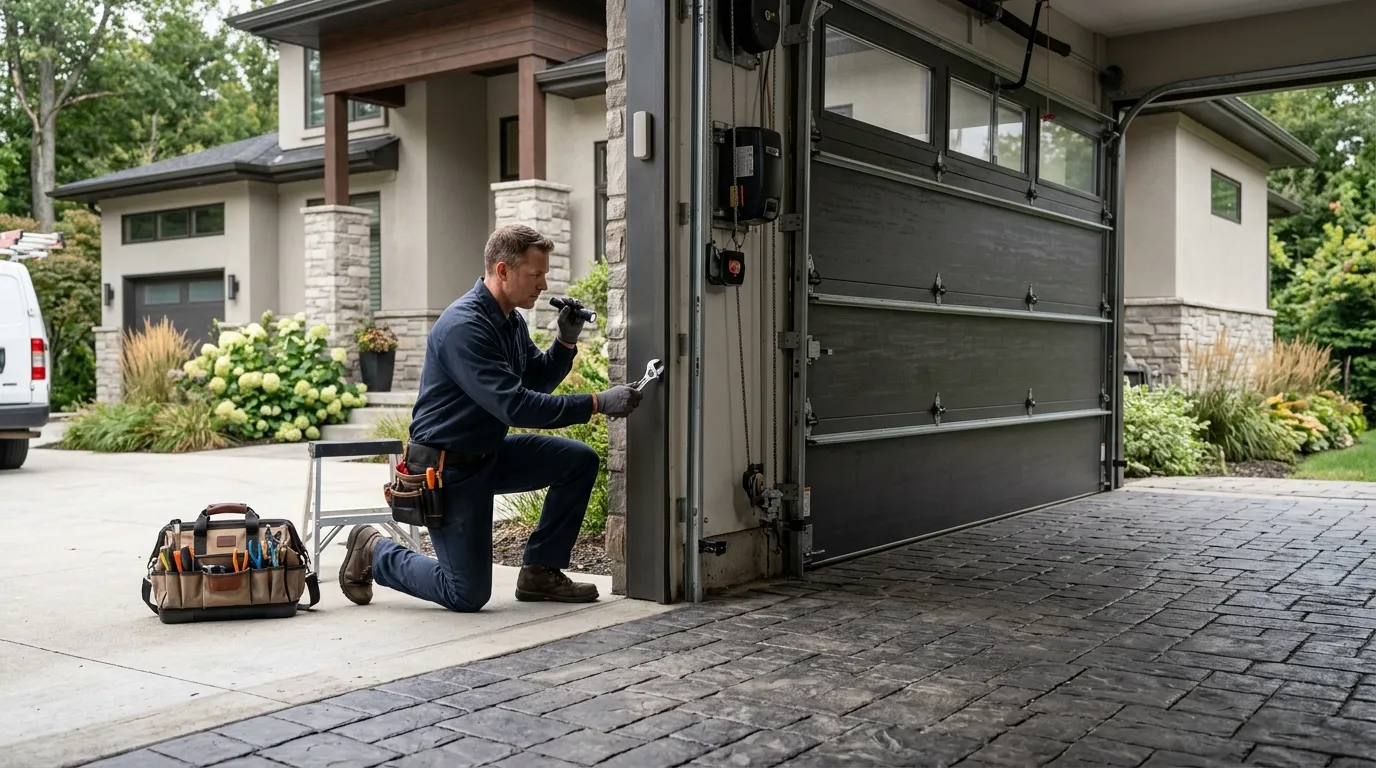
Another spot this goes wrong: chain tension. Openers from this era use adjustable chain tensioners that nobody's touched in 30 years. A loose chain slaps the rail and sounds like a bearing going bad, so people call about the wrong part. Diagnosing which of these it actually is takes opening the housing, not just watching the door cycle.
Why This Fails Locally
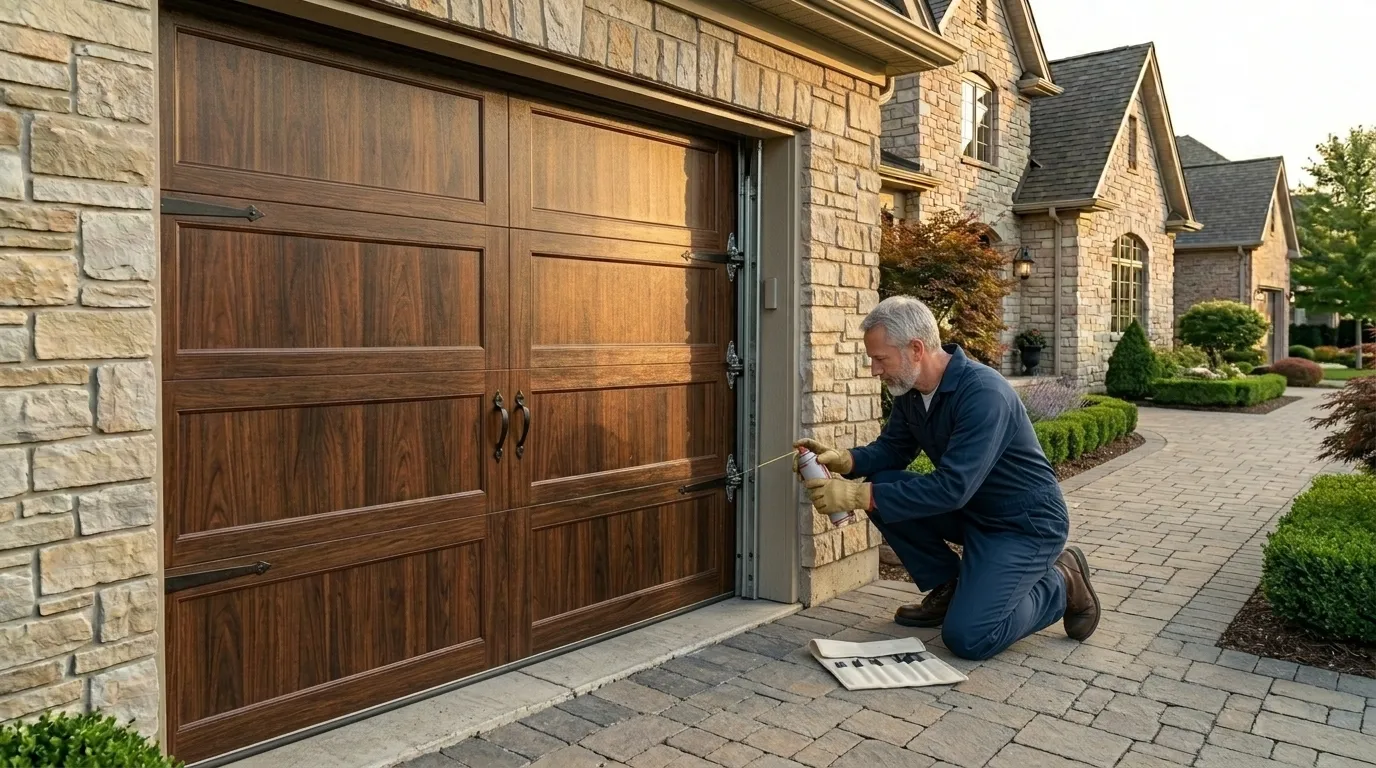
This region sits in a cold-severe climate band, and that matters more for a 30-plus-year-old opener than for a new one. Lubricants in original drive chains and screw-drive units thicken in deep cold, which pulls more current at startup - exactly the kind of strain that finishes off an aging capacitor or motor winding on a unit already near the end of its service life.
Houses built around 1990 in Auburn Hills also tend to have unheated or minimally insulated garages, which means the opener sits through the same freeze-thaw swings as the driveway outside it. None of that is unique to any one street, but it's consistent across housing built in this window, and it's why openers from this era show up on service calls more than newer units from houses built in the 2000s and later.
What the Repair Takes
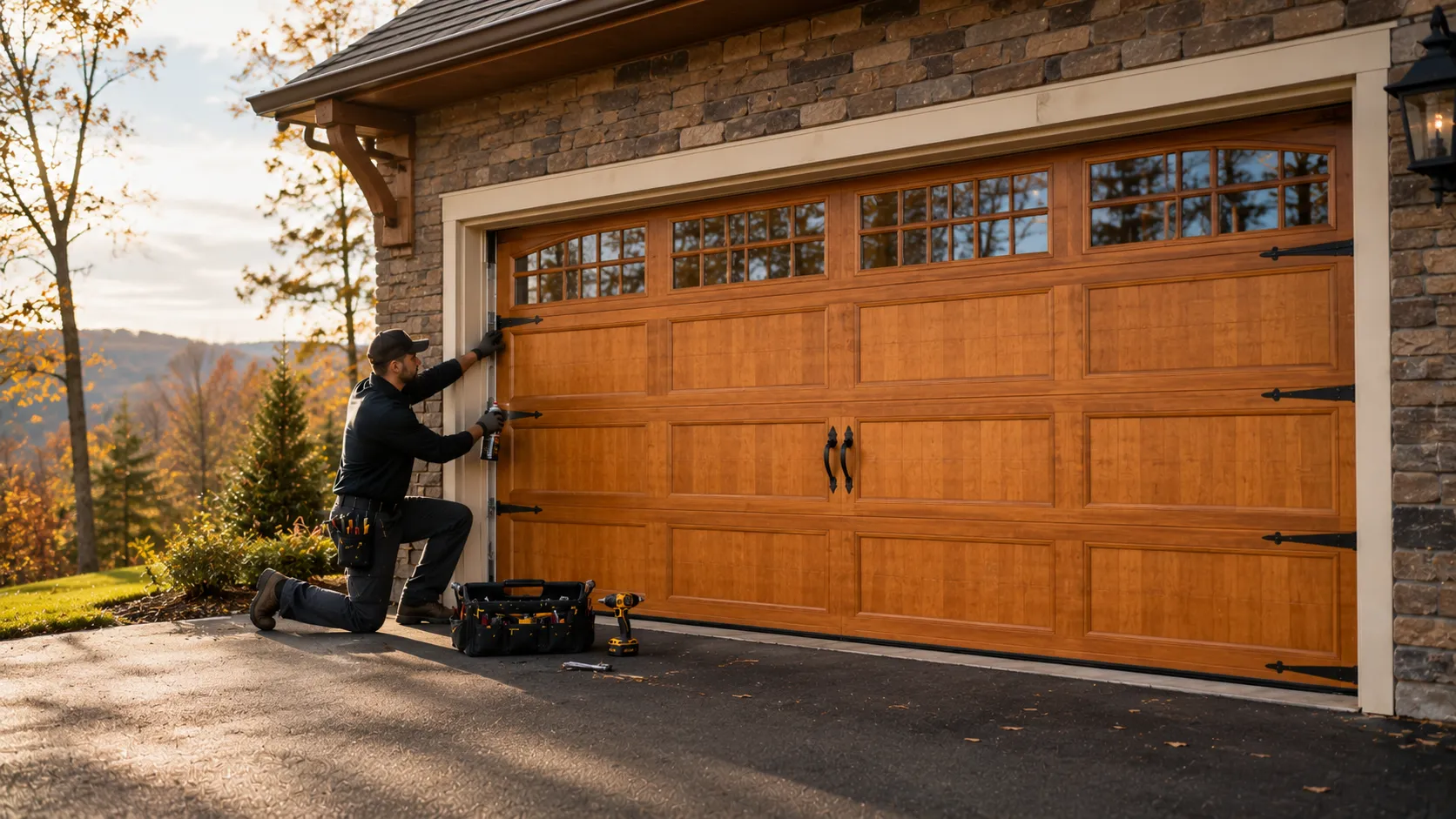
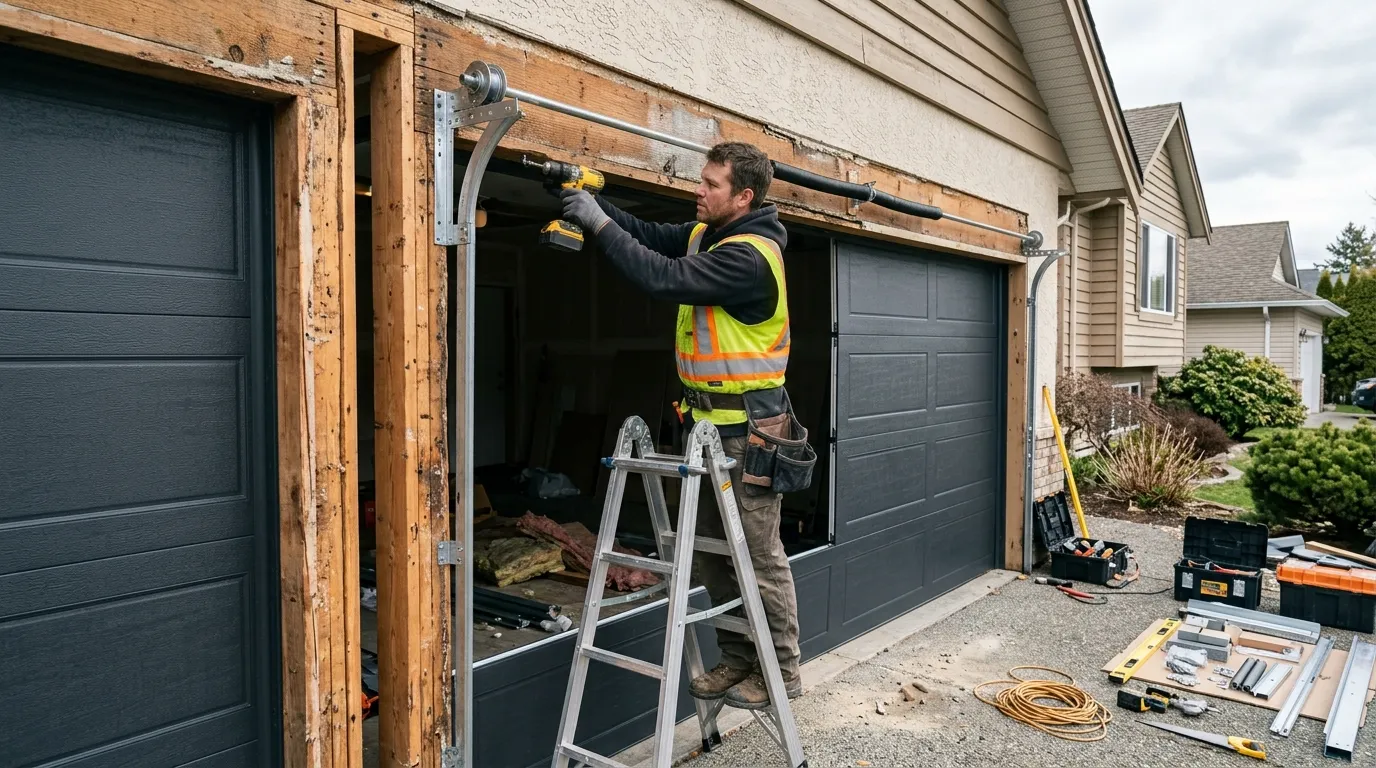
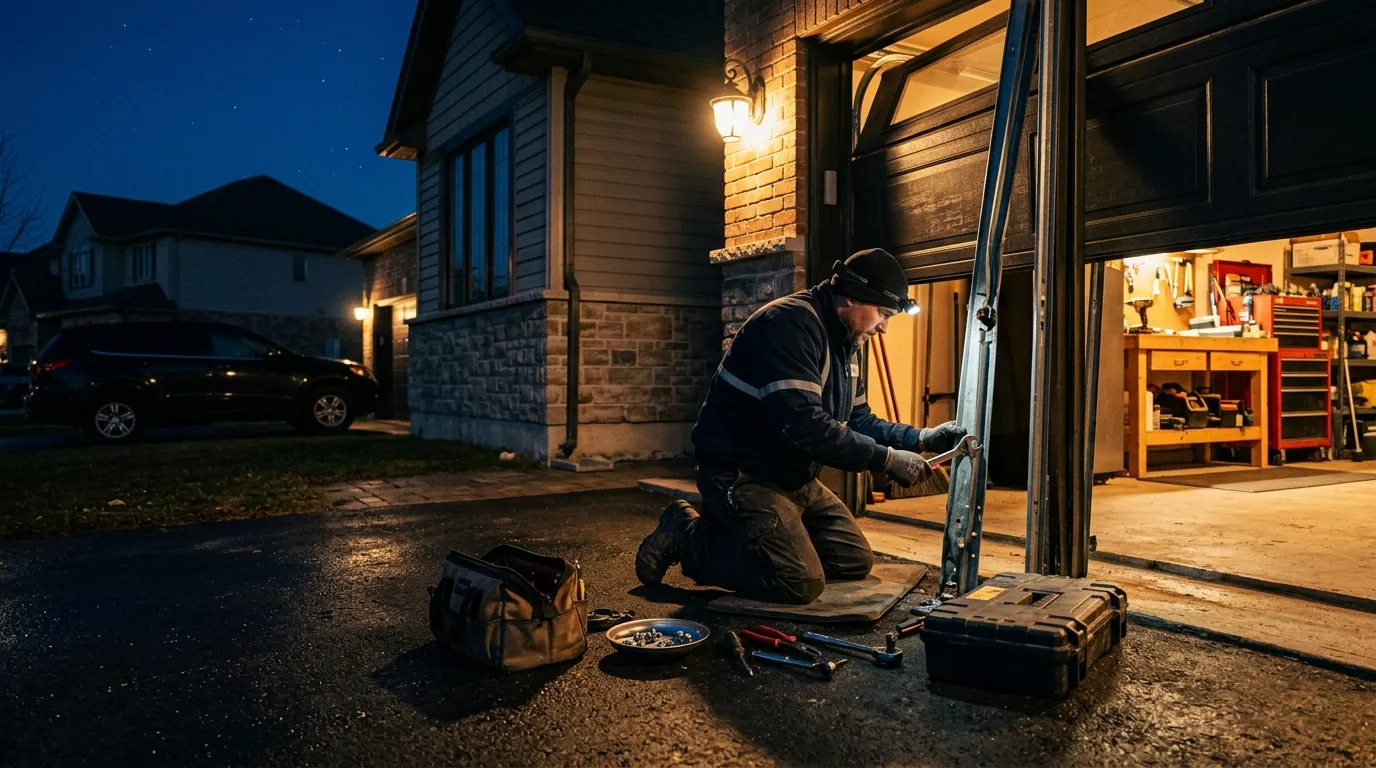
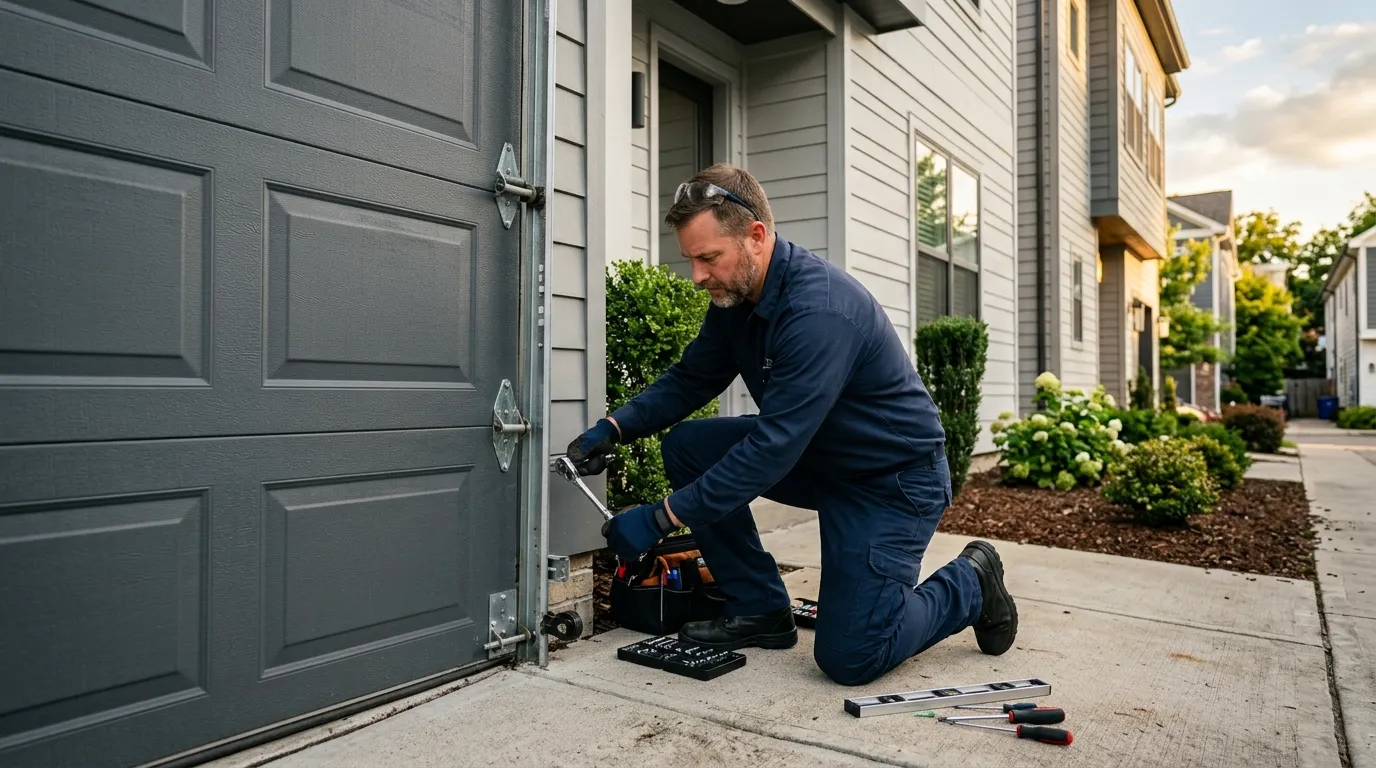
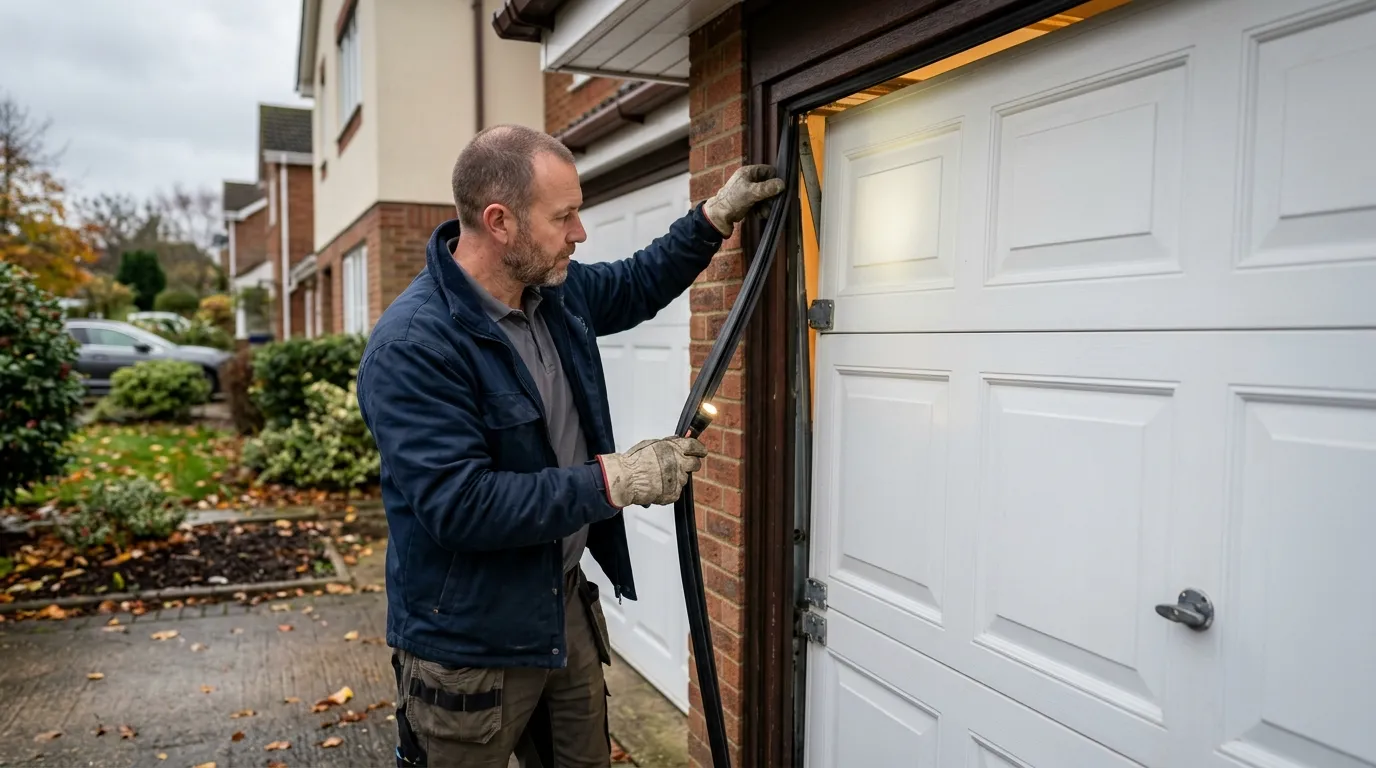
A service call starts with running the opener through a full cycle to see where it actually fails - at open, at close, or somewhere mid-travel - before touching anything. That narrows it to sensor, board, or drive mechanism fast, instead of guessing.
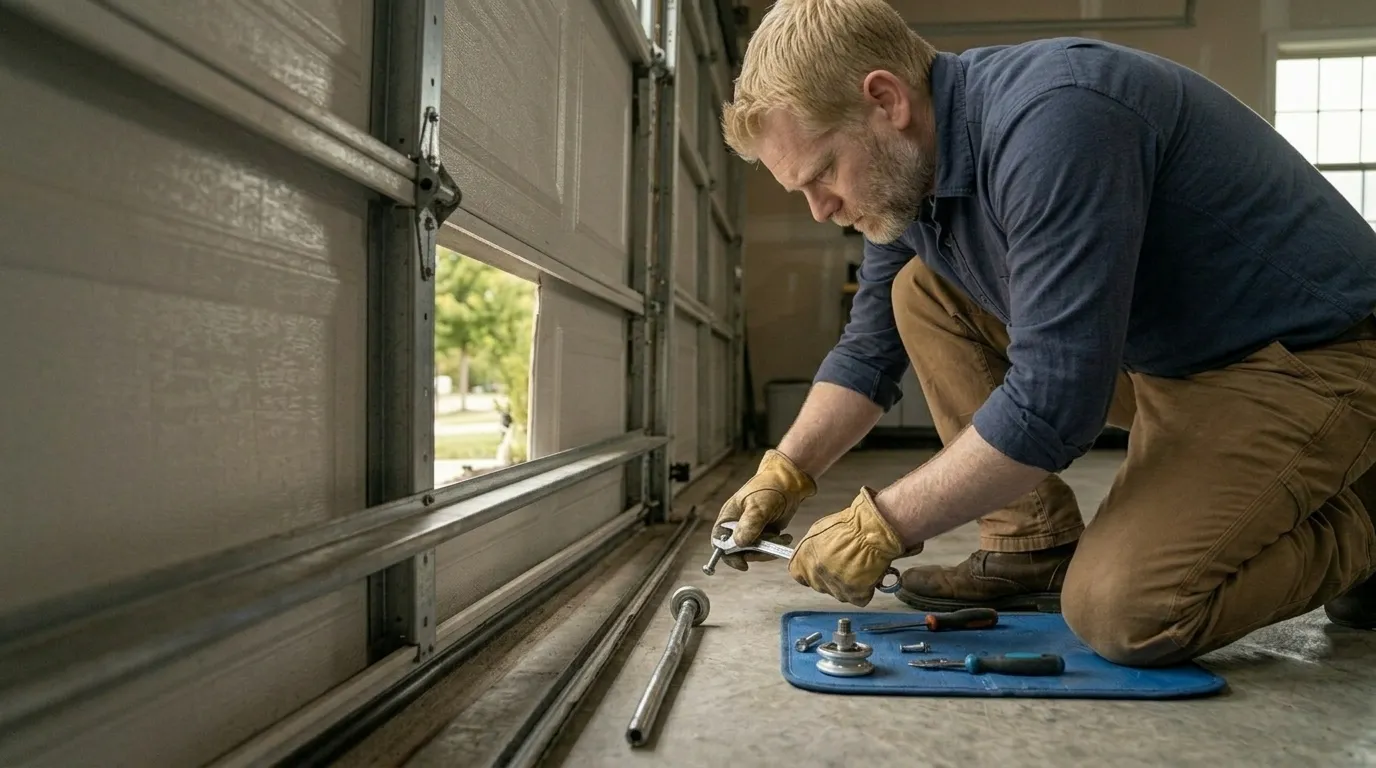
We run this from Rochester Hills, four miles away, so getting a truck to an Auburn Hills address isn't a long haul. Parts availability is the real variable: a photo eye or a chain tensioner is an easy stock item, but a specific logic board for a 1990s-era opener sometimes has to be sourced, and we'll tell you upfront if that's the case rather than let you wait without knowing why.