How It Shows Up
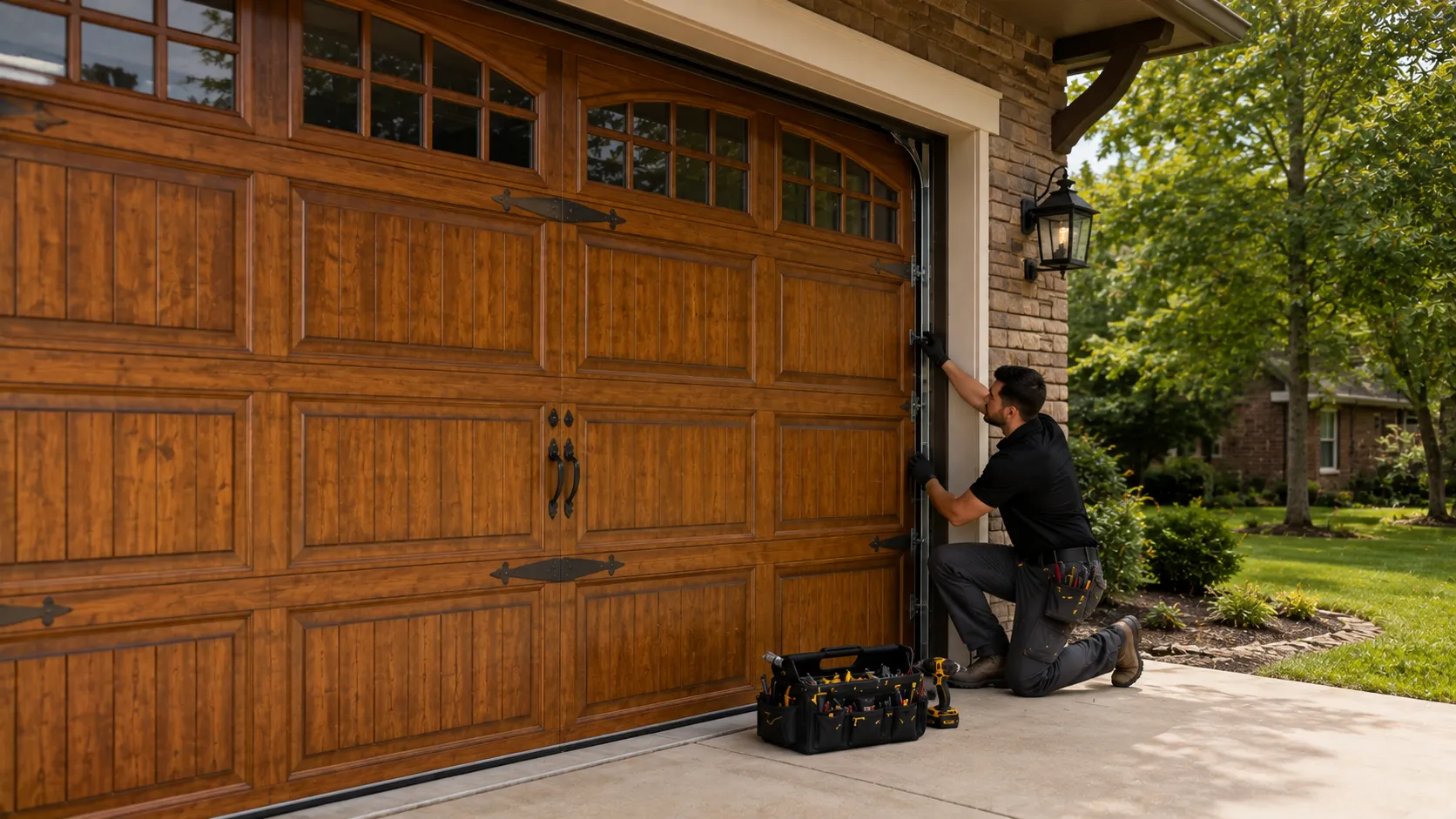
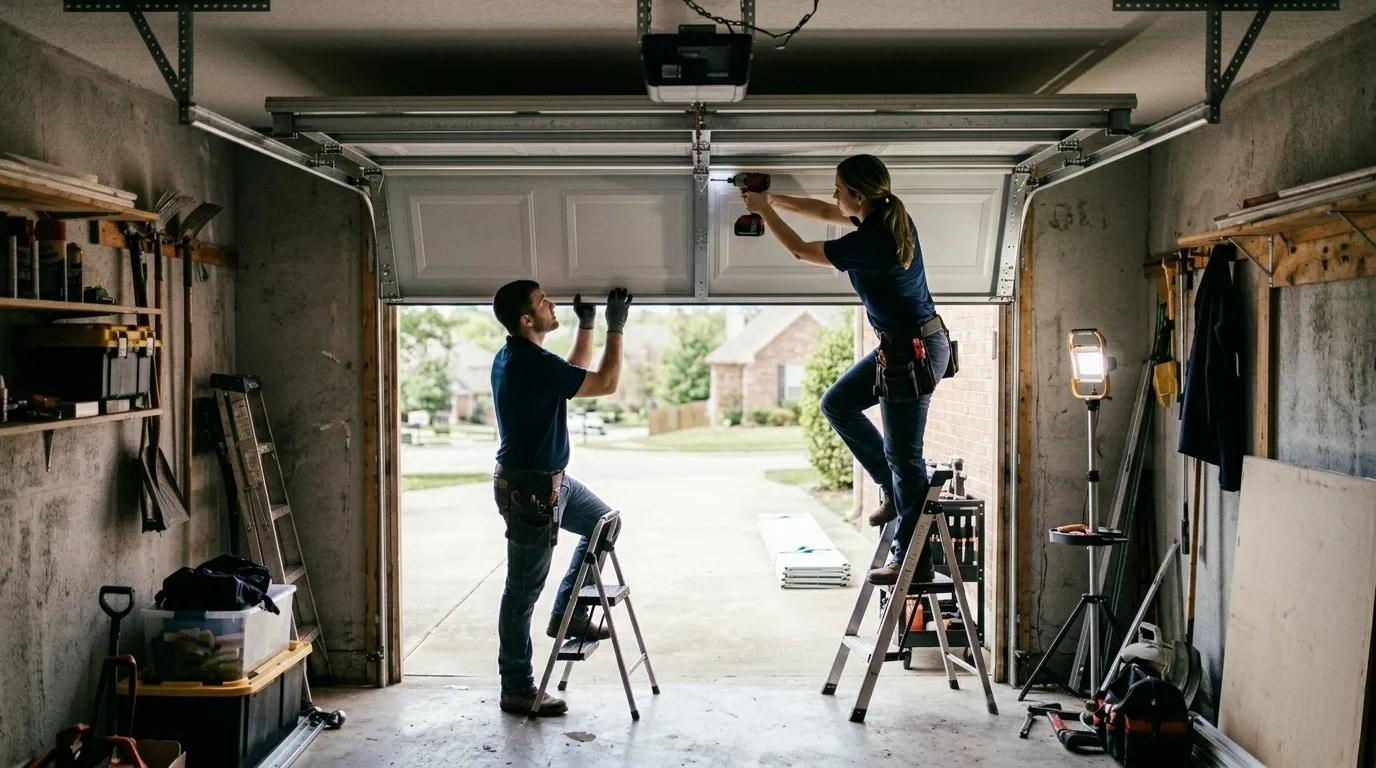
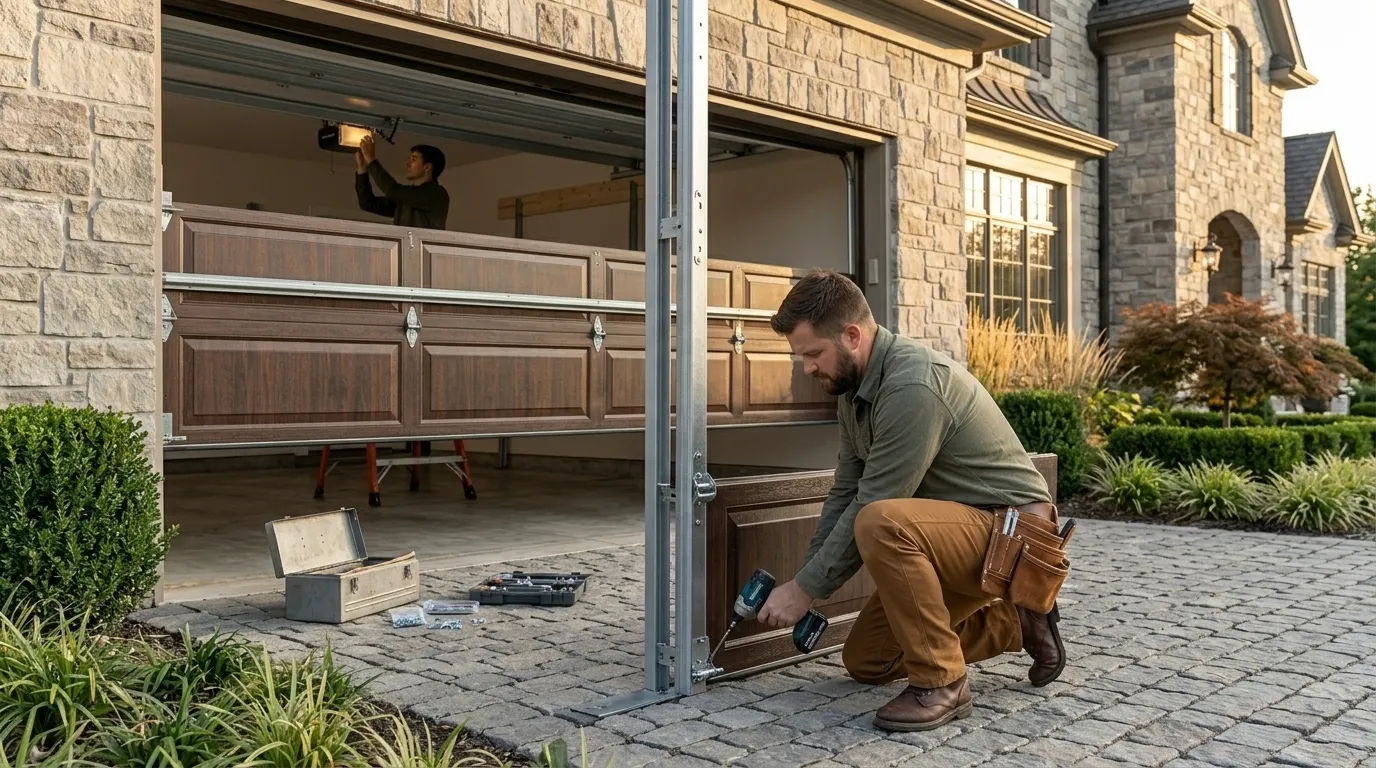
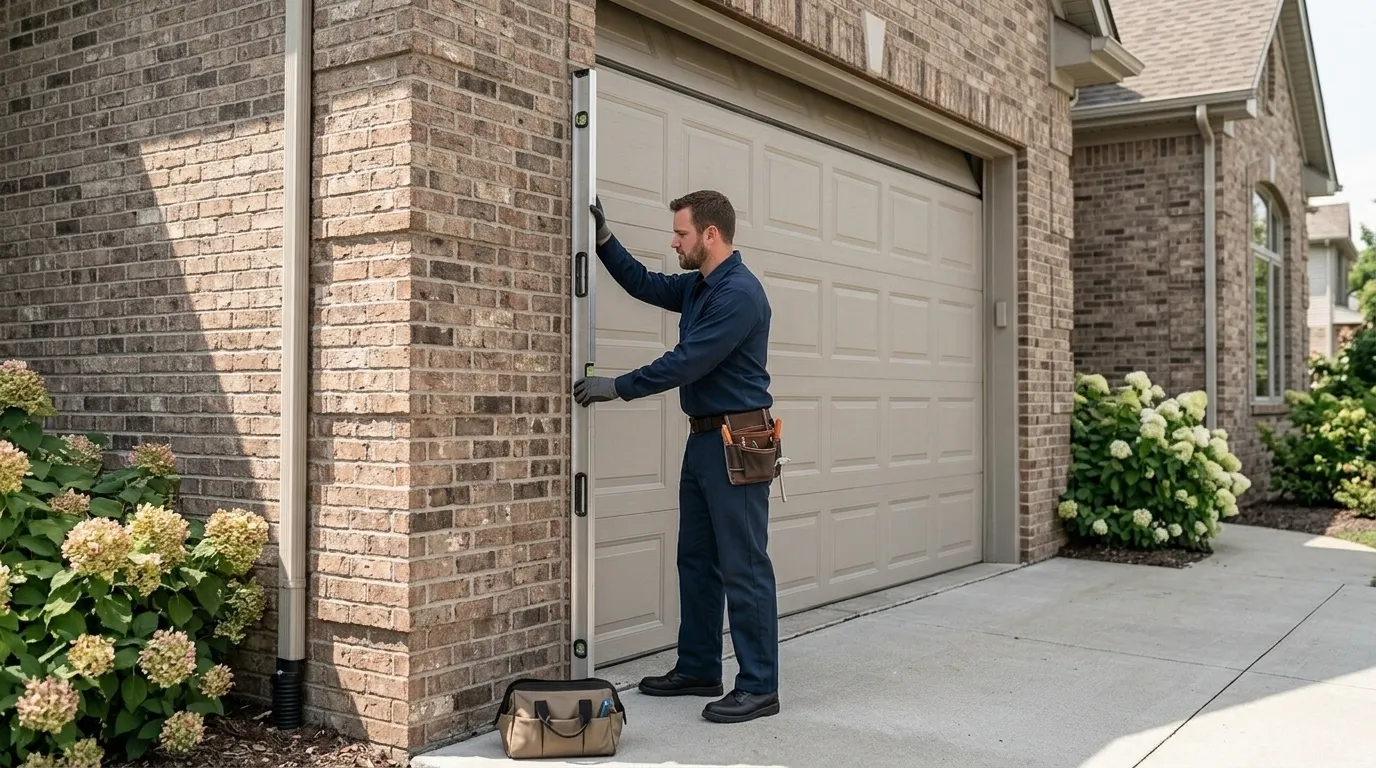
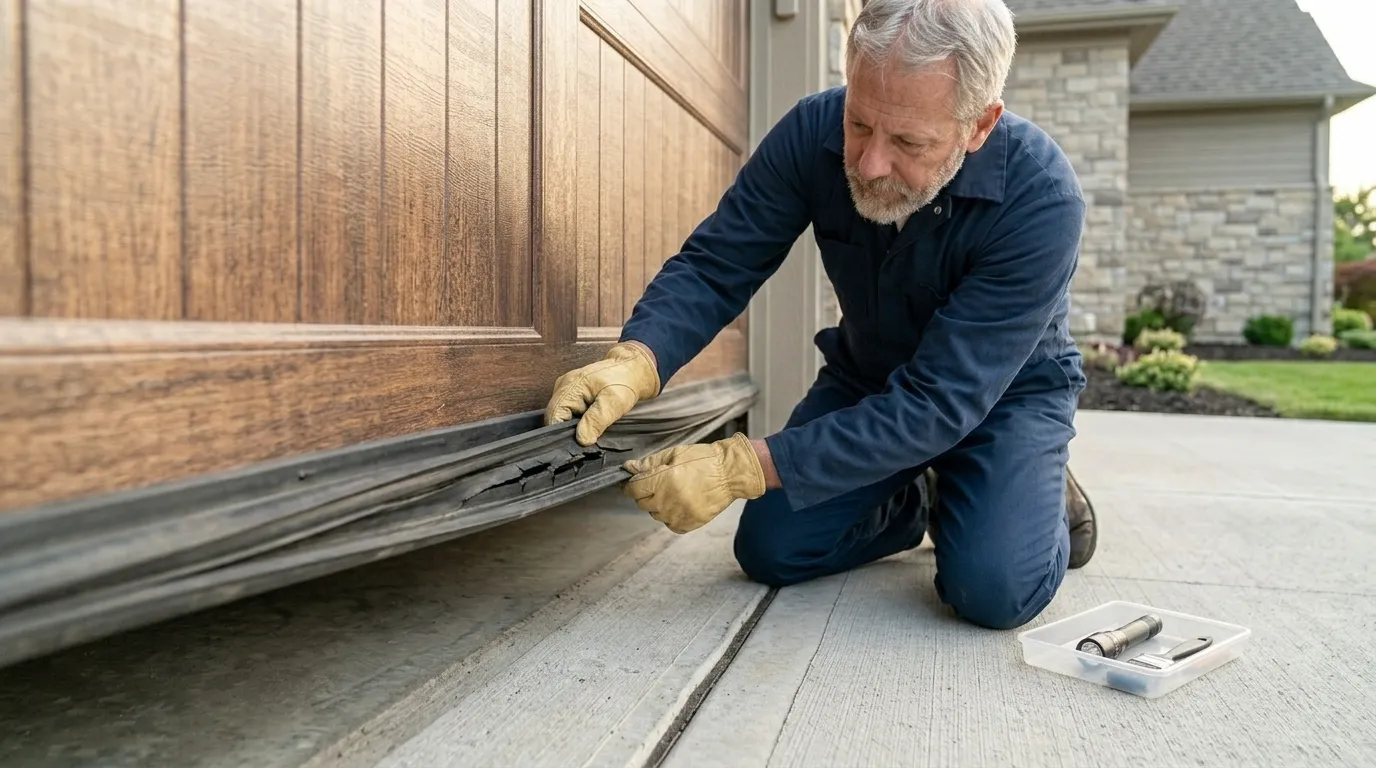
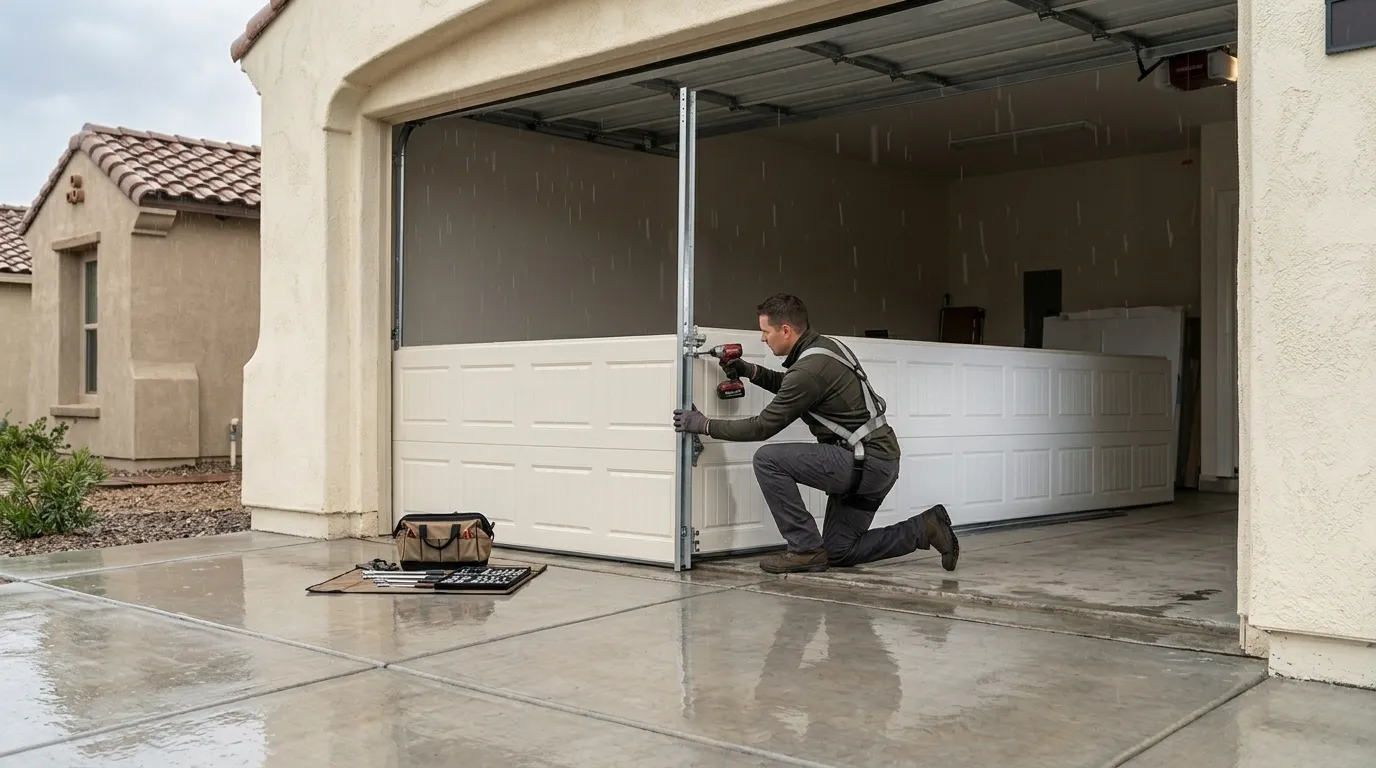
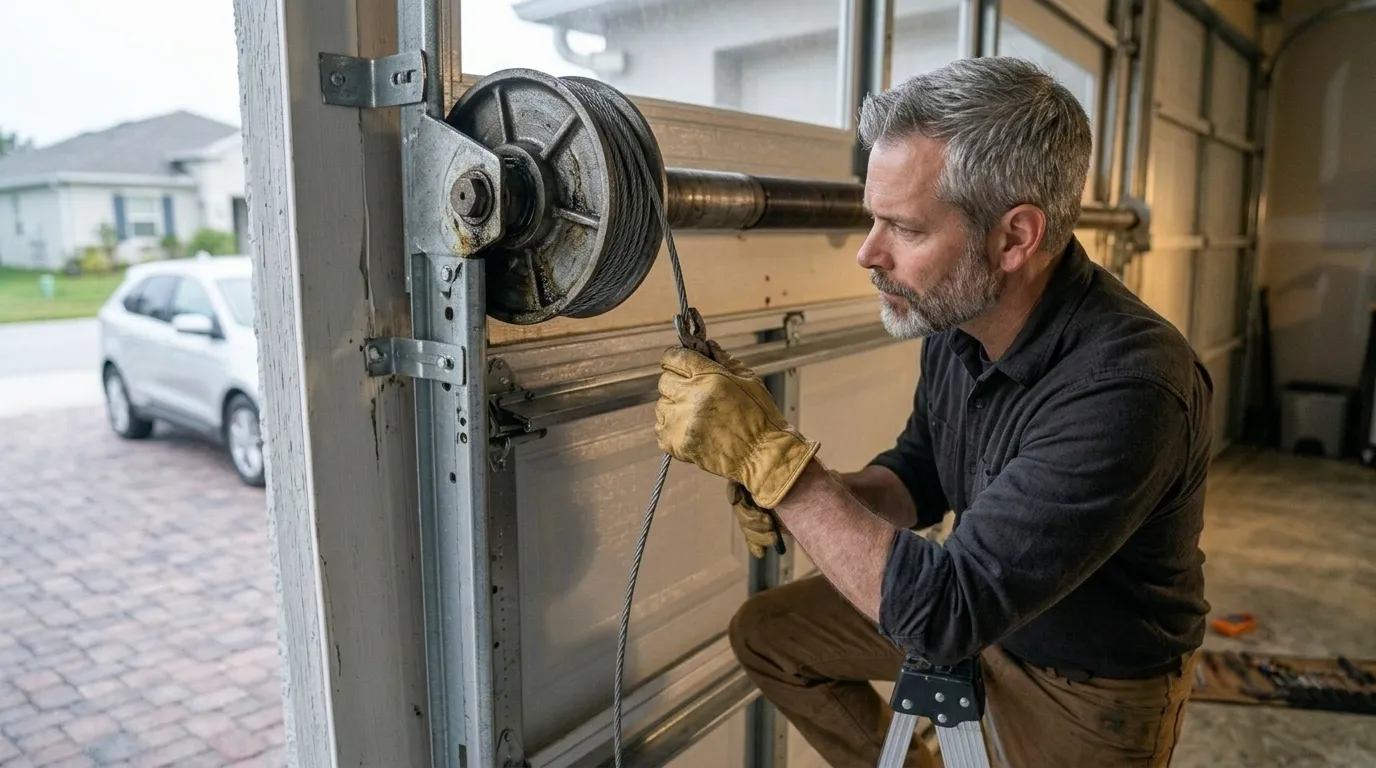
Most of what we see on a Rochester Hills service call is spring and hardware fatigue on doors from the 1960s. Auburn Hills is a different animal. The median home here went up around 1990, three decades newer than the typical house four miles over in Rochester Hills, and that gap shows up the moment we open the panel. Instead of worn-out one-piece doors on old side-mount torsion setups, we're usually looking at sectional steel doors on factory-standard extension or torsion springs, with openers that are chain or belt drive rather than the screw-drive units common on older stock. The failure mode shifts too - it's less "this hardware is original and shot" and more "the opener logic board or a plastic gear stripped out" or "a roller bearing seized because it was never lubed." Cables snap here too, but on newer doors it's more often a fraying lift cable at the drum than a rusted-through cable on an ancient track. Because the housing here is younger, we spend less time fighting rust-frozen bolts and more time chasing electrical faults, sensor misalignment, and worn nylon rollers that were fine for the first fifteen years and are now due.
Where This Job Goes Sideways
The trouble spot on a 1990-era door is usually the opener, not the door itself. A door built to late-80s/early-90s code specs is heavier steel than what went in during the 1960s, and homeowners here often have openers rated for a lighter door than what's actually hanging on the track - a mismatch that burns out motors early or leaves the door reversing itself on a photo-eye that's slightly out of alignment. We also see torsion springs that were sized right for the original door but wrong after a homeowner swapped in a heavier insulated replacement panel without upsizing the spring. That's an invisible problem until the day the door won't lift past waist height and the opener just grinds. Cold matters here the same as anywhere in this climate band - a spring under load in a heated attached garage behaves differently than one in an unheated detached structure, and Auburn Hills has plenty of both. The sideways moment is almost always someone treating a symptom (adding WD-40, adjusting the opener's force setting) instead of the actual undersized-spring or misaligned-track root cause.
Why This Fails Locally
Auburn Hills households sit at a median income around $78,727, somewhat below the wider Rochester Hills service area figure of $84,862, and that tracks with what we see on newer-construction doors: original builder-grade hardware that's never been upgraded, running on the factory opener from move-in. Builder-grade torsion springs and stamped rollers are engineered to a price point, not a lifespan, and on a 1990s door that means the first real failure often lands right around the 25-to-30-year mark - which is exactly where a lot of Auburn Hills housing is right now. Combine that with a severe cold climate band that stiffens grease and shrinks metal tolerances every winter, and you get a predictable failure window: builder-grade springs and rollers reaching end-of-life at the same time the cold is putting extra strain on the lift mechanism. That's a different local pattern than the older, hand-me-down hardware failures we chase in the 1960s-built parts of the wider service area.
What the Repair Takes
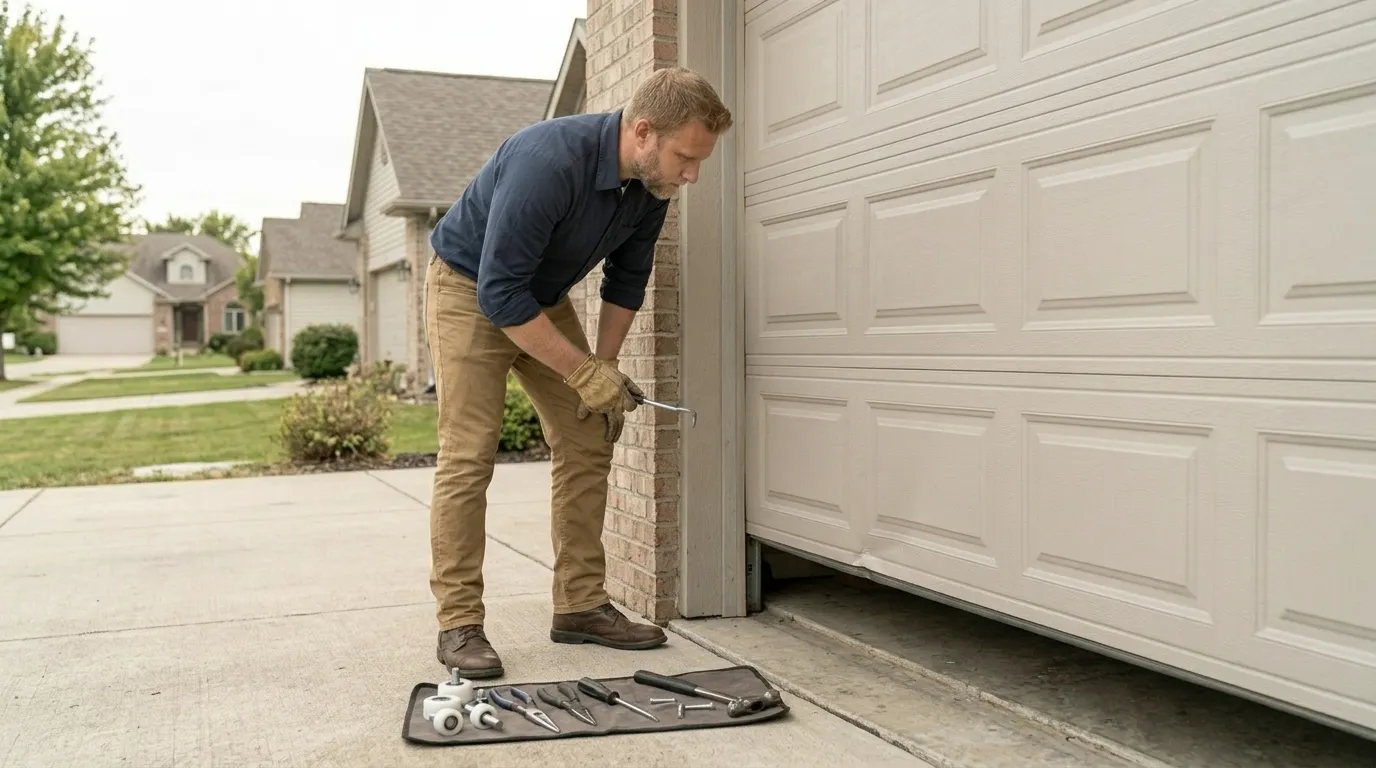
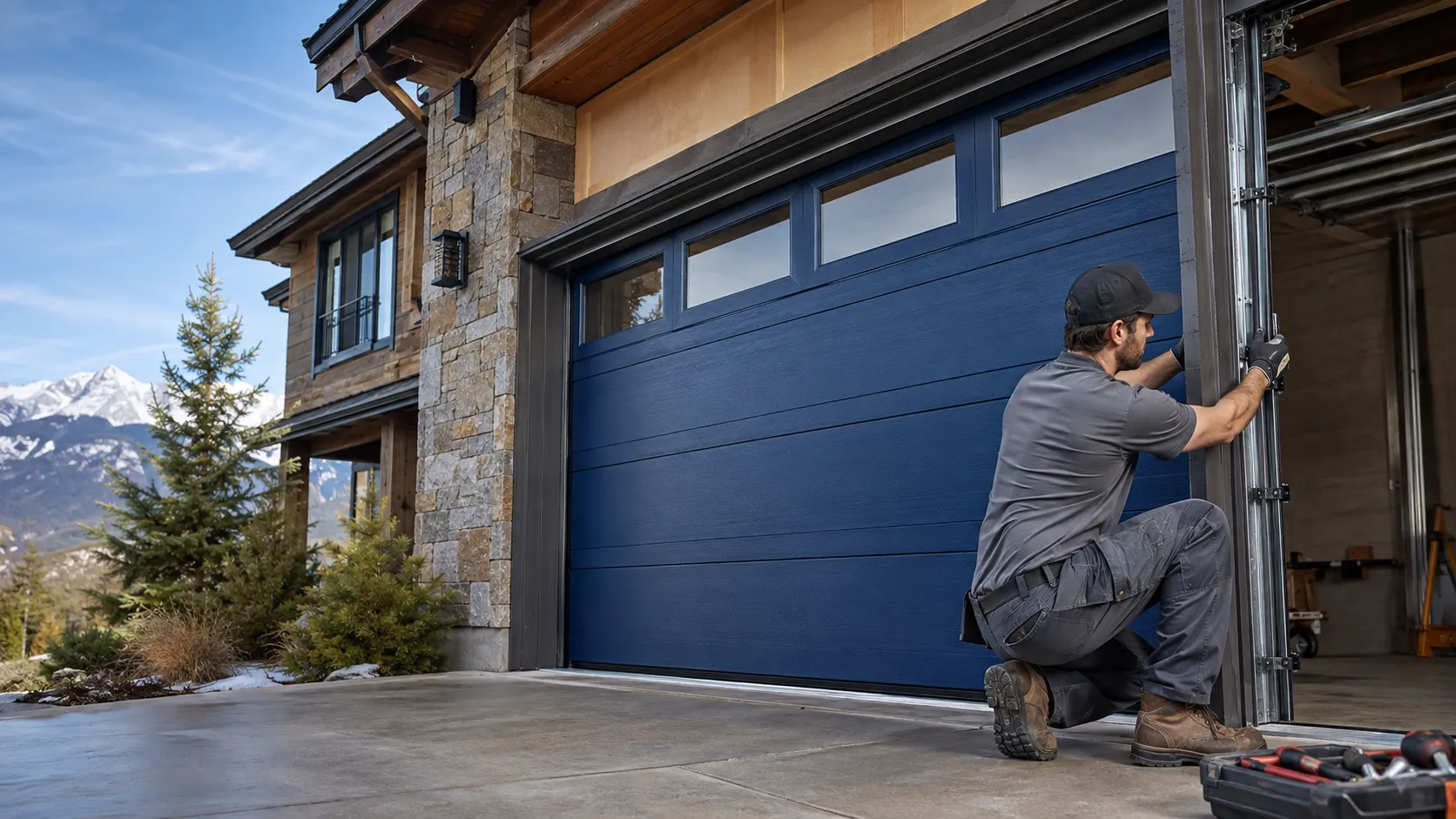
On a typical Auburn Hills call, the fix is usually opener-side: a control board, a drive gear, a sensor bracket, or a spring that was undersized for a heavier replacement panel at some point. Torsion spring swaps on a standard sectional door here run a straightforward hour or two once we've got the right spring on the truck - sizing it to the door's actual weight, not just its original spec sheet. Cable and roller jobs are quicker. Where it slows down is opener boards for specific models; if yours isn't a common stock part, we may need a day or two to get it in before we come back and finish the job. We travel to Auburn Hills from our base in Rochester Hills, about four miles away, so there's no local branch here - just the same truck and the same parts stock making the short drive over.