How It Shows Up
The drive from Rochester Hills to Auburn Hills is about 4 miles, which means a truck can be looking at your track within the same stretch of road most days - no ferry across town, no guessing at traffic patterns three suburbs over. That short haul matters because an off-track door is not a problem you want sitting for a full afternoon; a door hanging on one roller can drop the rest of the way off its track with the next open cycle.
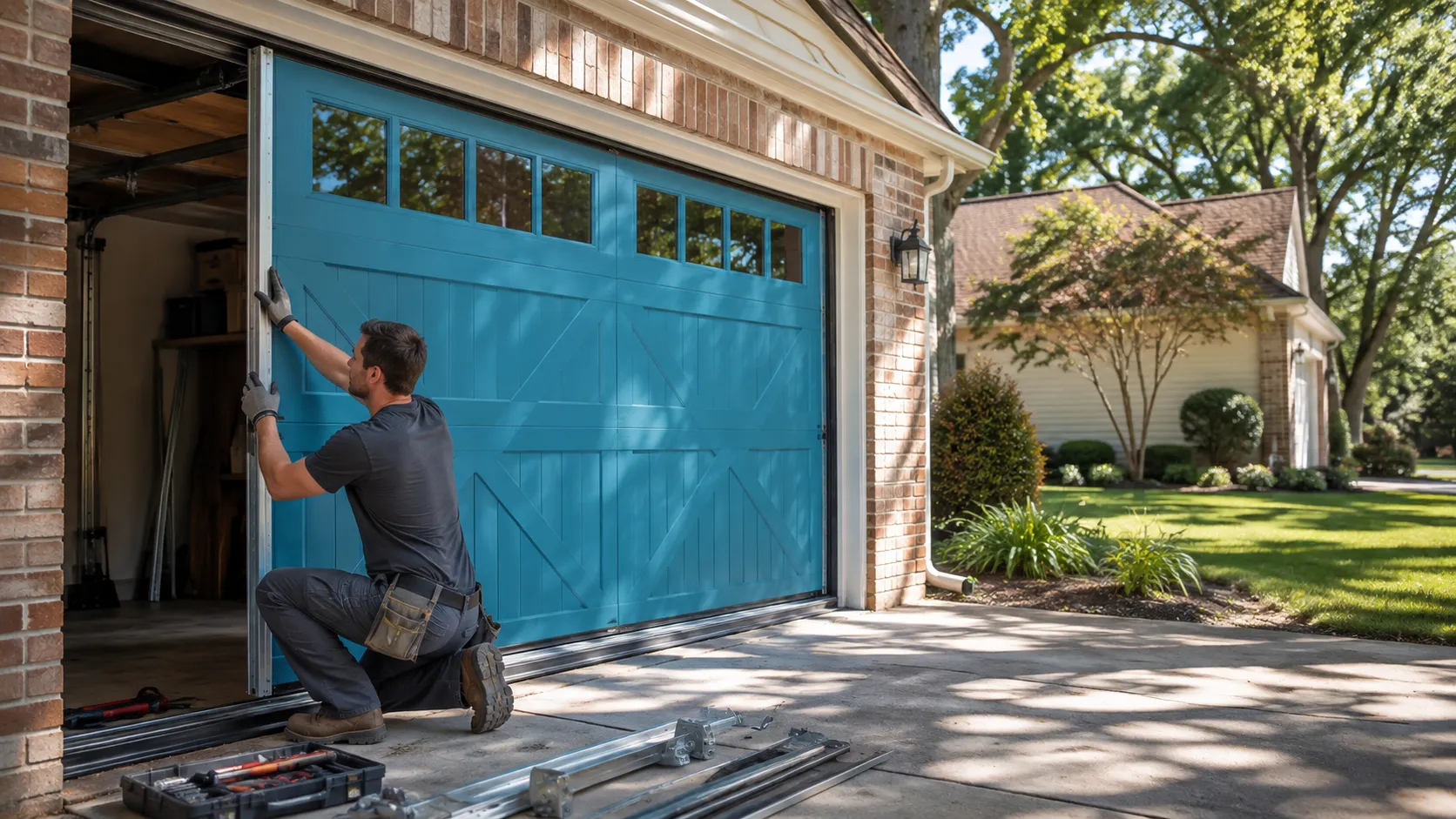
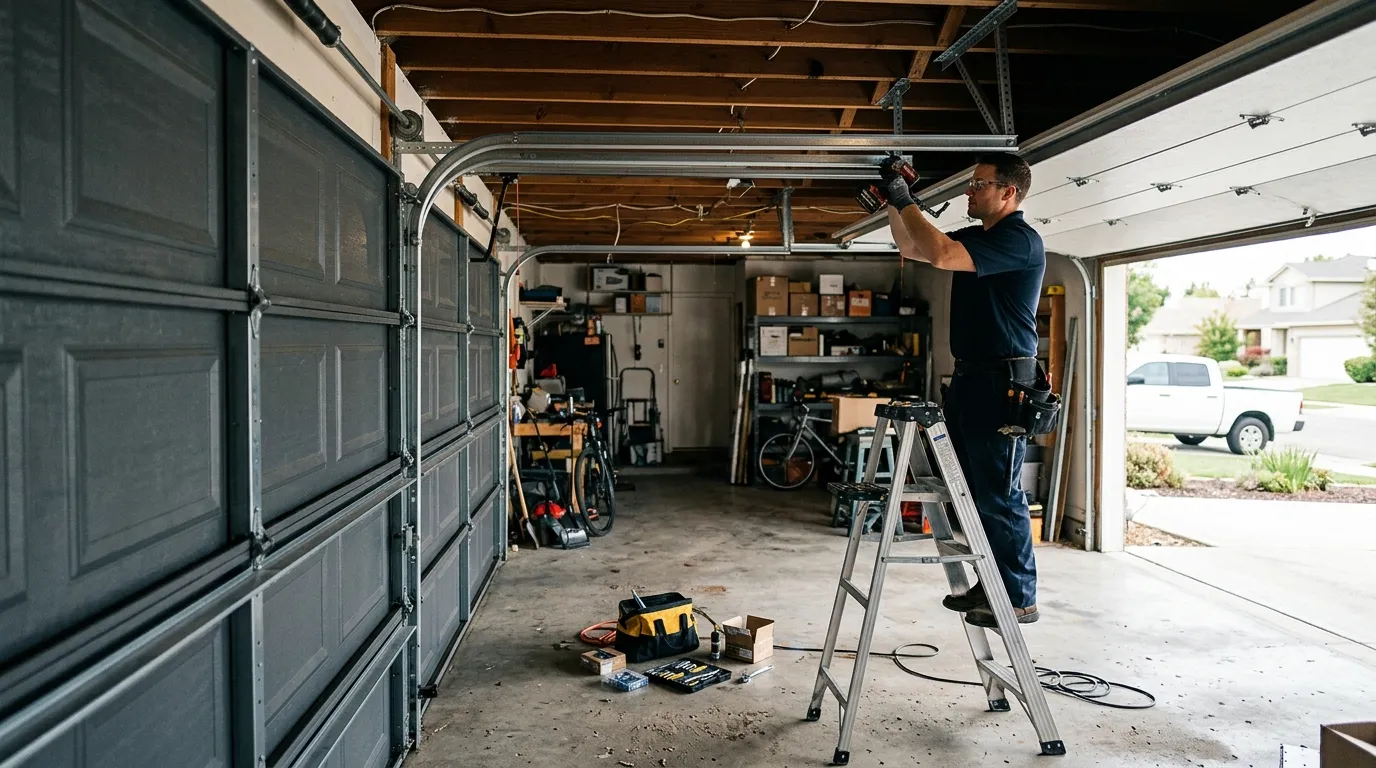
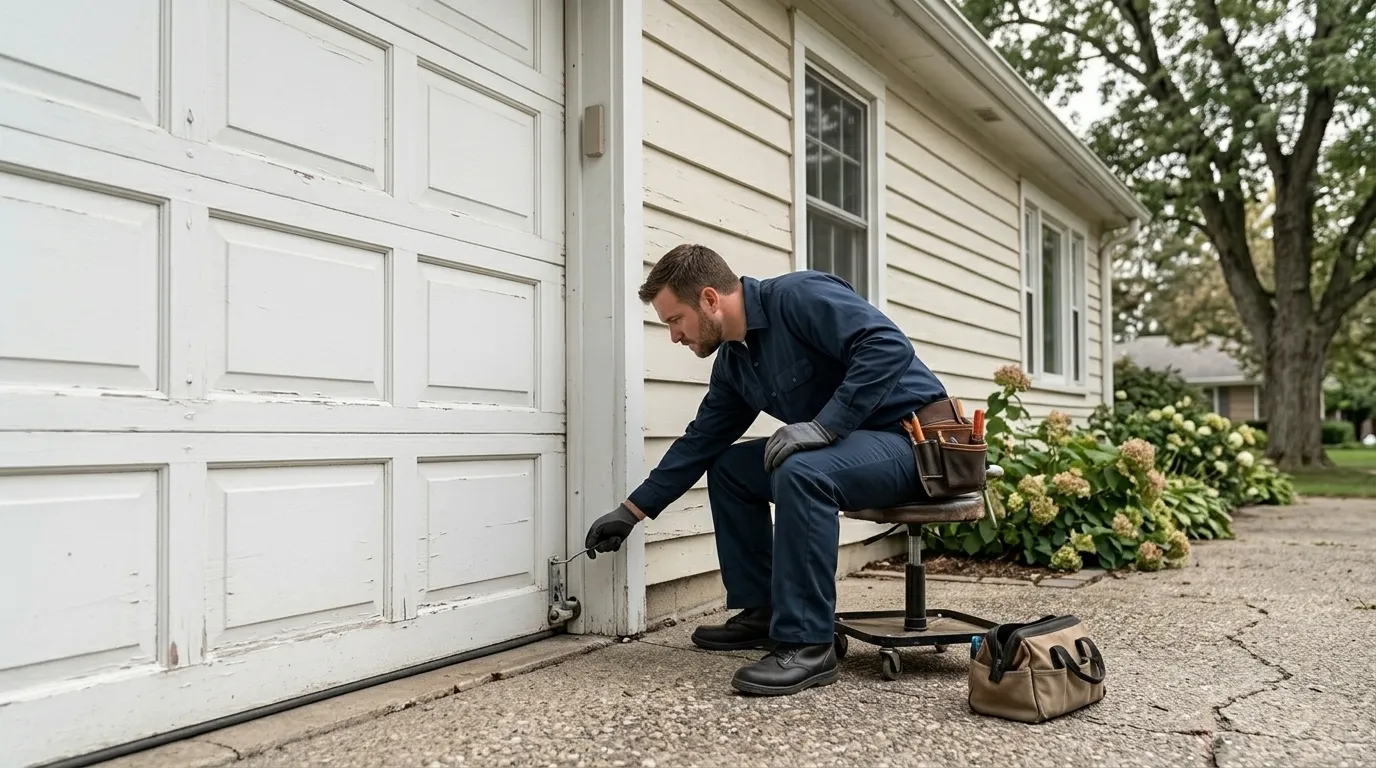
In Auburn Hills the typical house dates to around 1990, newer than a lot of what we see elsewhere in this part of Oakland County, where F1 shows homes going back as far as 1938. Newer builds here often came with lighter-gauge track and nylon rollers instead of the steel rollers and heavier track common on older stock. That lighter hardware is easier to bend - a car bumper tap, a basketball, even a gust catching the door mid-swing can pop a roller out of its track. You'll see the door hang crooked, catch partway up, or refuse to close square in the frame.
Where This Job Goes Sideways
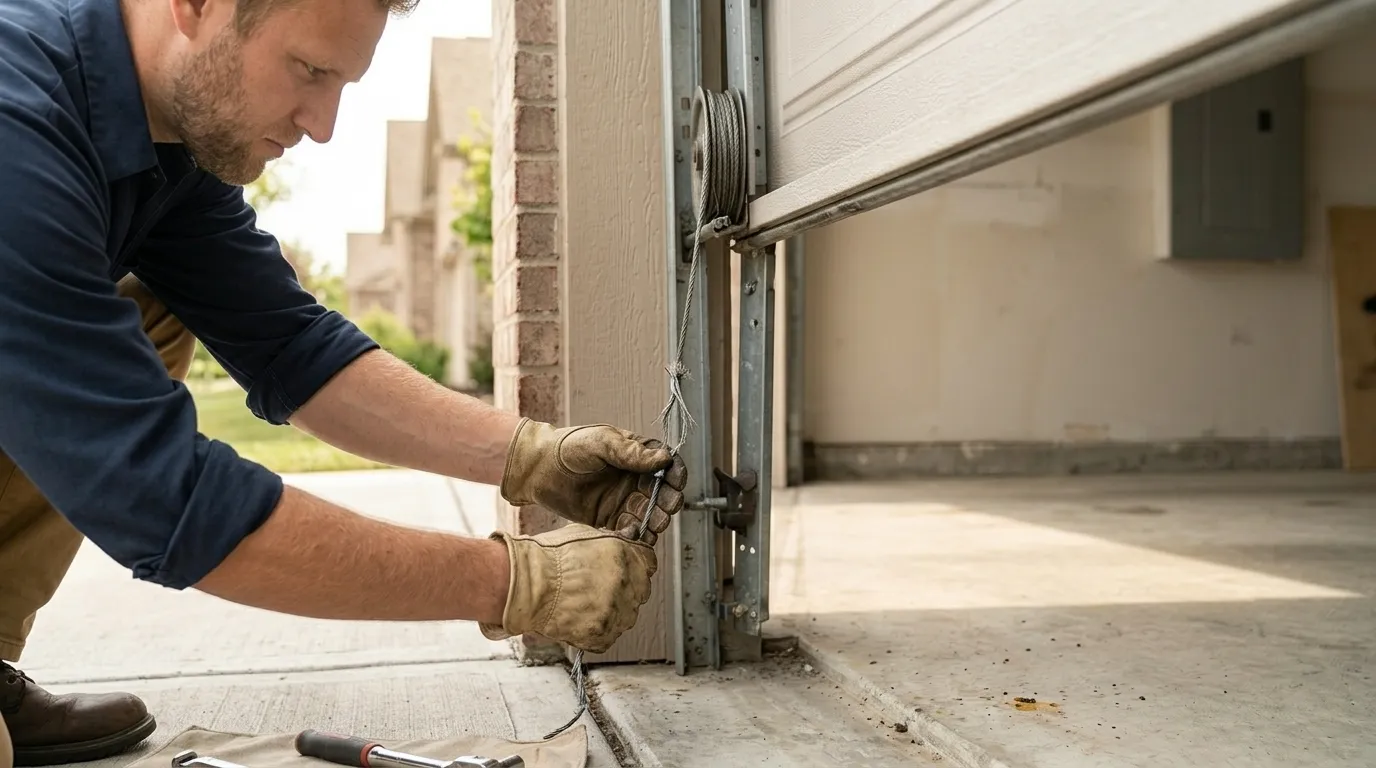
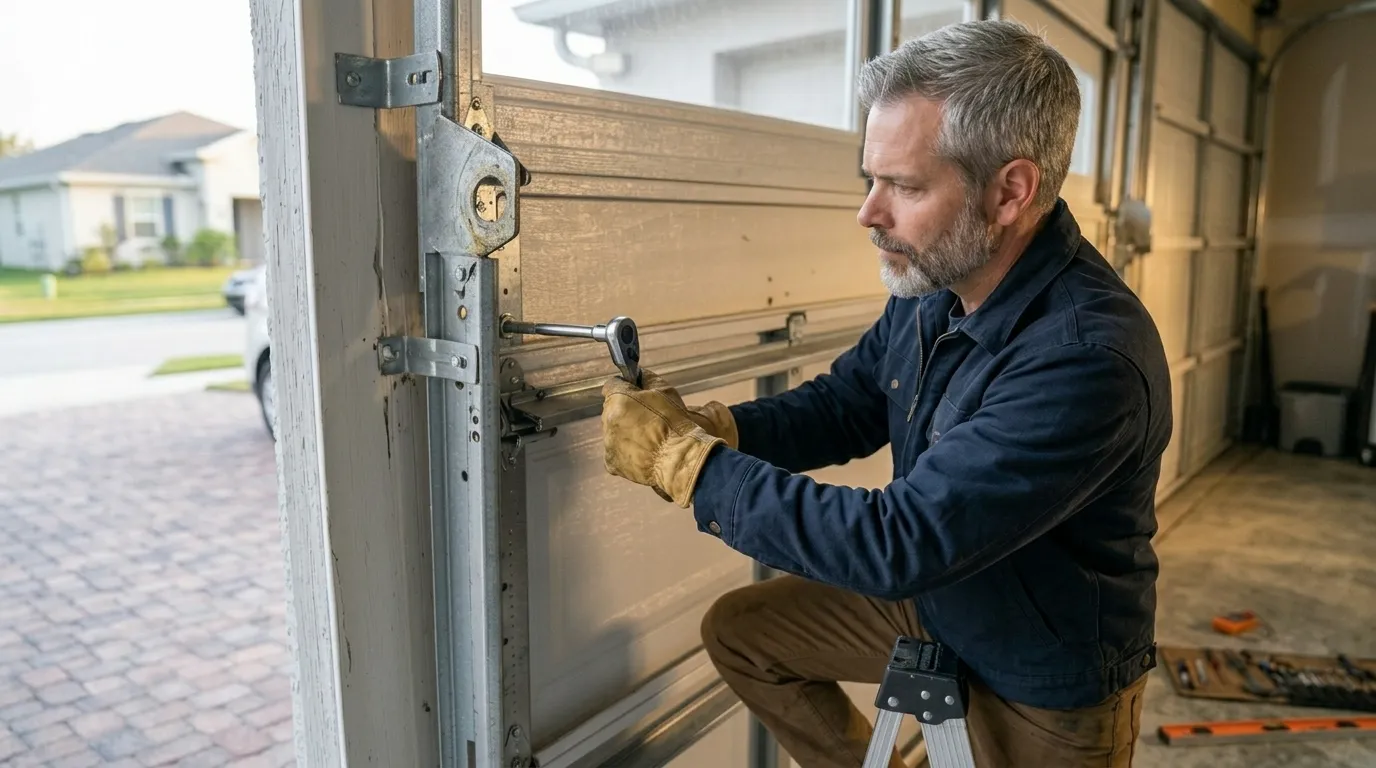
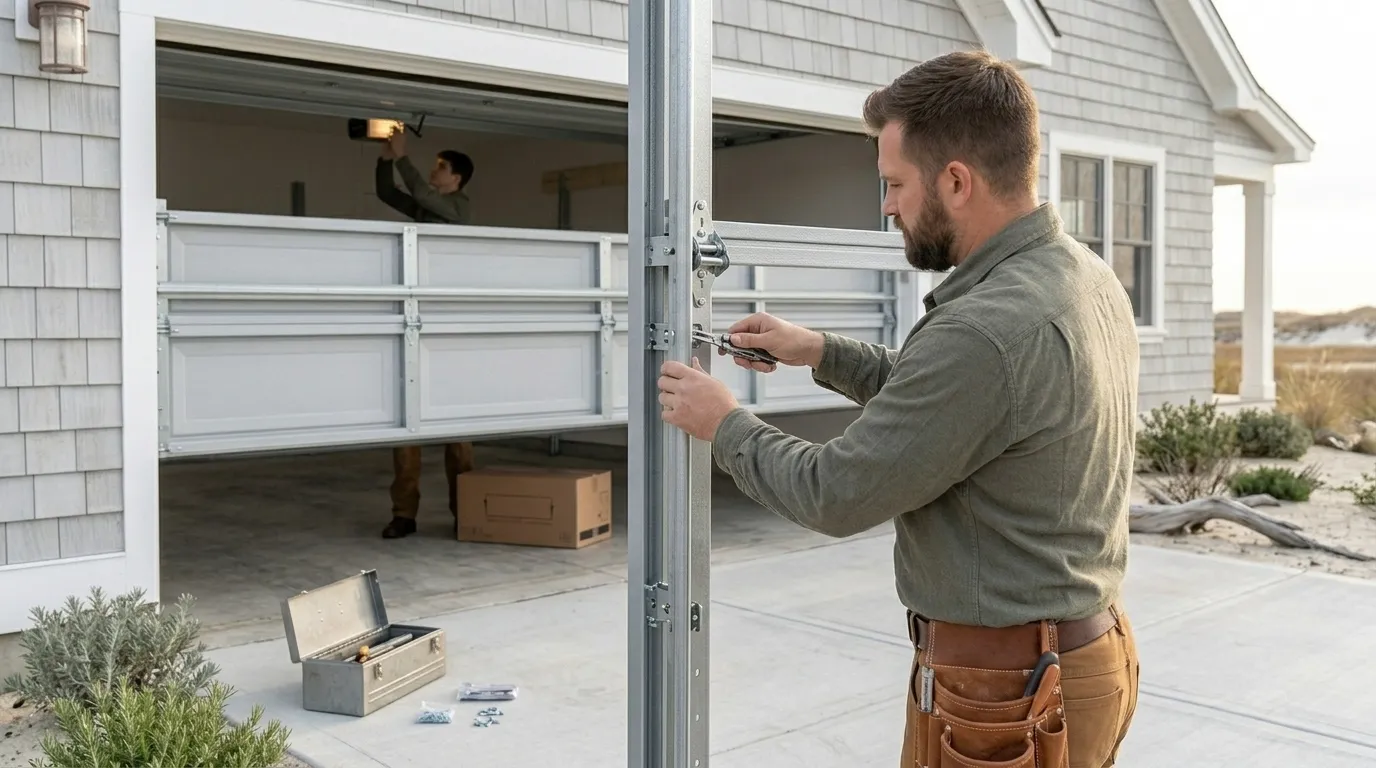
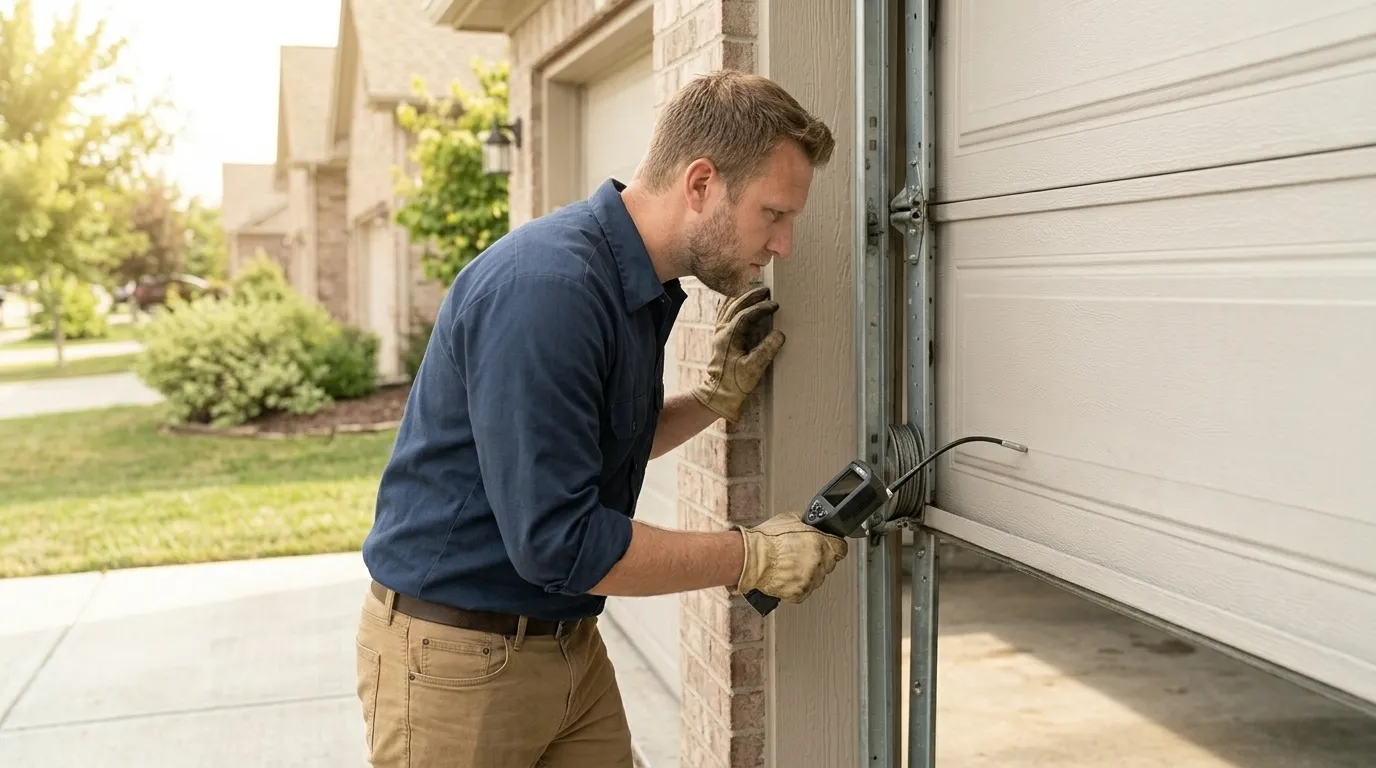
An off-track door on 1990s-era track usually starts as a bent rail, not a broken part. The roller itself is often fine; it's the track flange that's kinked outward, and once that's true the door won't ride straight no matter how many times you push the roller back in by hand. Keep running the opener against a bent track and you stress the cable drum, the hinges at the bend point, and eventually the opener's drive gear.
Cold makes it worse. F3 marks this whole region as a severe cold climate, and a garage that sits at or near outdoor temperature all winter stiffens the nylon rollers common in newer construction. A roller that's slightly out of round in July can crack under the same load in January, and a door that was merely off-track becomes a door that's off-track with a split roller and a bent hinge. We see more of these calls in the first hard cold snap than any other week of the year.
Why This Fails Locally
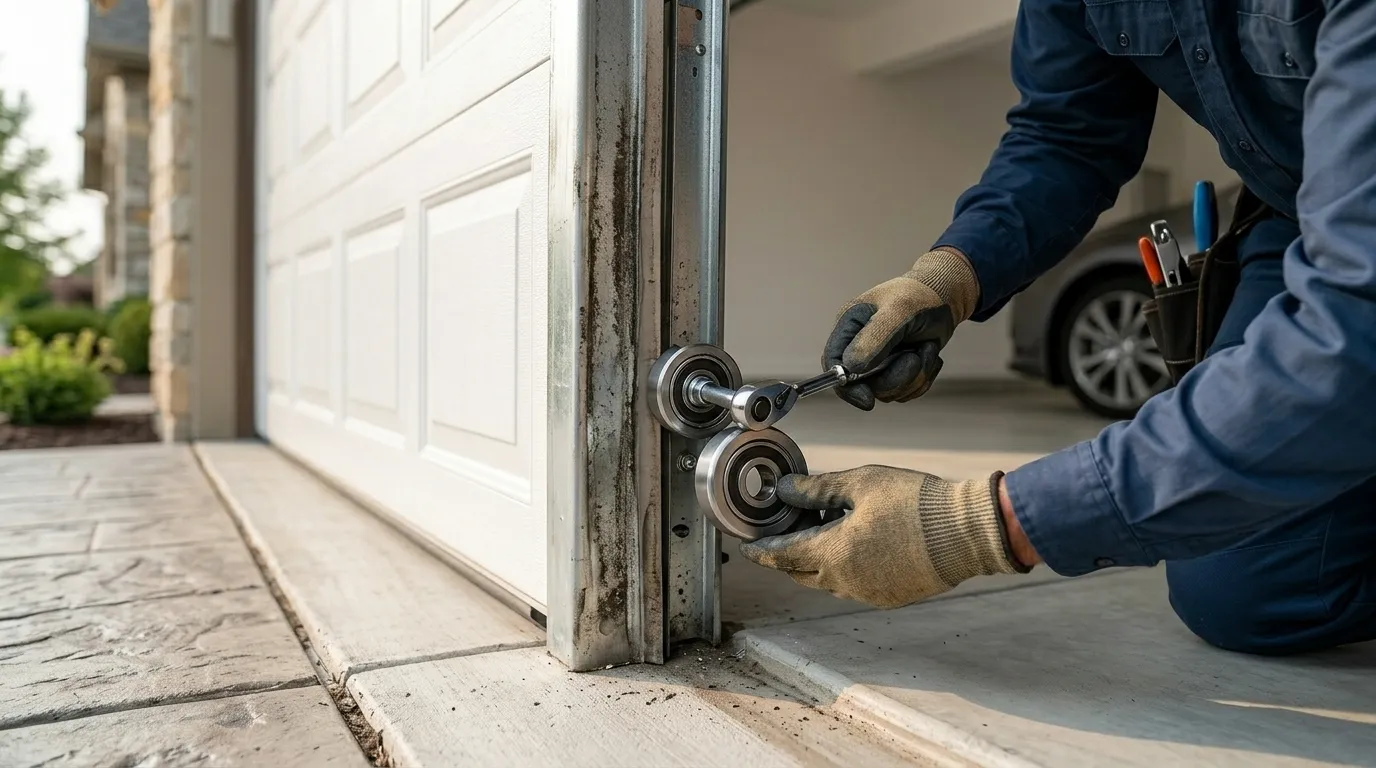
This isn't a generic wear-and-tear story. Auburn Hills homes running roughly 1990-vintage track and rollers are past the age where the original nylon rollers hold their shape, but they're not old enough that most owners have replaced anything yet - so a lot of doors in town are due for a roller swap whether they've gone off-track yet or not. Compare that to the wider Rochester Hills service area, where F1 and F2 put most housing in the 1960s-70s band with heavier steel-roller hardware from that era; the failure mode there is usually a worn steel roller wearing a groove in the track, not a bent flange.
Income here runs $78,727 against $84,862 across the broader area covered from Rochester Hills, and the household count in Auburn Hills, at 11,223, is a small slice of the 233,489 households and 122,221 owner-occupied houses across the full service territory. None of that changes how we fix a track - it just means the fix here tends toward roller and track-alignment work on newer hardware, not full spring and hinge rebuilds on forty-year-old steel.
What the Repair Takes
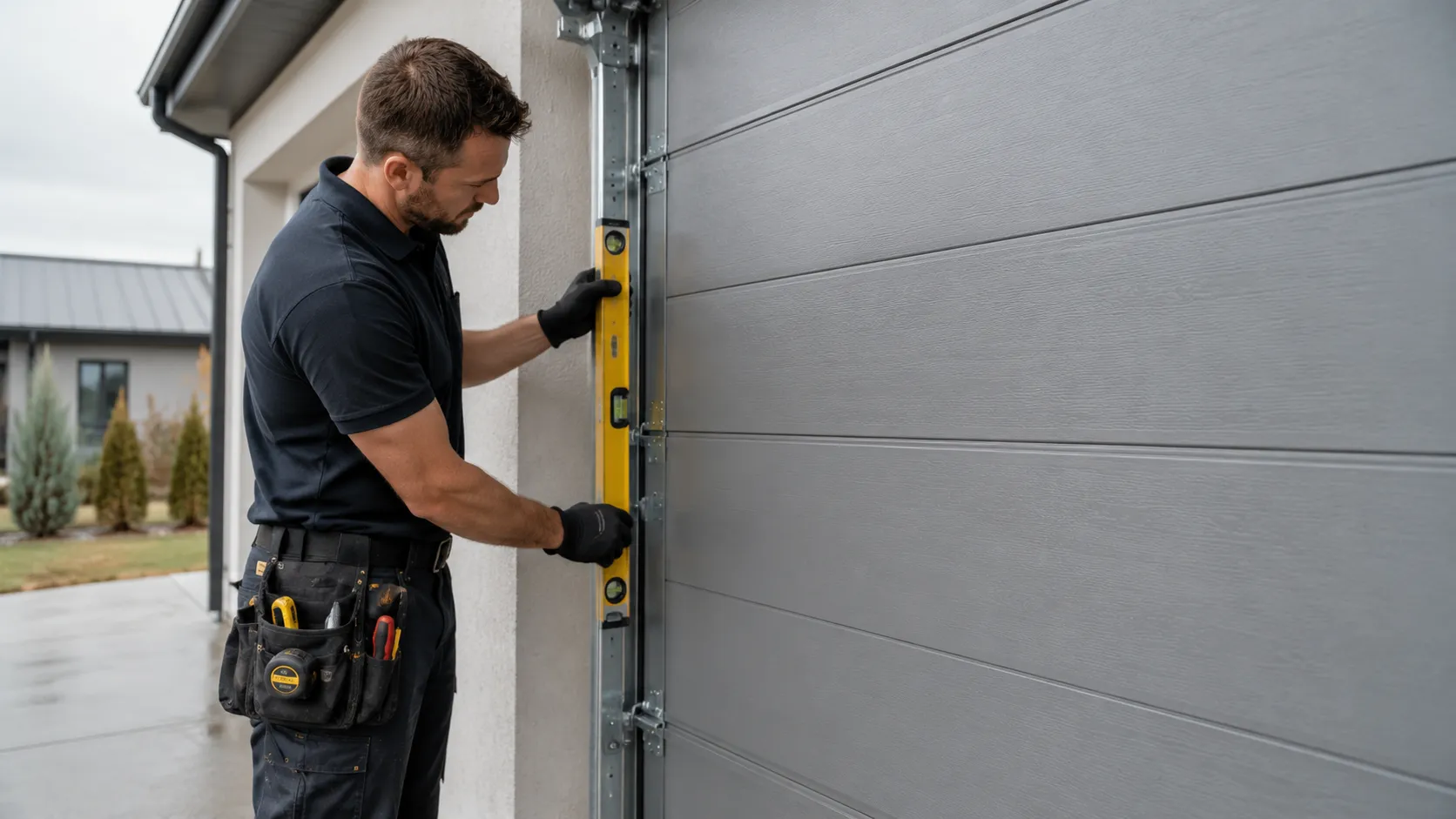
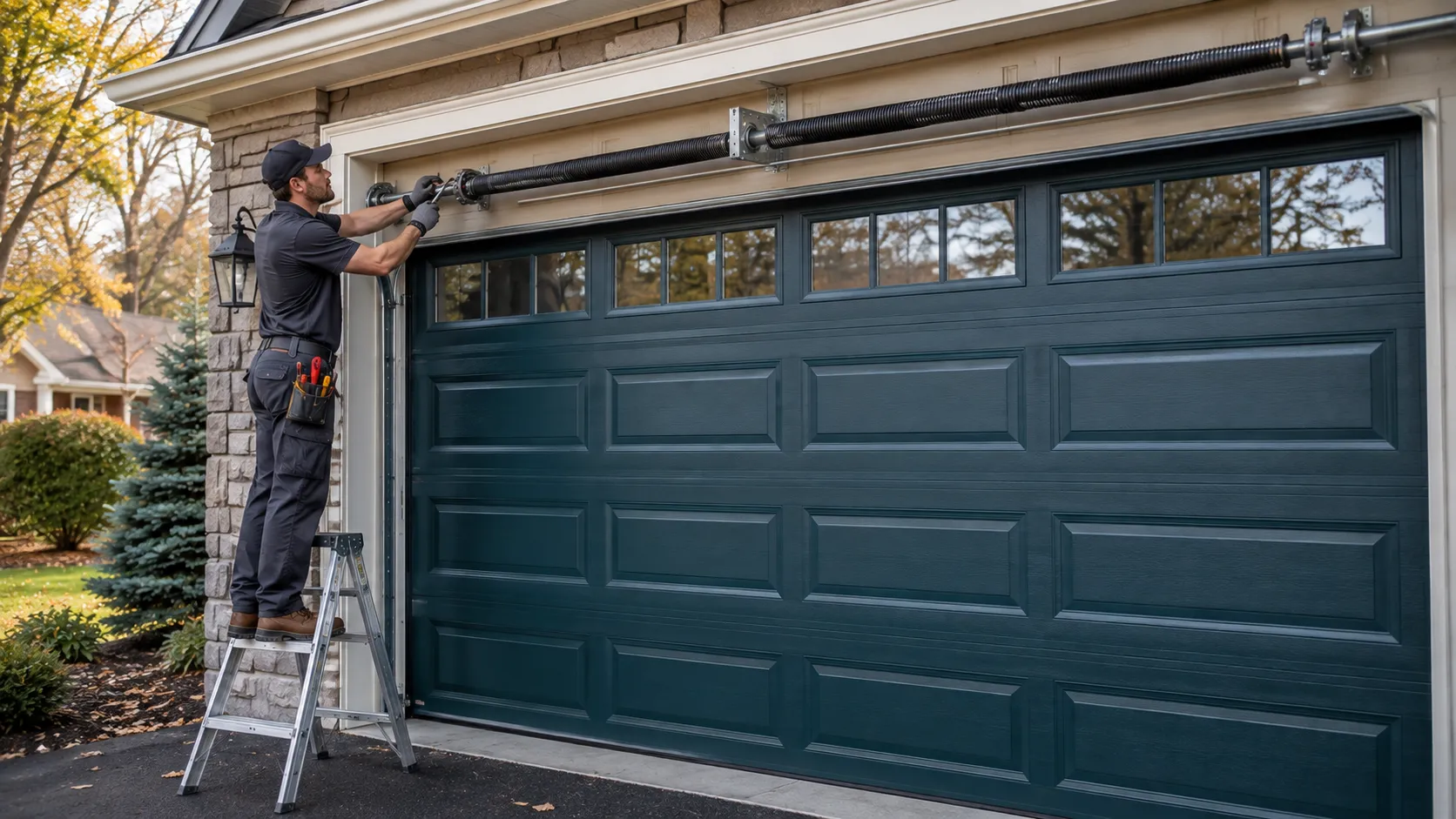
Most off-track calls on this era of door are a track realignment plus a roller or two, sometimes a hinge if the bend pulled on the panel seam. That's usually a same-visit fix once the truck is on-site - nothing here requires a special-order part on the newer track sizing common in Auburn Hills builds.
Where it takes longer is if the opener's travel limits got thrown off by the door riding crooked before the call came in, or if cold cracked a roller and we need a matching size on the truck. We carry common roller sizes, but an unusual track profile can mean a second trip. We'll tell you on-site if that's the case rather than guess and have you wait on a part that isn't coming.