How It Shows Up
Auburn Hills is a smaller town by household count - about 11,223 of them - which keeps the fault pattern narrower than you'd see in a bigger suburb. You're not dealing with forty years of mixed hardware sitting side by side. Most of what's out there is either the opener that went in when the house was built, or a swap from the 2000s or 2010s.
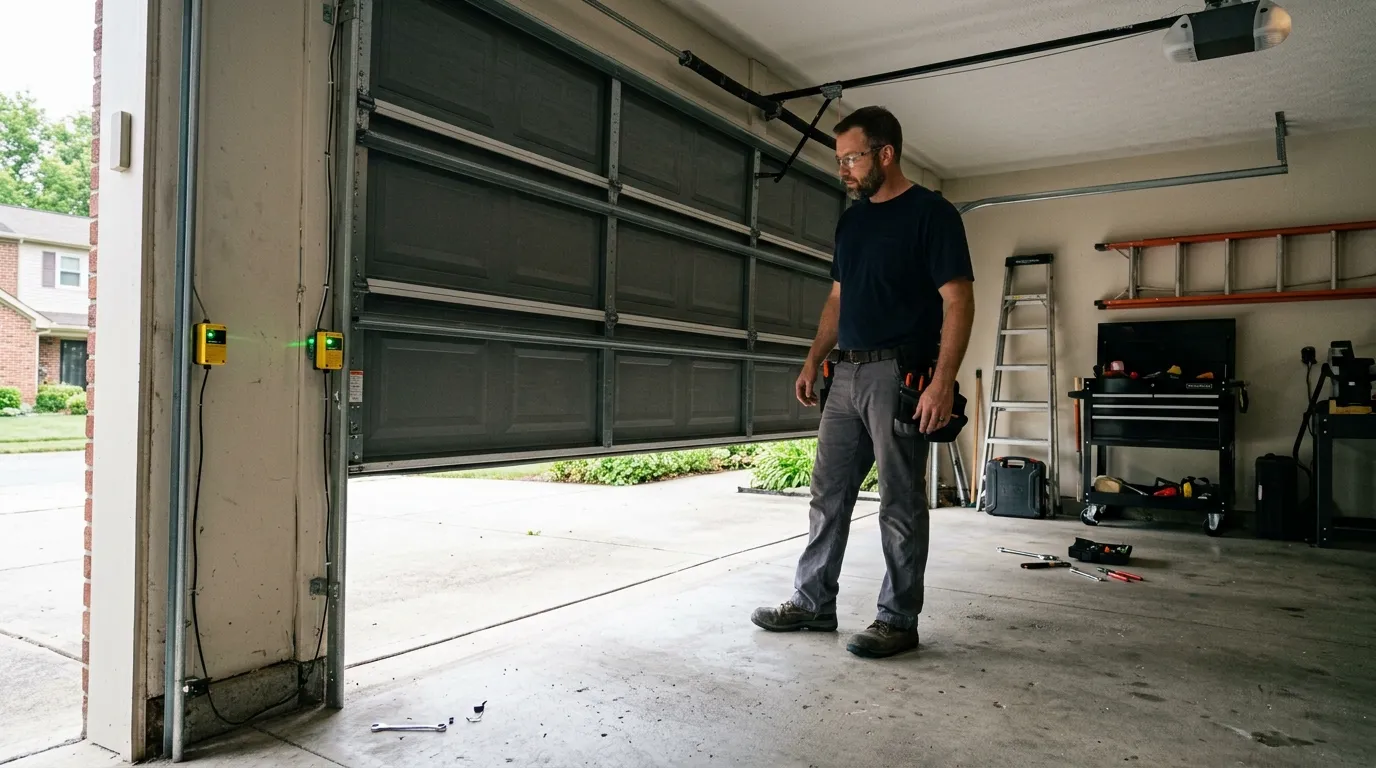
The housing stock here centers on 1990, noticeably newer than the 1960 median across the wider Rochester Hills service area. That one number changes the job. A house built in 1990 usually already has a garage circuit run for an opener, not a retrofit outlet someone added later. It also means the original units were early chain or belt-drive models with photo-eye safety sensors - the reversal law that came in around that era. By now those motors are past their working life, gears worn smooth, and the logic boards don't talk to a modern wall control or a phone app. The complaint is rarely "it won't open." It's "it opens on its own" or "it stopped closing the last two inches," both classic end-of-life symptoms on a motor from that generation.
Where This Job Goes Sideways
The mistake we see most in a town like this is matching the new opener to the old bracket instead of the actual door. A house built around 1990 in this area often still has its original panel - heavier steel than what goes in today - and a 1/3-horsepower unit sized for a lighter door will grind through the lift and burn out early. The horsepower has to match the door in front of it, not whatever was there before.
Wiring is the other trap. Houses from this build era have a garage circuit, but it's frequently shared with something else - a freezer, a sump pump - and it wasn't sized with a smart opener's standby draw in mind. An installer who doesn't check the circuit before mounting the unit is setting up a nuisance trip six months out, not a working opener.
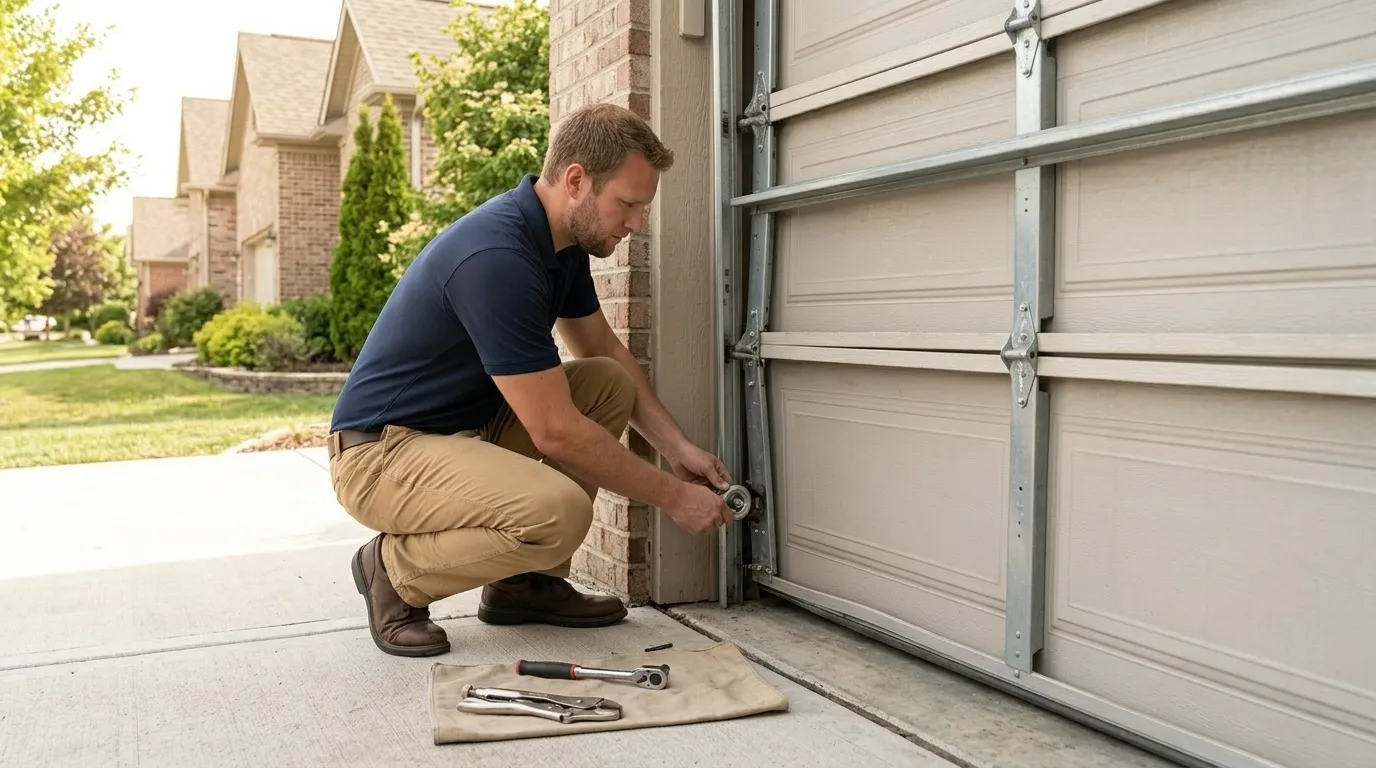
The last one is bracket reuse. Header brackets rated for a 1990-era operator aren't always rated for the heavier motor housing on current models, and reusing one to save time is how a header board cracks a year later under vibration.
Why This Fails Locally
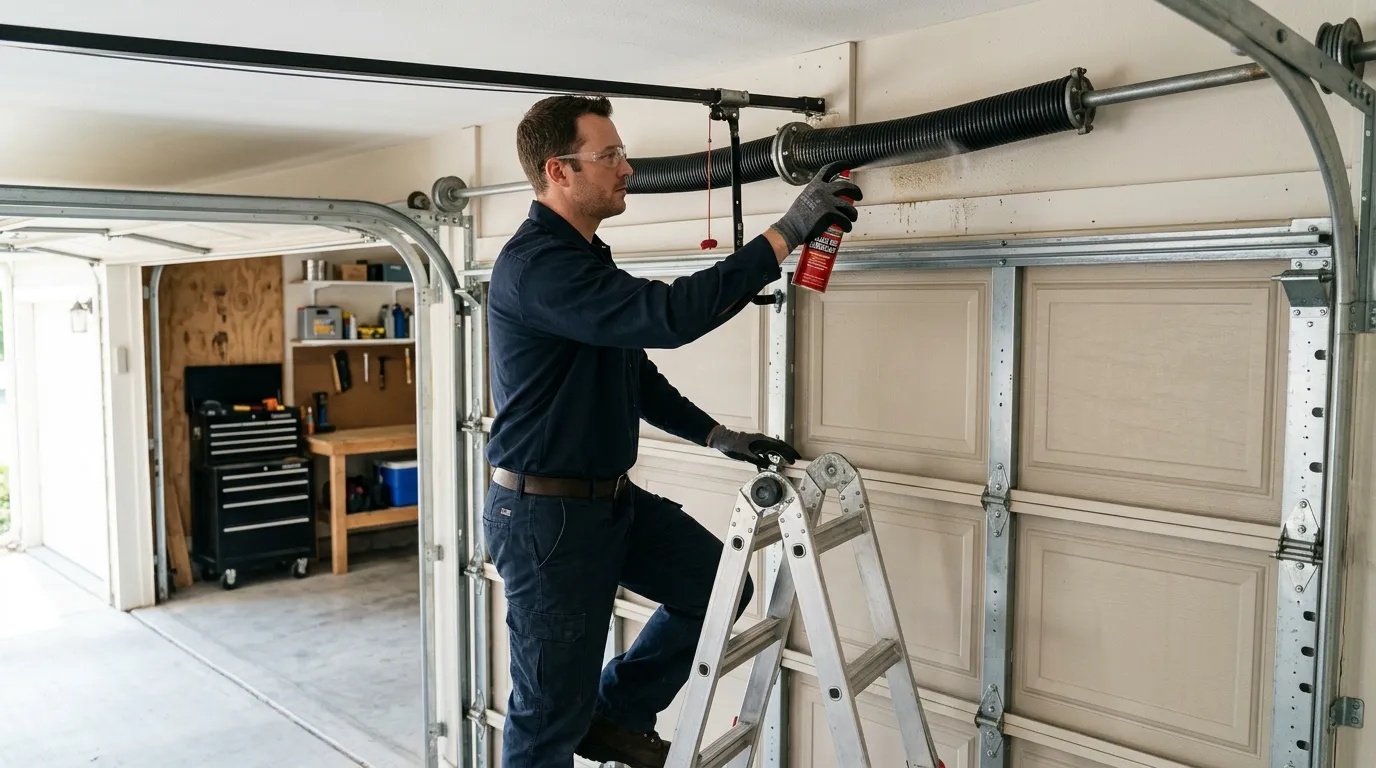
This area sits in a cold-climate band with real winter severity, and that matters for opener choice more than people expect. Grease that's fine in a mild climate stiffens up here, and a motor already working against a heavier original panel has to push through that stiffness every cold morning. That's a big part of why gear sets on older units in this area fail sooner than the same part would in a milder region.
Auburn Hills's median household income runs around $78,727, a bit under the roughly $84,862 median across the wider service area. That's not a comment on any one household - it's context for why we don't push the top-tier opener line as a default here the way we might elsewhere. A mid-tier belt-drive with a solid reversal system and a battery backup covers what this climate and this housing stock actually need, without upselling features nobody asked for.
What the Repair Takes
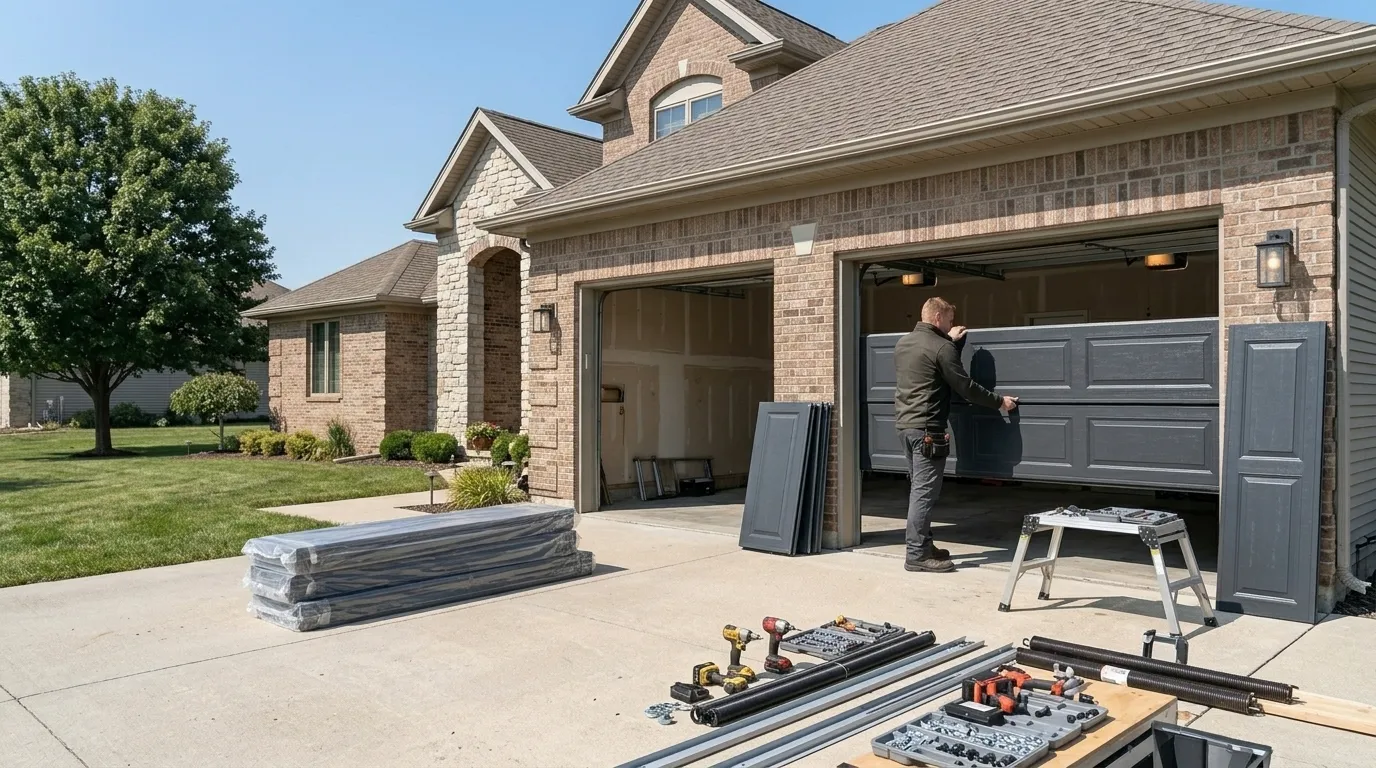
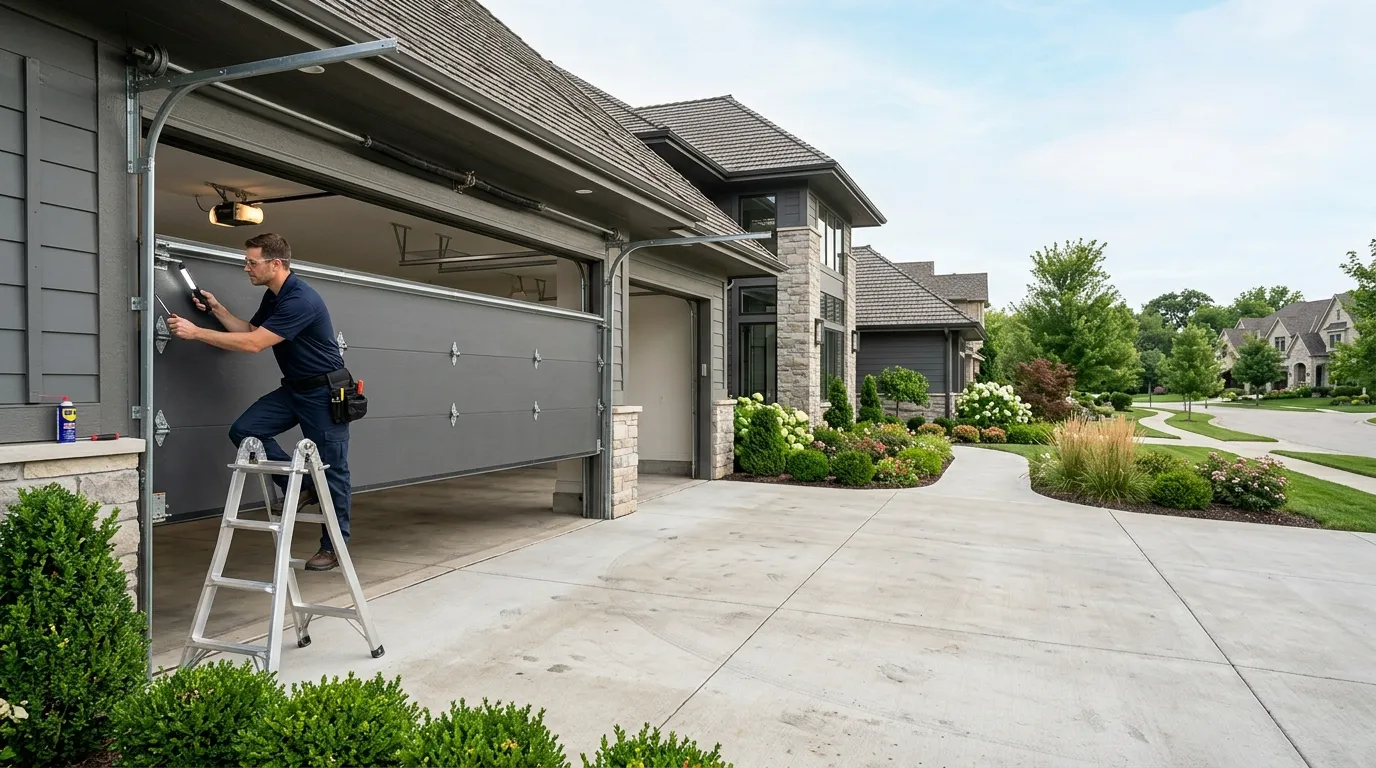
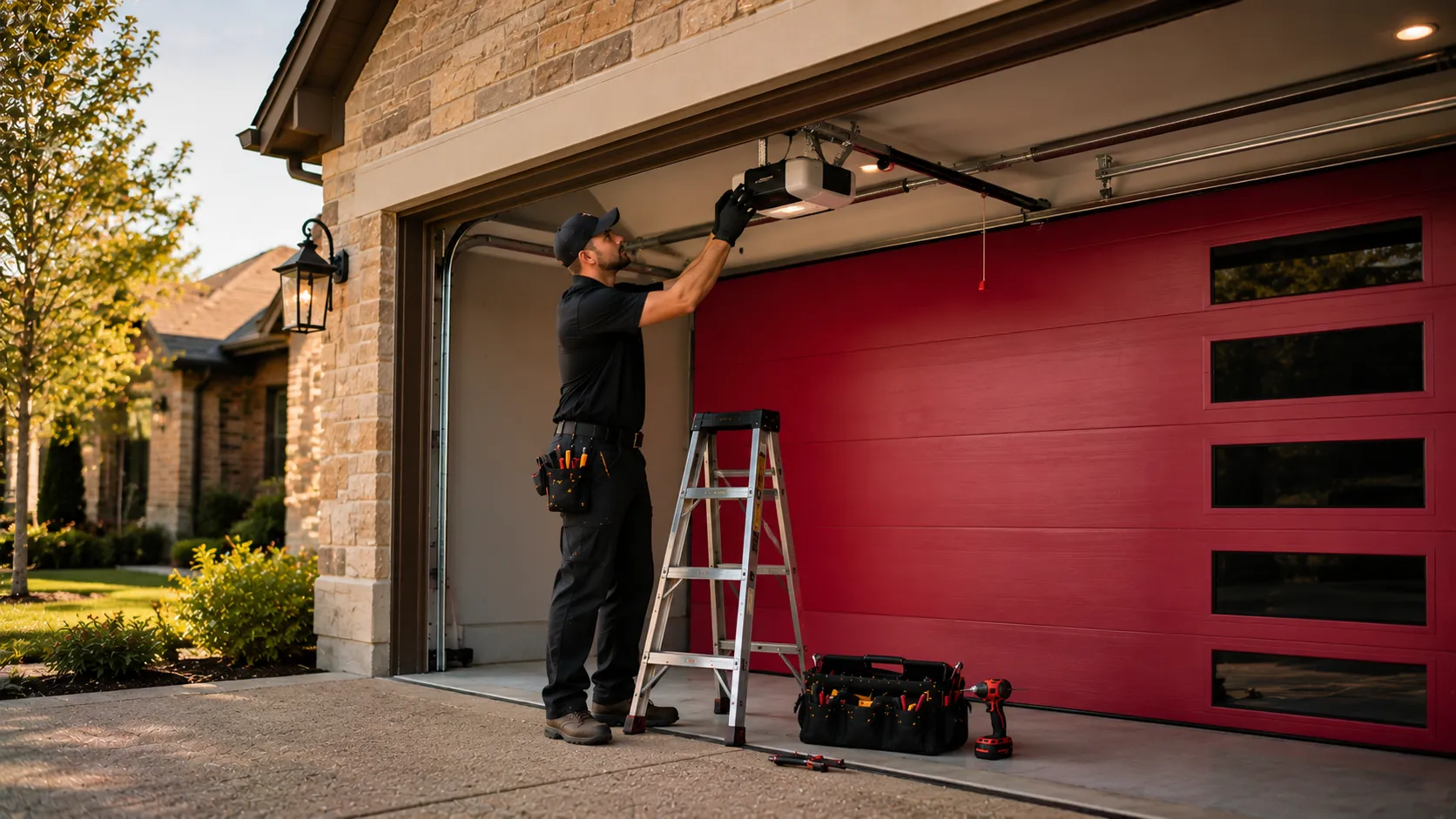
For a straight opener swap on a house from this build era, the job is: pull the old motor and rail, check the header board and brackets for the new unit's weight rating, confirm the circuit can carry a standby-power opener without tripping, then mount, wire, and set the travel limits and force settings to match the actual door - not a factory default.
We travel out from Rochester Hills, about 4 miles, so this is a scheduled visit, not a same-hour call. One honest limitation: if your header board is undersized or cracked, that's a separate repair before the opener goes in, and we won't mount a new motor on a board that can't take it - doing that just moves the failure point up six inches and calls it fixed. Battery-backup units are worth the extra cost here given the winter power blips this climate produces; we'll walk you through whether your panel and track can take one before we quote it.