Checking It Yourself
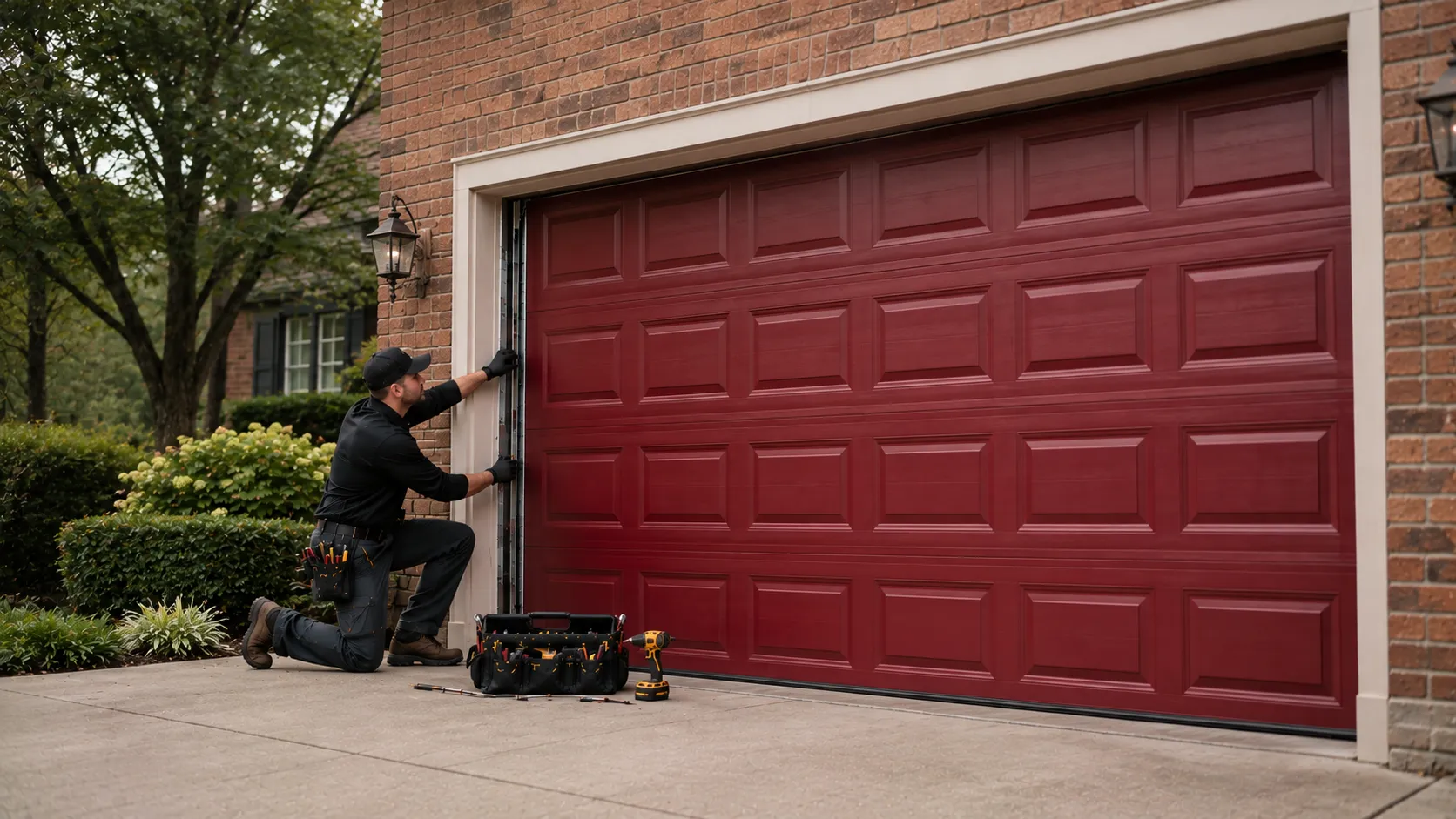
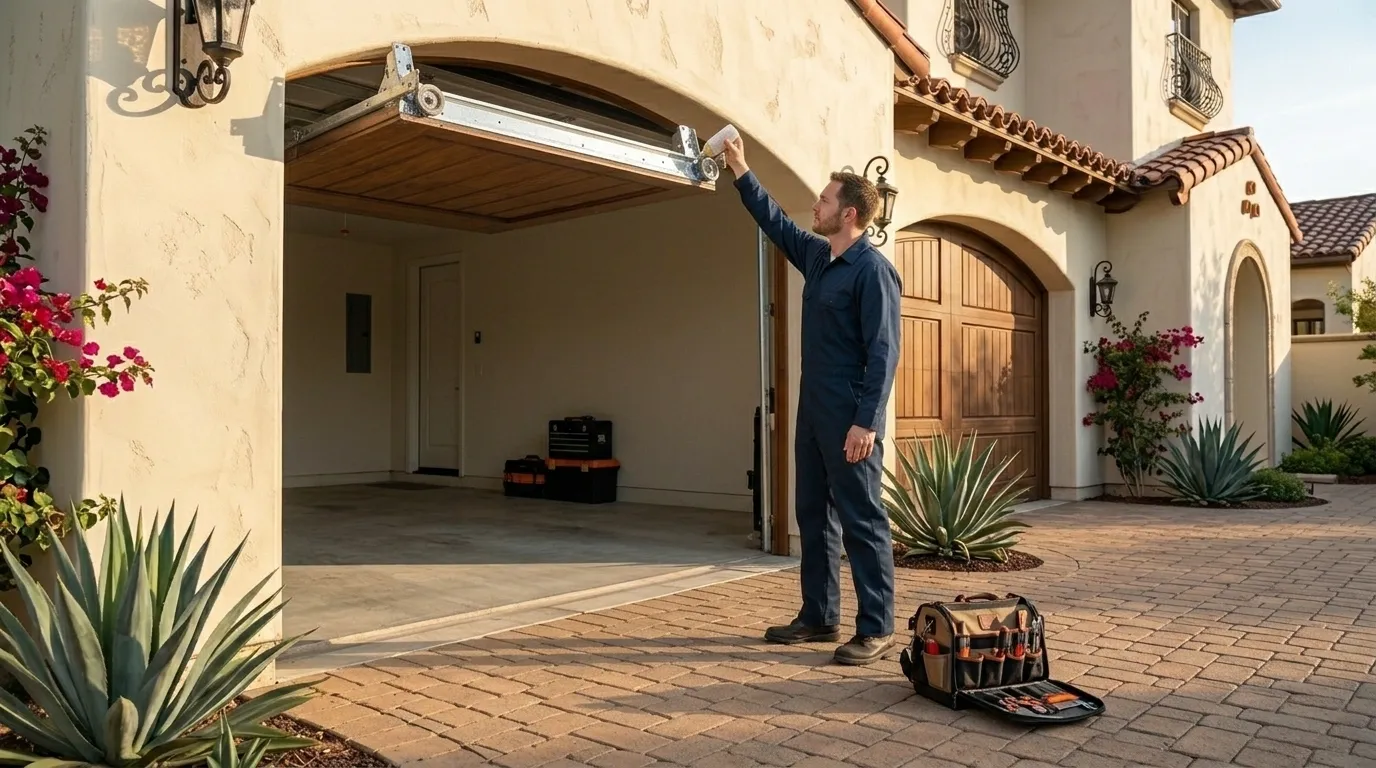
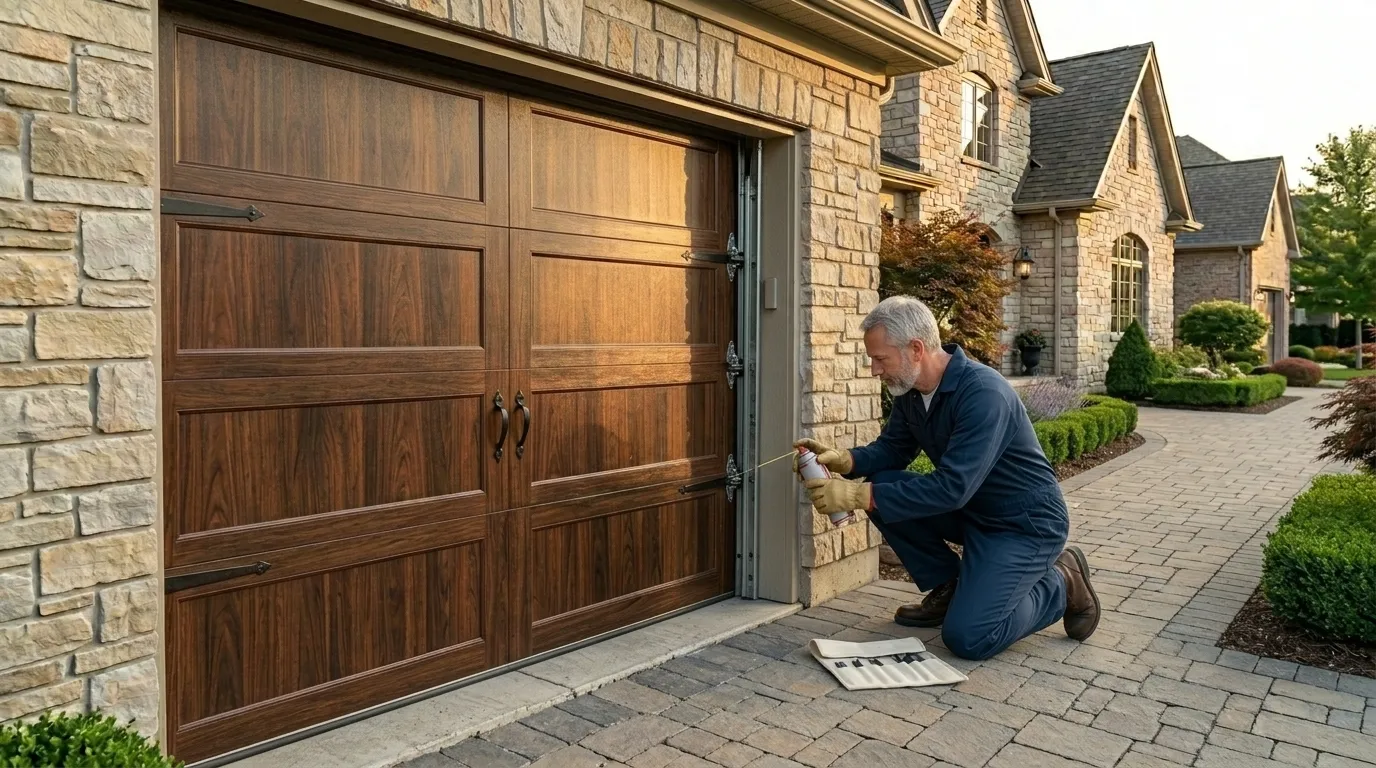
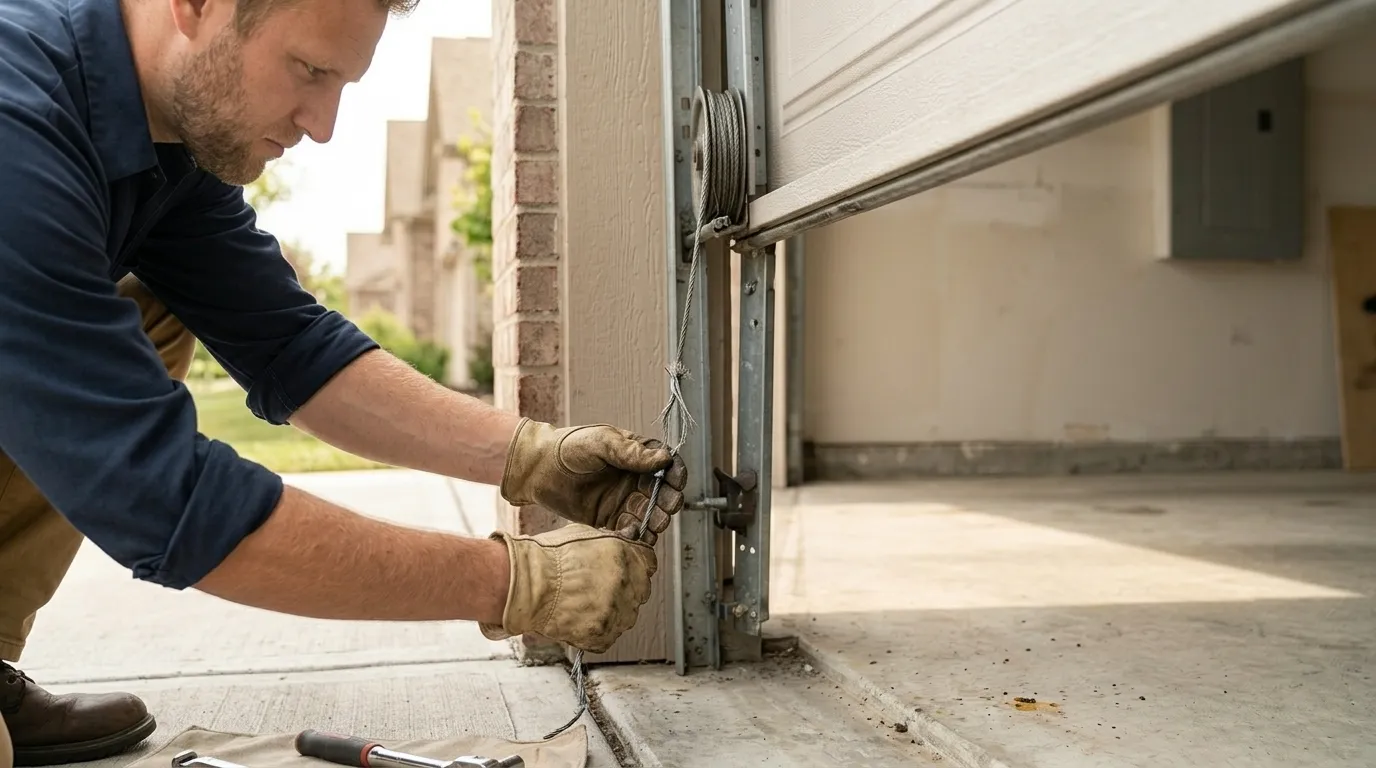
Before you call anyone, stand next to the door while someone runs it and just listen. A dry squeal on the rollers usually means they need lube, not replacement - cheap fix, five minutes. A rhythmic thunk once per cycle often means a roller has worn flat on one side, common on doors that have logged decades of cycles, which describes a lot of what's out there since this area's housing runs 1938 to 2002 with a lot sitting around 1960. A loud bang followed by the door refusing to move is almost always a broken torsion spring - don't keep hitting the button, you'll strip the opener trying to force a door that can't lift itself. Grinding from the track side, especially near the top corners, points to a bent track or a bracket working loose from the header. Check that the tracks are still bolted tight to the wall studs; on older builds those brackets sometimes only have two fasteners where current work uses four. If the noise changes with temperature - quiet in summer, loud on cold mornings - that's a hardware and lubrication issue, not something you can wait out. One thing you can't check yourself: torsion spring tension. Leave that part alone.
What You Pay
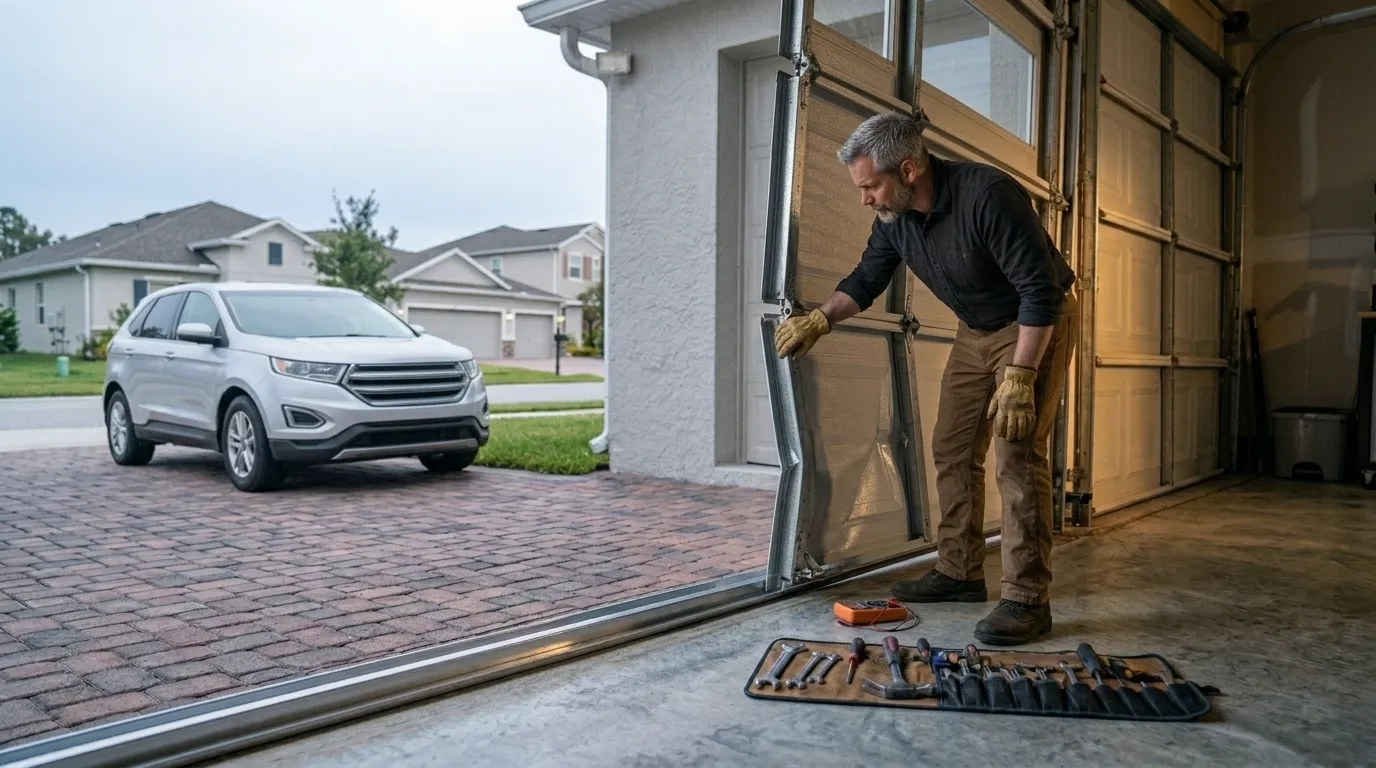
We're not going to put a number here that doesn't hold up once we're standing in your driveway looking at the actual door. What drives the range is mostly what's original versus what's been replaced - a door that still has its factory hardware from a 1960s or 70s build often needs a full hardware swap rather than a single part, because half the pieces aren't sold anymore in that size or gauge. A door with a newer opener but an old torsion spring is usually the cheapest fix: spring and cables, nothing else disturbed. Median household income across this service area sits around $84,862, and most of the repair-versus-replace calls we get come down to how much original hardware is left versus how much has already been patched over the years. If a door has had three different repairs stacked on top of each other, replacement usually costs less over time than a fourth patch. We'll tell you straight if that's where you are instead of quoting another repair.
What Local Conditions Do
This area sits in a COLD severe climate band, and steel doors and springs both respond to that. Torsion springs lose a measurable amount of lifting force in hard cold - steel doesn't flex the same at 10 degrees as it does at 70, so a spring that was already near the end of its cycle count is more likely to snap on a January morning than in July. Panel seams do the same thing: a door that closes flush in summer can bind slightly in a track that's contracted with the cold, which is where you get that scraping noise on the last foot of travel. Ice is the other piece - a thin layer at the base of the track catches the bottom roller and forces it sideways instead of straight down, which over a season wears the roller unevenly. None of this is unique to any one house; it's what a severe cold climate does to steel hardware over the run of a winter, and it's why doors here that get serviced once a year hold up longer than ones that don't get looked at until something breaks.