Checking It Yourself
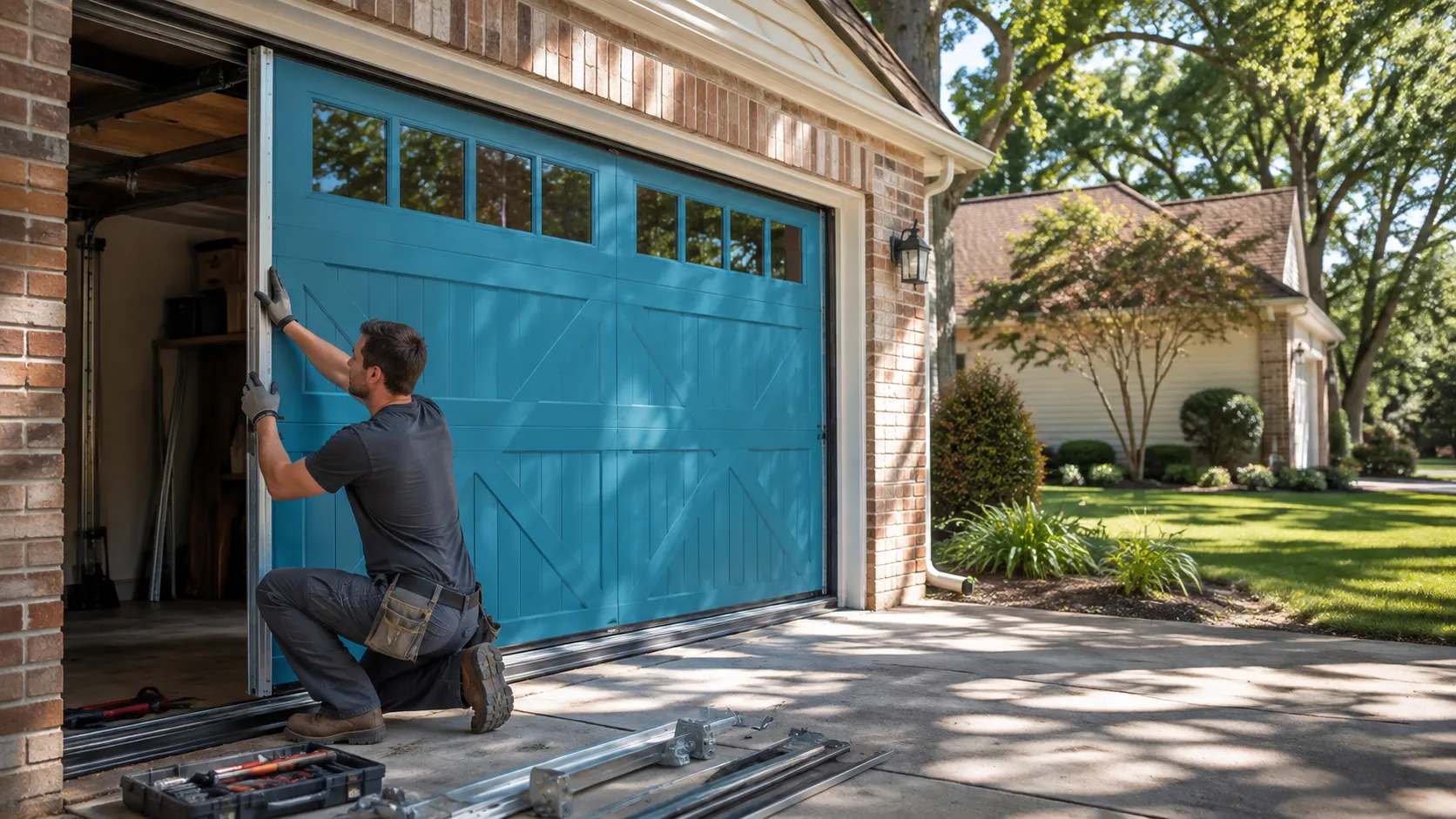
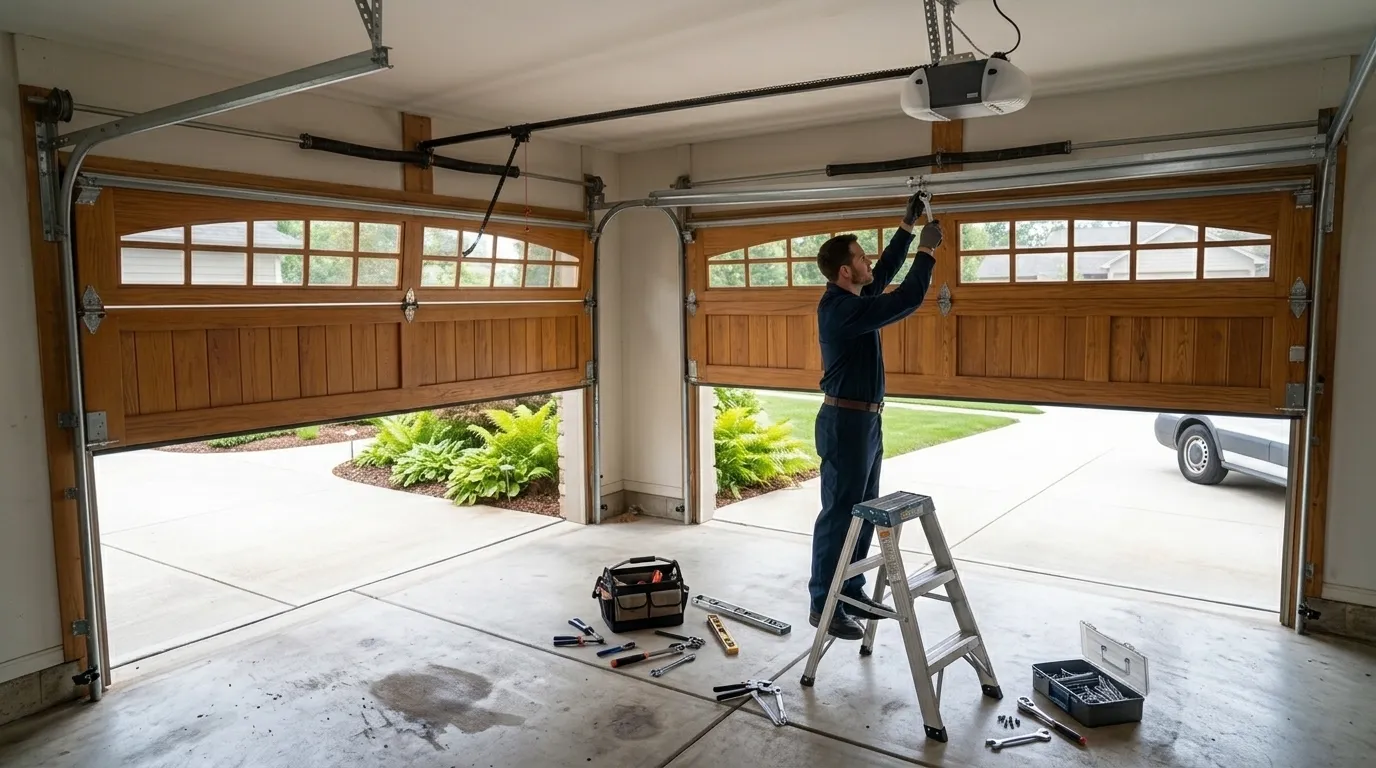
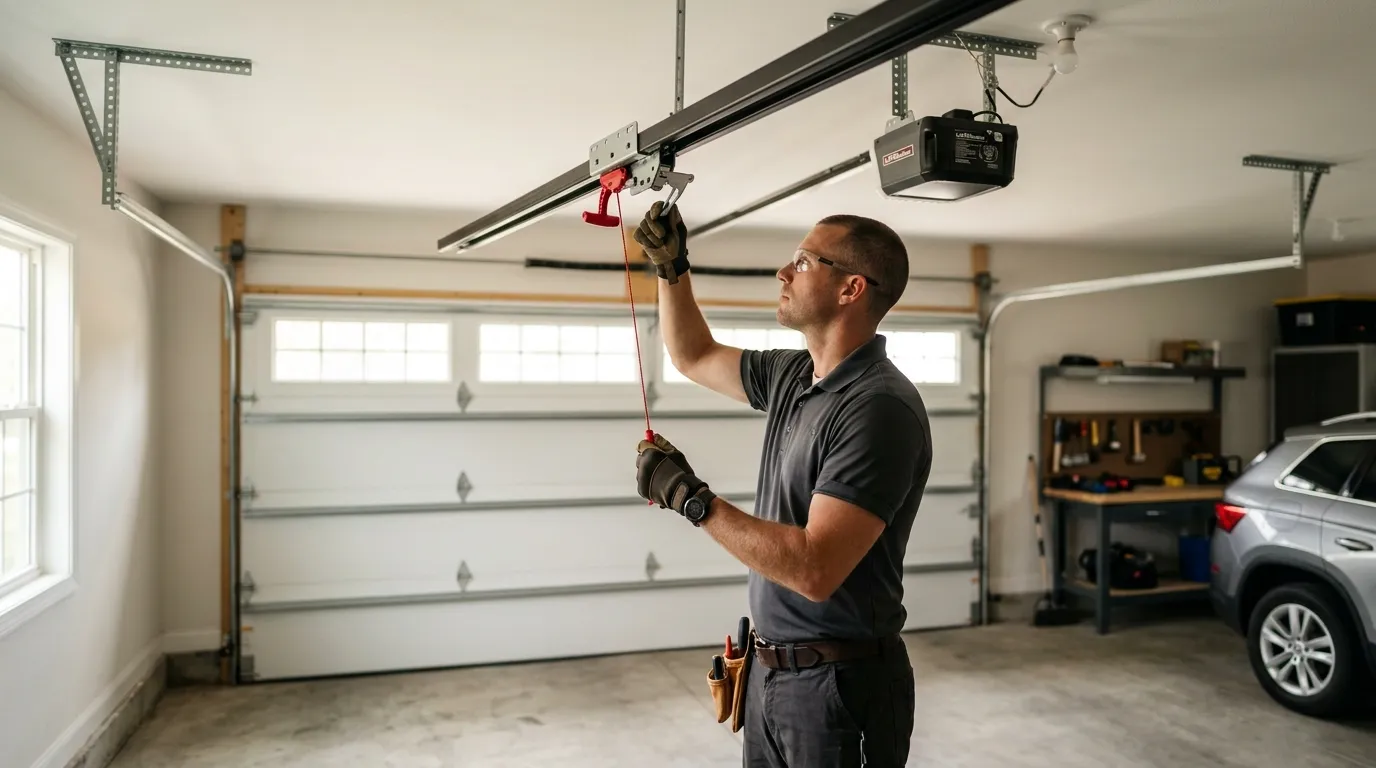
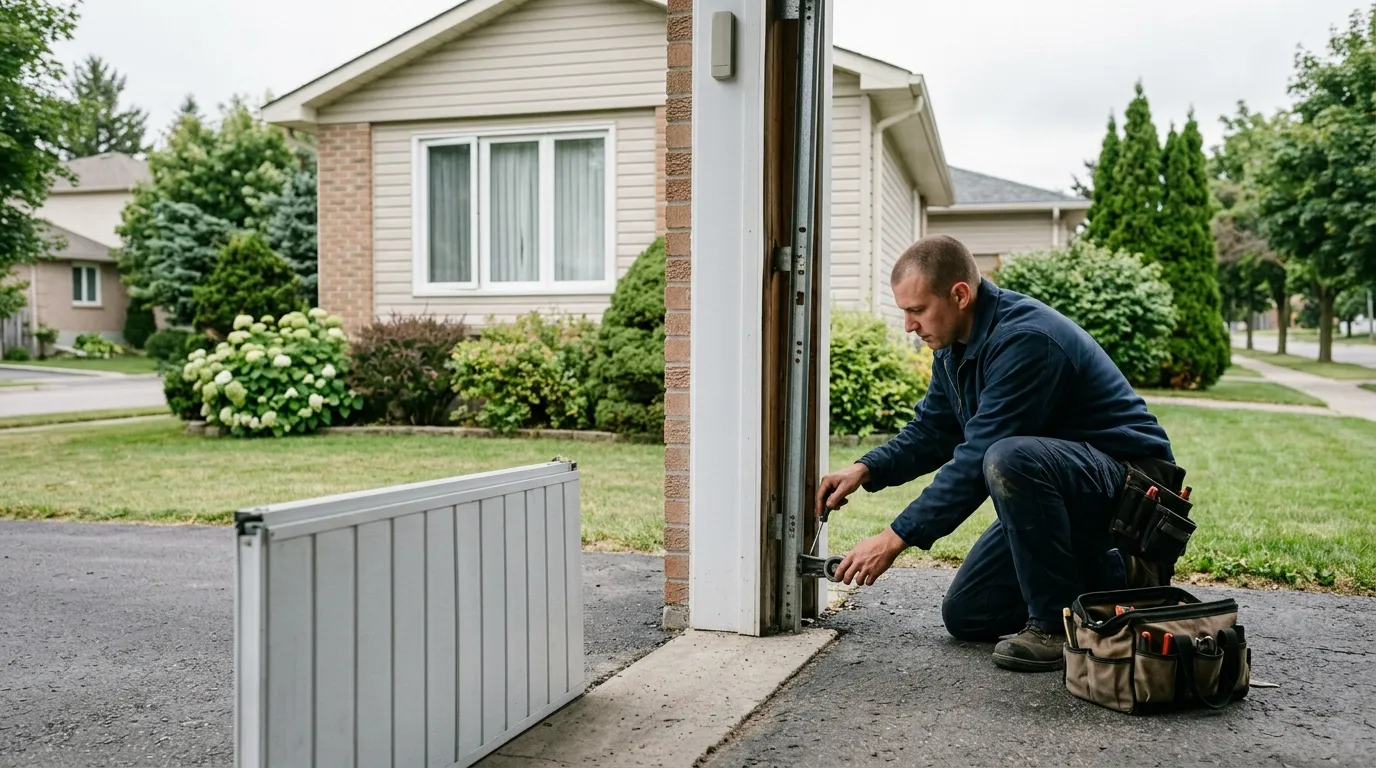
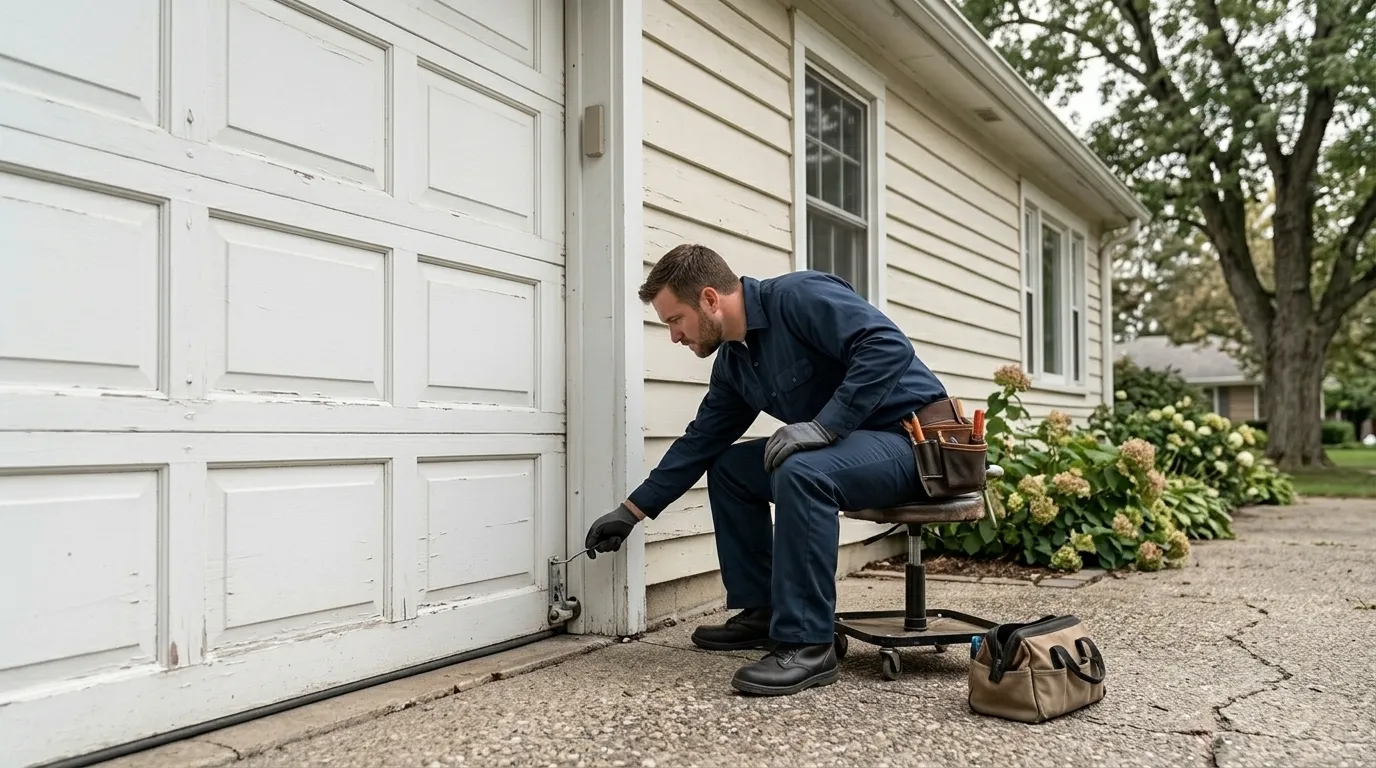
Before you call anyone, look at the track itself. Stand inside the garage with the door down and sight along both vertical rails. If one rail bows away from the wall, or the rollers sit visibly outside the track lip at any point, that's your off-track door, not just a noisy one. Check the brackets where the track bolts to the framing - in a lot of Rochester Hills houses built in the 1960s and 70s wave, that framing is original, and 60 years of seasonal movement can loosen the lag bolts enough that the whole track leans a few degrees out of plumb. Pull the door by hand (opener disconnected) and see if it drags to one side. A door that swings free on one side and binds on the other is telling you the track alignment, not the opener, is the problem. Don't force it past a jammed roller - that's how a cable jumps its drum next. If the door came off the track after a loud bang, stop pulling on it and step back; a broken spring under tension is a different, more dangerous job than a bent rail.
What You Pay
We don't have a set number to give you here, and we're not going to invent one - what a track job costs depends on whether we're realigning bent rail, replacing a section, or dealing with brackets that pulled out of framing that's older than the hardware store's stock sizes. What we can tell you is what drives the cost either way: how many sections of track need replacing, whether the rollers and cables are original to a 1960s-70s install and need swapping at the same time, and whether the jamb itself needs shimmed or rebuilt to hold new brackets square. Median household income across this service area runs a bit over $84,800, and most of the jobs we see land within a normal repair range rather than a full door replacement - but if the track bent because a panel got hit, or the opening was never square to begin with, realignment alone won't hold and we'll say so before we start.
What Local Conditions Do
Rochester Hills sits in a climate band we'd call cold and severe by any building-code measure, and that matters for track alignment specifically. Steel track expands and contracts with temperature swings, and the brackets holding it to the jamb are only as stable as the wood or masonry they're bolted into - wood that's been through decades of freeze-thaw cycling in houses built as far back as 1938. Ice and packed snow at the bottom of the track is the other piece: when the bottom rollers have to push through frozen buildup instead of gliding, they catch, and a caught roller on one side is exactly the uneven load that walks a door off its rail. We see this cluster in the first hard cold snap of the season and again during the spring thaw, when ground movement under slab foundations shifts the whole doorframe by a few degrees - enough to matter to a track, even if you'd never notice it looking at the wall.