24/7 Emergency Service Open 7 days · 7am–8pm Serving Rochester Hills, MI & nearby
(947) 251-5993
Rochester Hills, MI

Fix It or Replace It: A Rochester Hills Homeowner's Guide

Rochester Hills homes date mostly to the 1960s and 1970s; here's how to tell if your garage door and opener are worth repairing or due for replacement.

Fix It or Replace It: A Rochester Hills Homeowner's Guide

Checking It Yourself

Start in the garage with the door closed and the opener unplugged. Grab the bottom bracket and lift the door by hand. If it feels balanced and stays put around waist height, the springs are doing their job. If it drops like a stone or you have to fight it up, the springs are worn out or already broken - common on doors from the 1960s and 70s stock that makes up most of this area, since torsion springs have a cycle life and nobody replaced them on a schedule.

Next, look at the track. Rust freckling on the rails, especially near the bottom rollers, tells you moisture has been getting in over the years. Check the panels for delamination - on older steel doors built before foam-core insulation was standard, you'll sometimes see the outer skin separating from the frame, especially at the bottom panel where road salt and slush collect.

Listen to the opener. A chain-drive unit from a 1960s or 70s build that grinds, hesitates, or drifts off course before reversing is telling you the gears or the logic board are near the end. None of this requires tools - just a flashlight and five minutes before you call anyone.

What You Pay

We don't have a price list to hand you here, and we're not going to guess one. What we can tell you is what drives the number up or down on a given call: whether it's a spring-only fix or the whole opener has to come out, whether the track is original 1960s-era steel that needs matching or can be swapped for a common size, and whether the door itself is worth keeping once you're inside it.

A single broken torsion spring on a double door is usually the cheapest call we make. A cracked bottom panel on a door that's otherwise sound might be a panel swap rather than a full replacement. Where costs climb is when the opener, the springs, and the track are all original to the house and all failing at once - which happens more often here than you'd think, since so much of the housing stock dates to the same narrow window. At that point we'll tell you straight if replacement costs less over five years than three separate repair calls.

What Is Going On

Most of the trouble we see traces back to age, not misuse. Housing in this area was built mostly between 1938 and 2002, with the heaviest concentration in the 1960s and 70s. That means a large share of the doors and openers still in service are 50 to 60 years old - well past the design life of a torsion spring, which is rated for a set number of open-close cycles, not years.

Steel doors from that era were built without the foam-core insulation that's standard now, so the panels are thinner and more prone to denting and flexing. Chain-drive openers from the same period use gears and capacitors that weren't designed to run for six decades. When one part fails, it's often because two or three other parts are at the same point in their life, not because something went wrong recently. That's why a single repair call sometimes turns into a longer conversation about the whole system.

What Local Conditions Do

This area sits in a climate band with severe cold winters, and that matters more for a garage door than most people expect. Steel contracts in the cold, which changes spring tension slightly every time the temperature swings - and it swings hard here across a winter season. That's extra stress on hardware that was already sized for a lighter-duty era of building.

Cold also stiffens the lubricant on rollers and hinges, so a door that opens fine in July can bind or groan in January, putting more load on the opener's motor and gears. On uninsulated 1960s and 70s steel doors, the temperature difference between the garage and outside also drives condensation, which is where you get the rust freckling on tracks and bottom brackets we mentioned earlier. None of that is unique to any one house - it's a function of the age of the housing stock meeting a genuinely cold climate, year after year.

How it works

From “it’s stuck” to “it’s fixed”

01
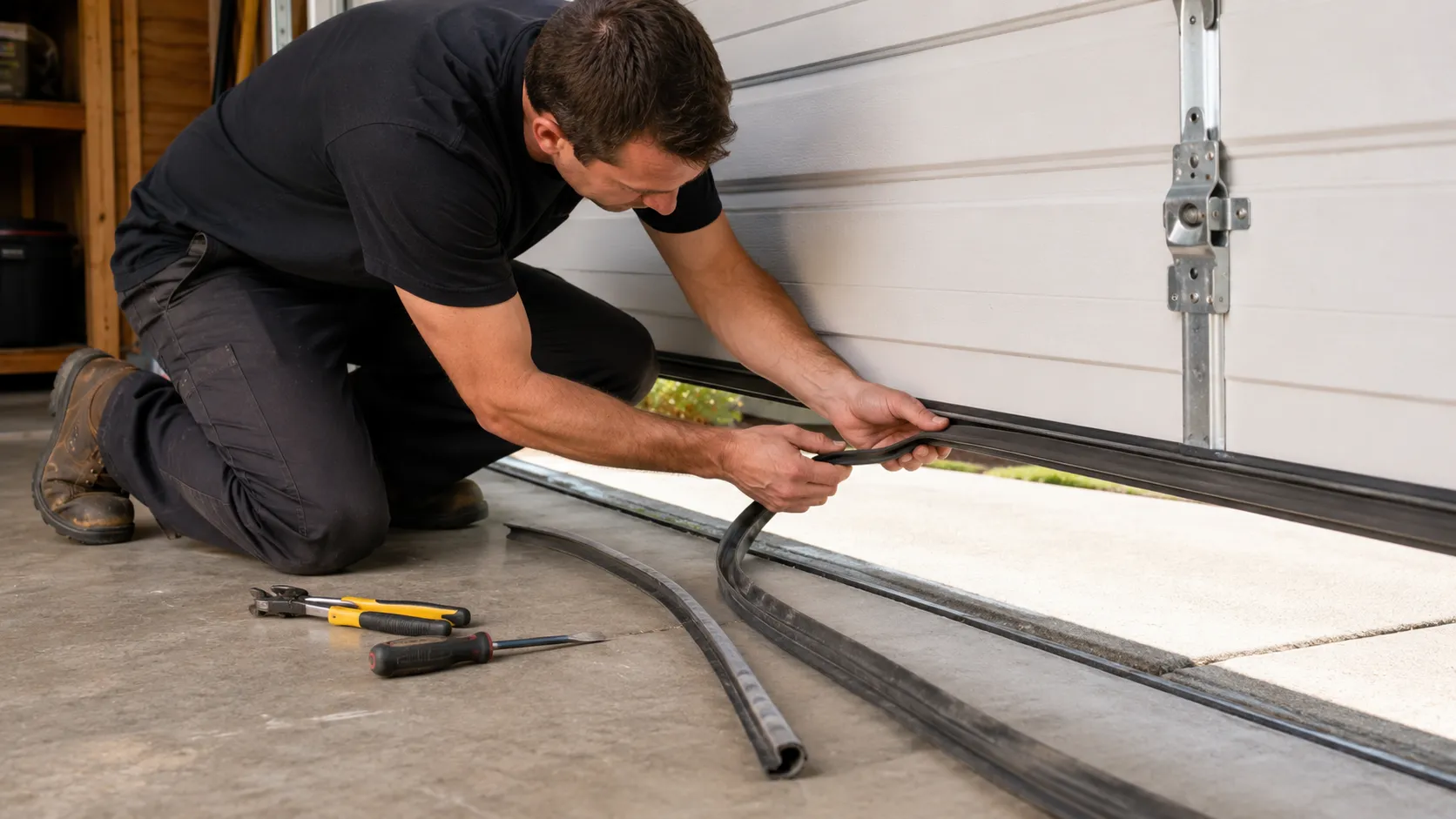
Tell us what’s wrong - Rochester Hills garage door service

Tell us what’s wrong

Describe the symptom - won’t open, loud bang, opener runs but the door won’t move.

02
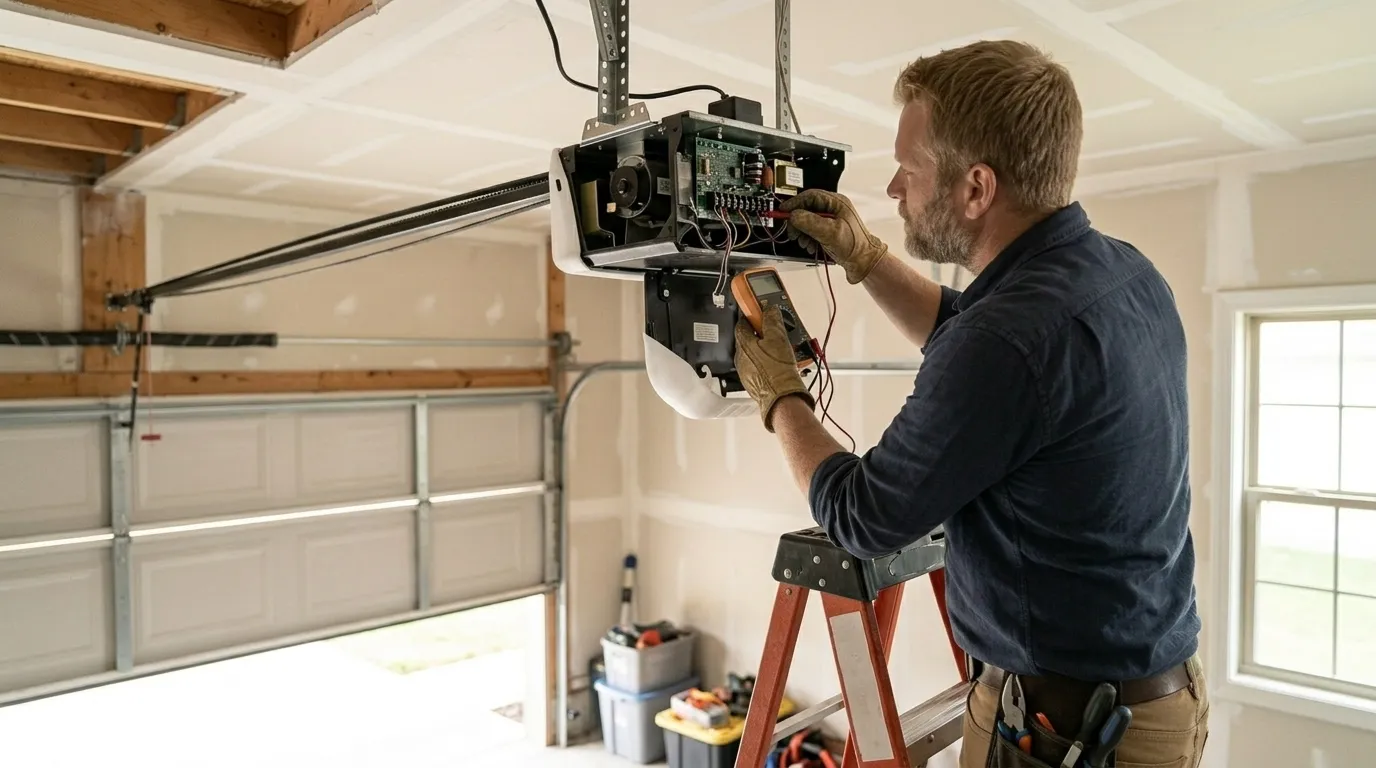
On-site diagnosis - Rochester Hills garage door service

On-site diagnosis

A technician tests the door under power and by hand and finds what actually failed.

03
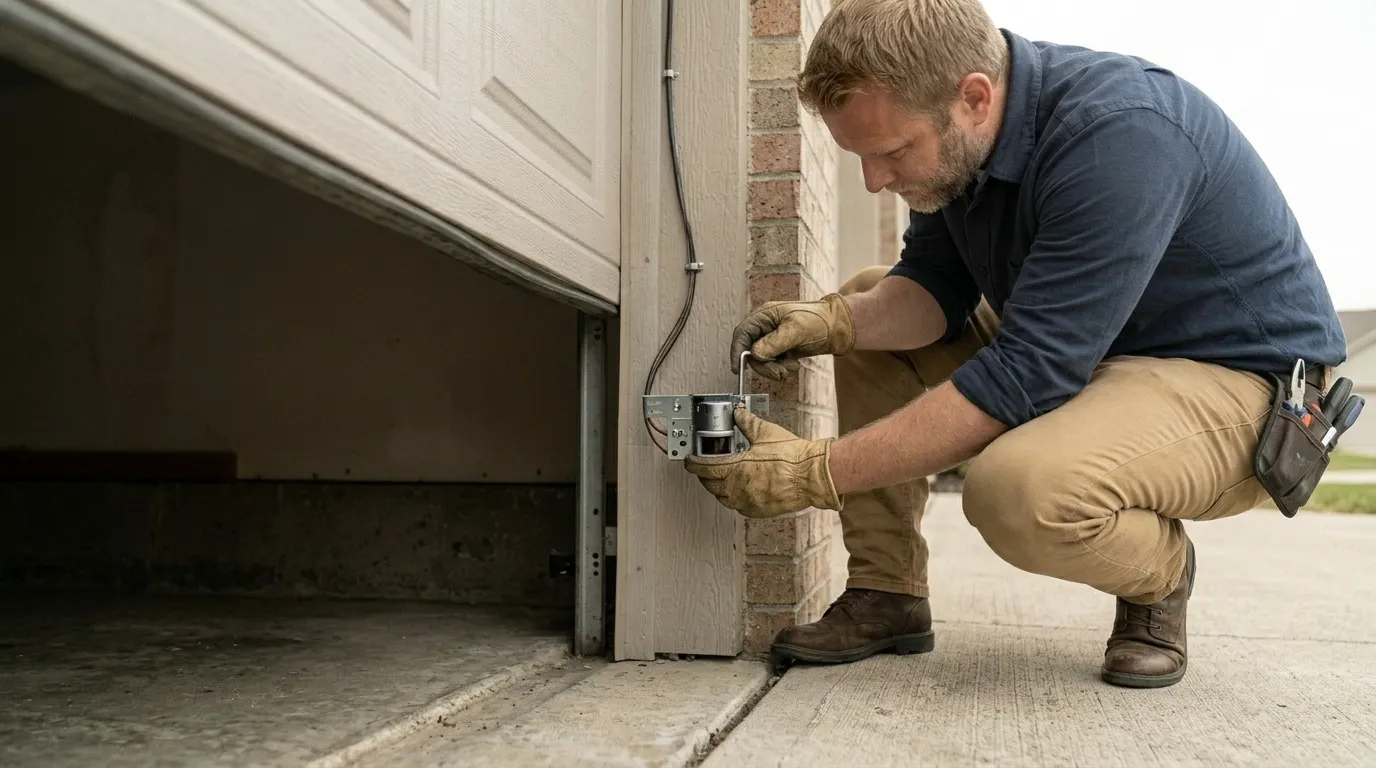
Clear, up-front plan - Rochester Hills garage door service

Clear, up-front plan

You get the fix that’s needed and what drives the cost - before any work starts.

04
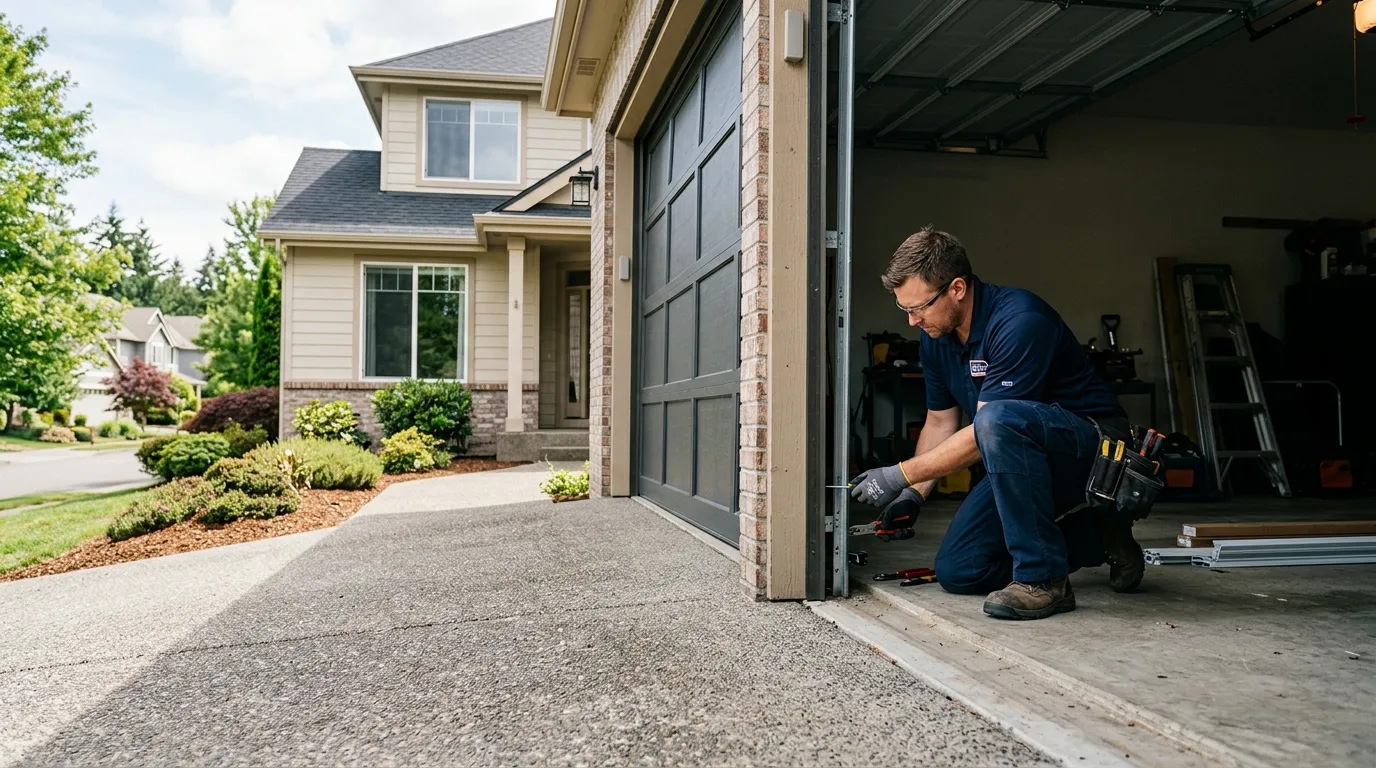
Repaired & tested - Rochester Hills garage door service

Repaired & tested

The repair is done, the door is set true and tested, and the work area left clean.

Serving Rochester Hills, MI - tell us what your door’s doing and we’ll take it from there.

How we work

What to expect

A straight, honest approach on every Rochester Hills job - diagnosis first, the right parts, and clean work.

01

Diagnosis first

Every visit starts by finding what actually failed - not a pre-written parts list.

02

The right part for the door

Springs and openers matched to the door’s weight and age, so the fix holds up.

03

Straight answers

When a repair makes more sense than a replacement - or the reverse - you hear it plainly.

04

Clean, careful work

Tension released safely, hardware set true, the door tested under power before we leave.

Questions

Frequently asked

Straight answers about garage door repair in Rochester Hills. Still unsure? Ask us directly.

How old does a garage door have to be before repair stops making sense?

There's no fixed number, but once the springs, track, and opener are all original to a 1960s or 70s build and starting to fail together, repair costs stack up fast. We look at whether we're fixing one worn part or patching a system that's failing on multiple fronts at once, and tell you which one it is.

Why does my door feel harder to lift in winter?

Cold steel and stiff lubricant both add resistance, and this area's winters are cold enough to make that noticeable. It's usually not a sign of a new problem - just an older spring or roller set showing its age more in the cold than it would in summer.

Is a rusty track a sign I need a new door?

Not by itself. Surface rust on the track from winter condensation is common on older steel doors and can often be cleaned and lubricated. It's worth a look if the rust has pitted the rail or if rollers are binding, since that's a different, more serious problem.

Ready to get your garage door sorted?

Tell us what it’s doing and where you are in Rochester Hills - we’ll take it from there.

Request a QuoteCall