How to Book
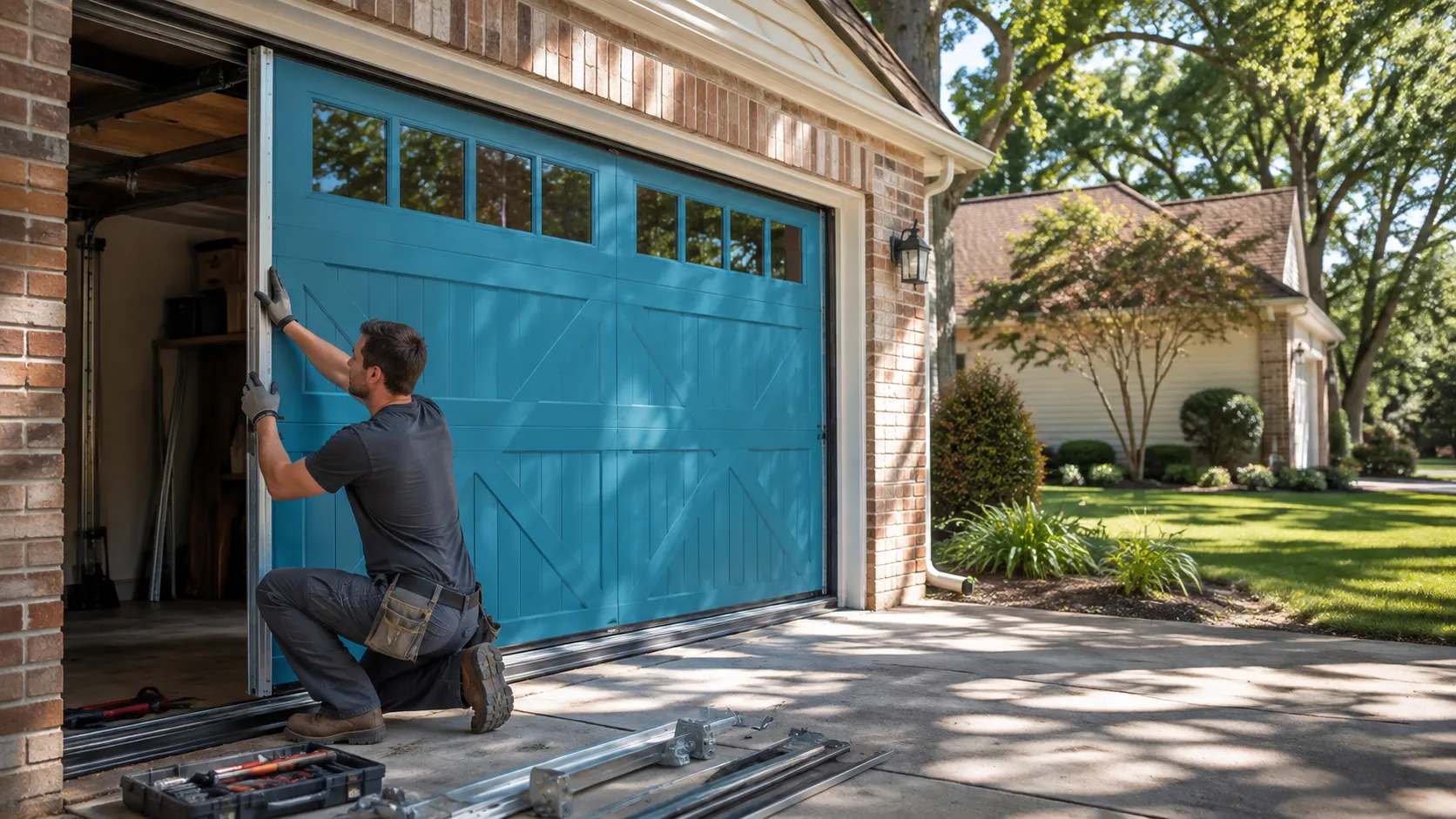
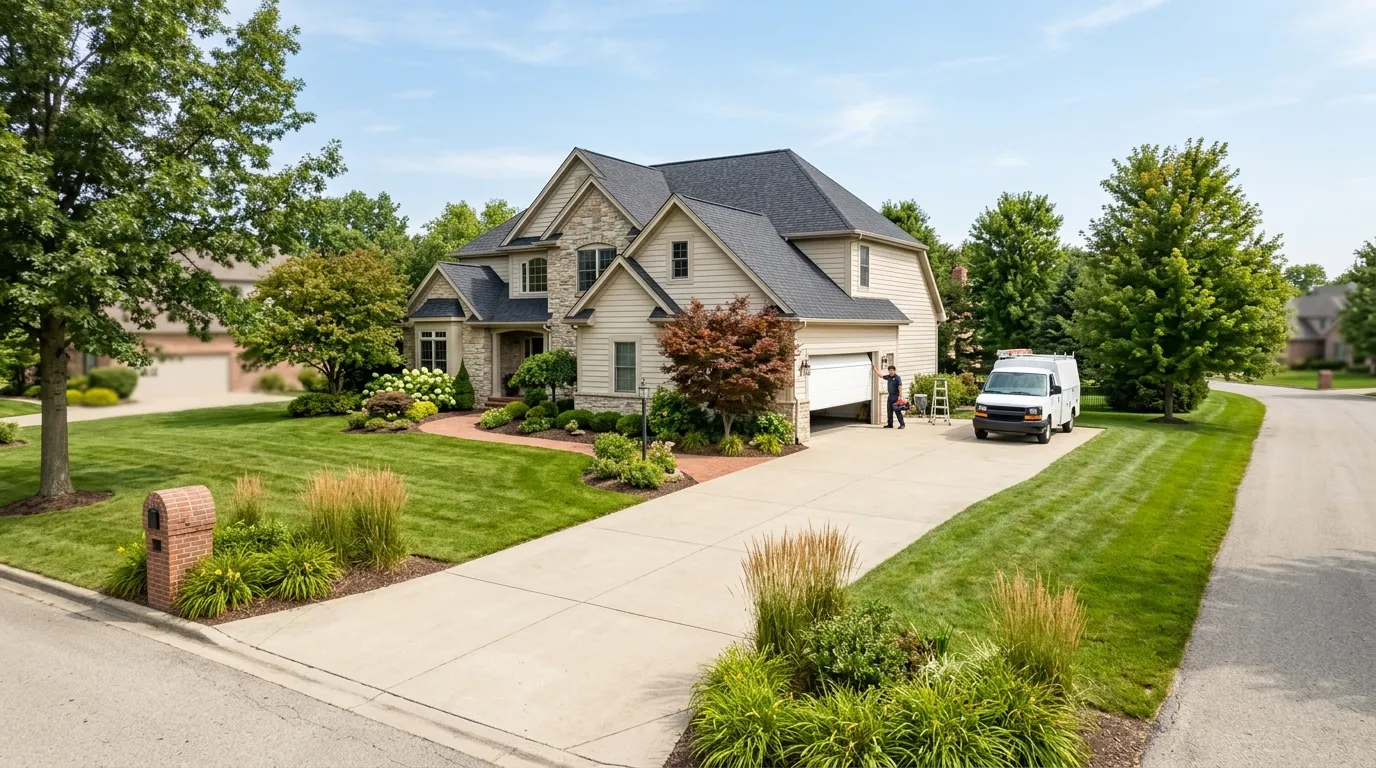
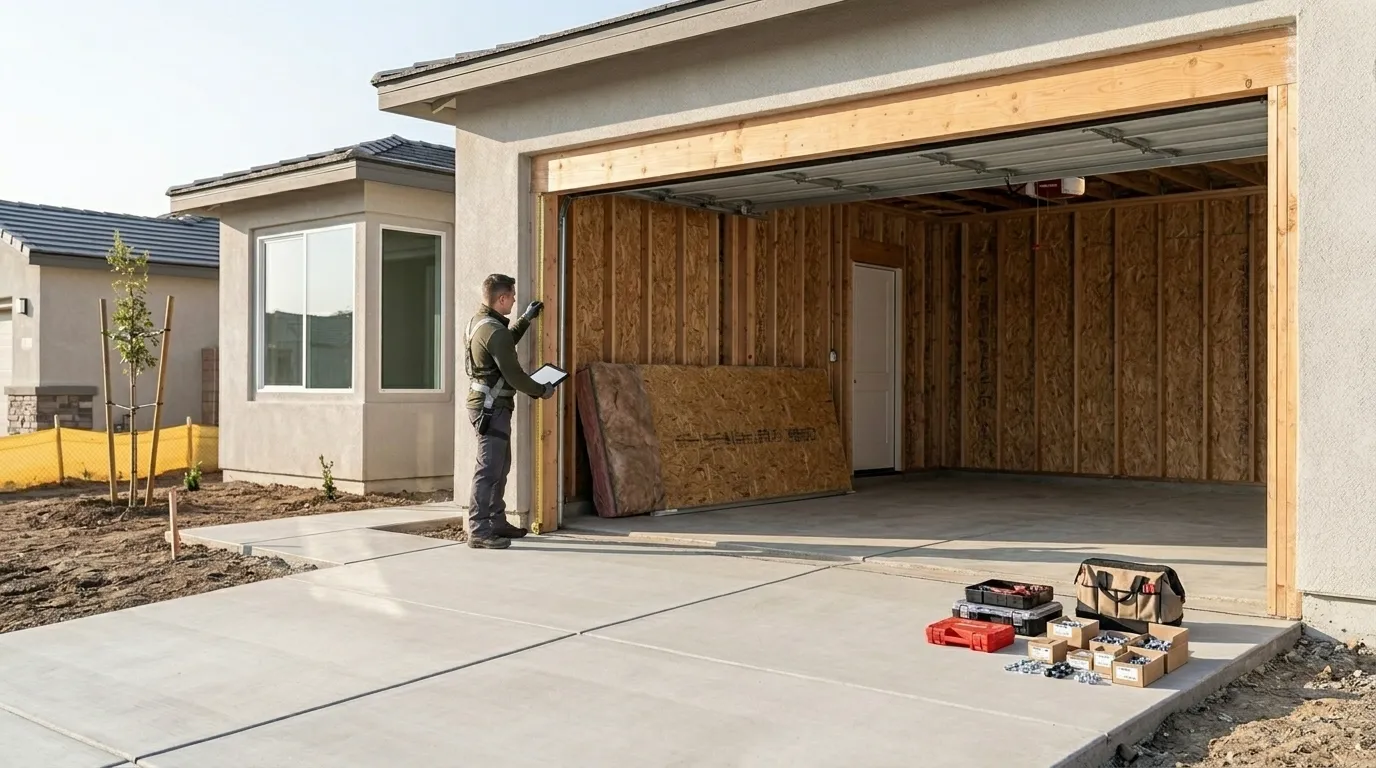
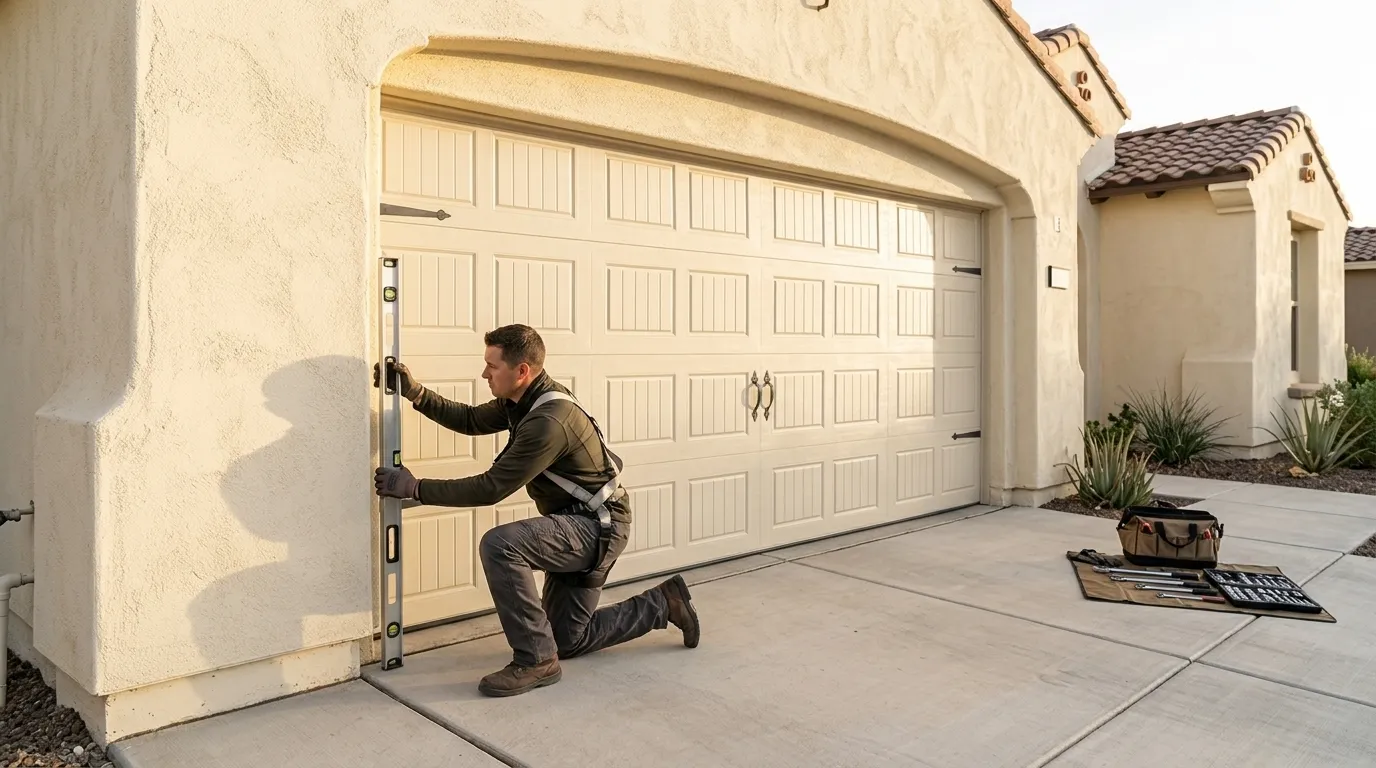
Booking starts with a look at the opening, not a guess over the phone. Rochester Hills houses were built across a long stretch, 1938 through 2002 with the median landing around 1960, so no two openings on the same street are guaranteed to match. We measure the jamb, check the header, and look at what's framing the opening before we quote a door.
Once we've seen the opening, you get a real number, not a range that moves once the crew shows up. If the header needs reinforcing or the track needs re-routing around an old opener mount, that gets flagged in the quote, not added after the fact.
Head to our site to set up a time. We work across the wider Oakland County service area, so if you're closer to Rochester, Auburn Hills, or Pontiac, we can usually still get someone out on a similar schedule. Bring any paperwork you have on the current door or opener, even if it's old - the model plate tells us more about what we're replacing than a description does.
Why This Fails Locally
Most of the housing stock in this service area - 42 named areas, mostly 1960s and 70s construction - was built before insulated steel doors were standard and before openers were sized to modern torsion specs. A door installed on a 1960 opening was matched to the springs, tracks, and headers of that era. Decades of settling, plus Michigan's severe cold band, work against that original fit in ways that show up slowly and then all at once.
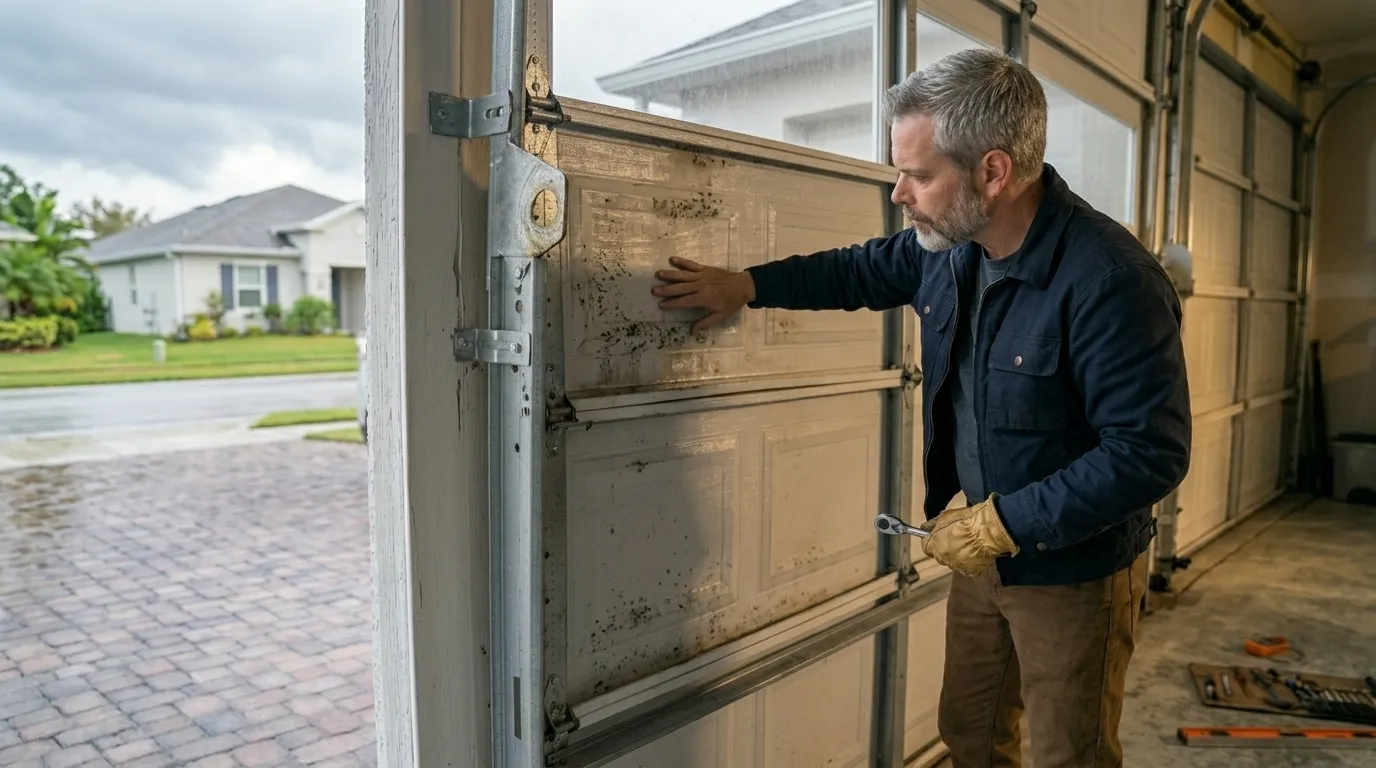
Cold steel contracts. On an older, uninsulated door, that contraction opens gaps at the seams and lets the track shift slightly against a header that's also moved with decades of freeze-thaw cycles. None of that is a defect - it's just what happens to a door built for a house built in 1960, sitting through sixty-plus winters in a severe cold zone.
With 122,221 owner-occupied houses across this area, we see this pattern constantly: a door that's structurally fine but was never engineered for the insulation standards or spring tolerances that a modern install requires. Replacement here usually means matching a new door to an opening that's shifted since it was framed, not just swapping panels.
The DIY Question
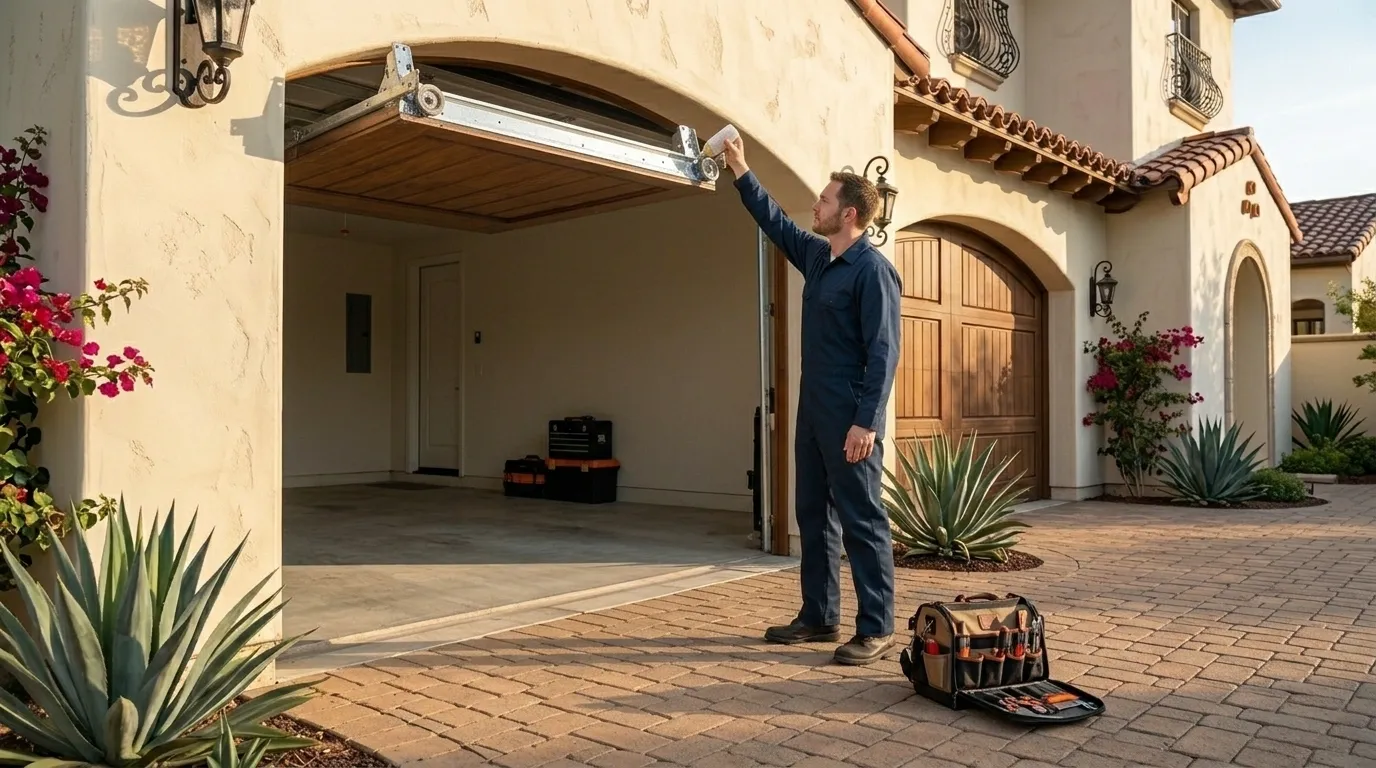
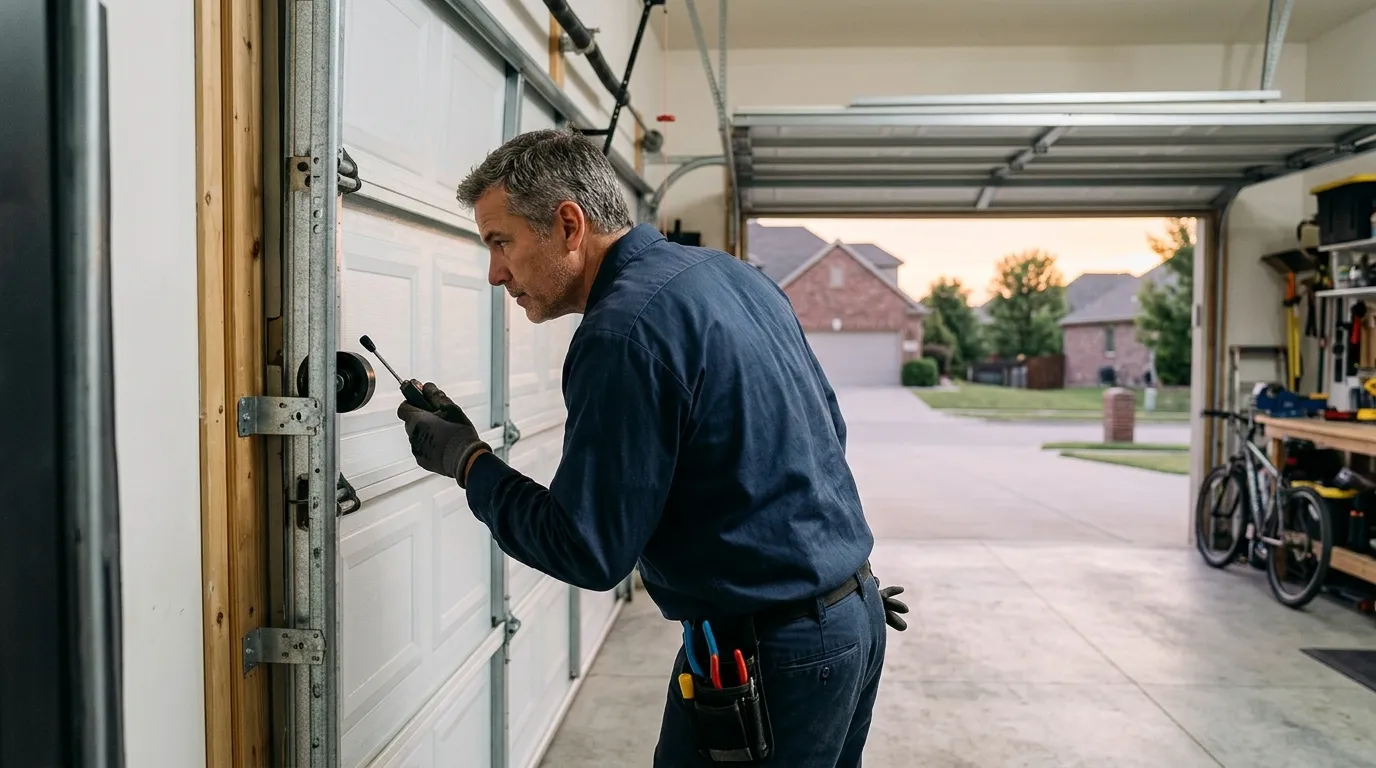
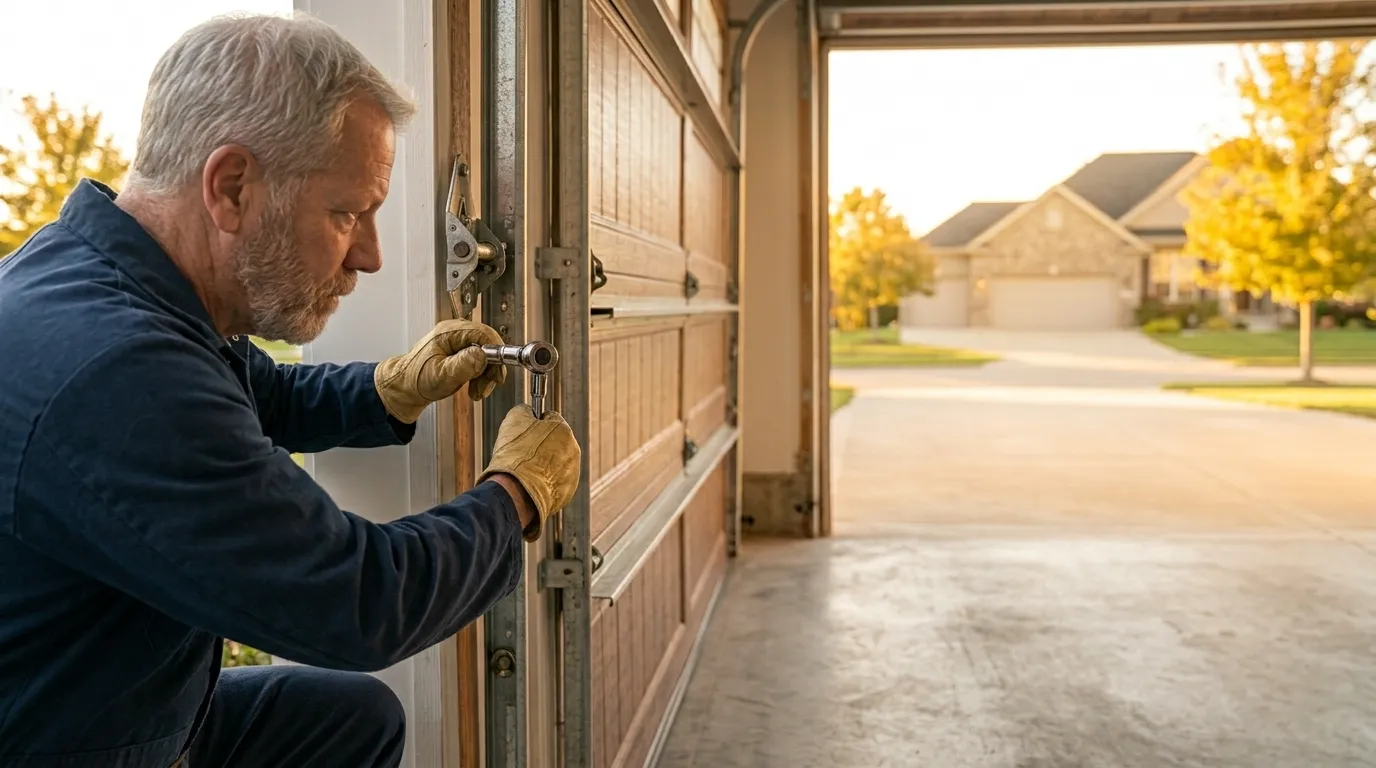
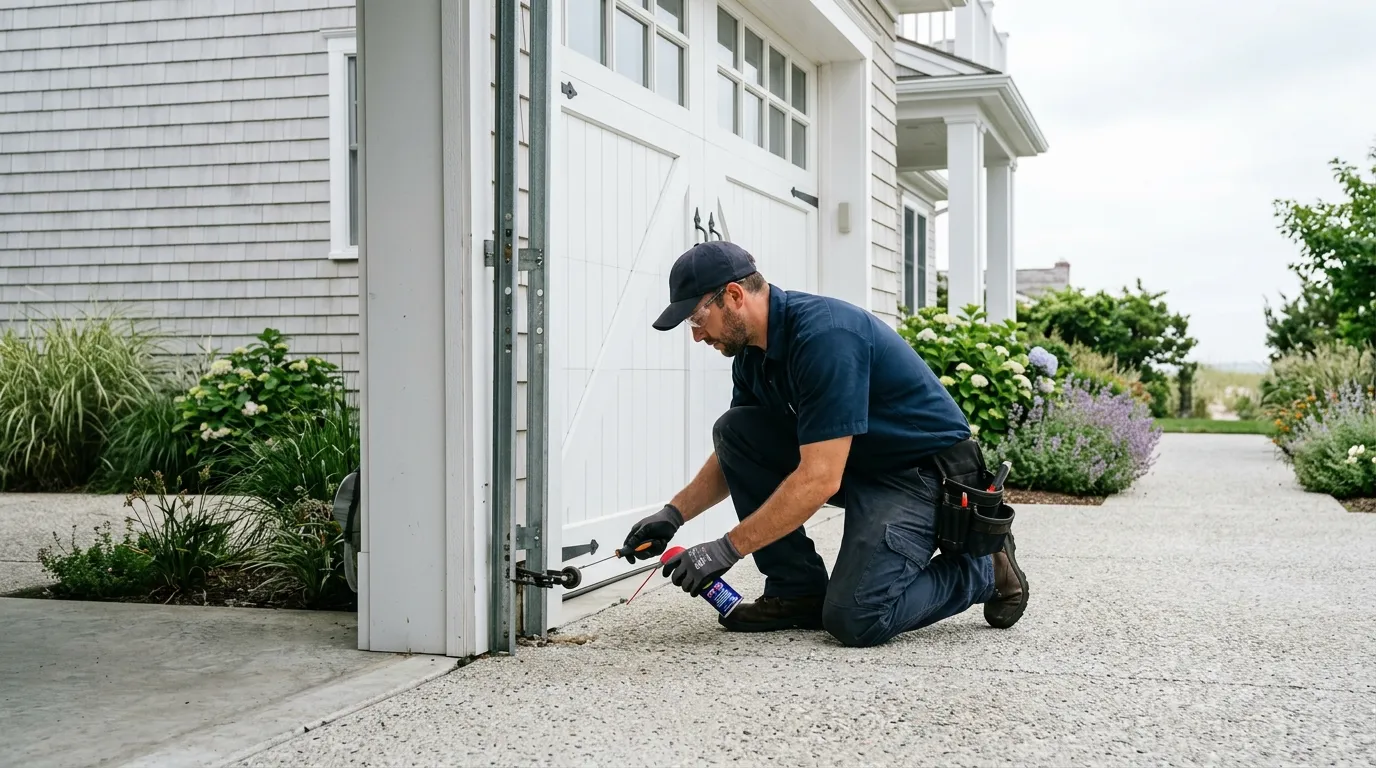
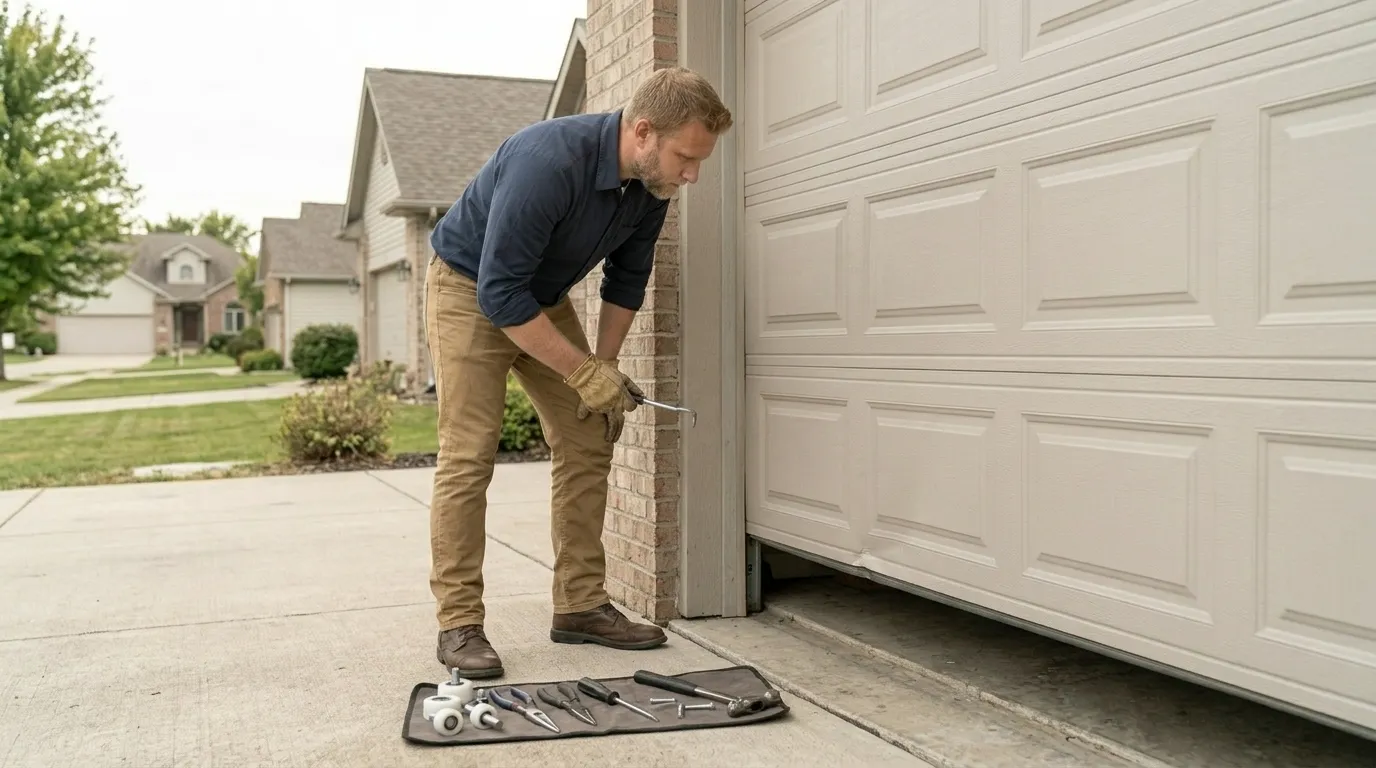
There's real DIY territory here - swapping weatherstripping, lubricating rollers, tightening loose hardware. None of that requires a truck.
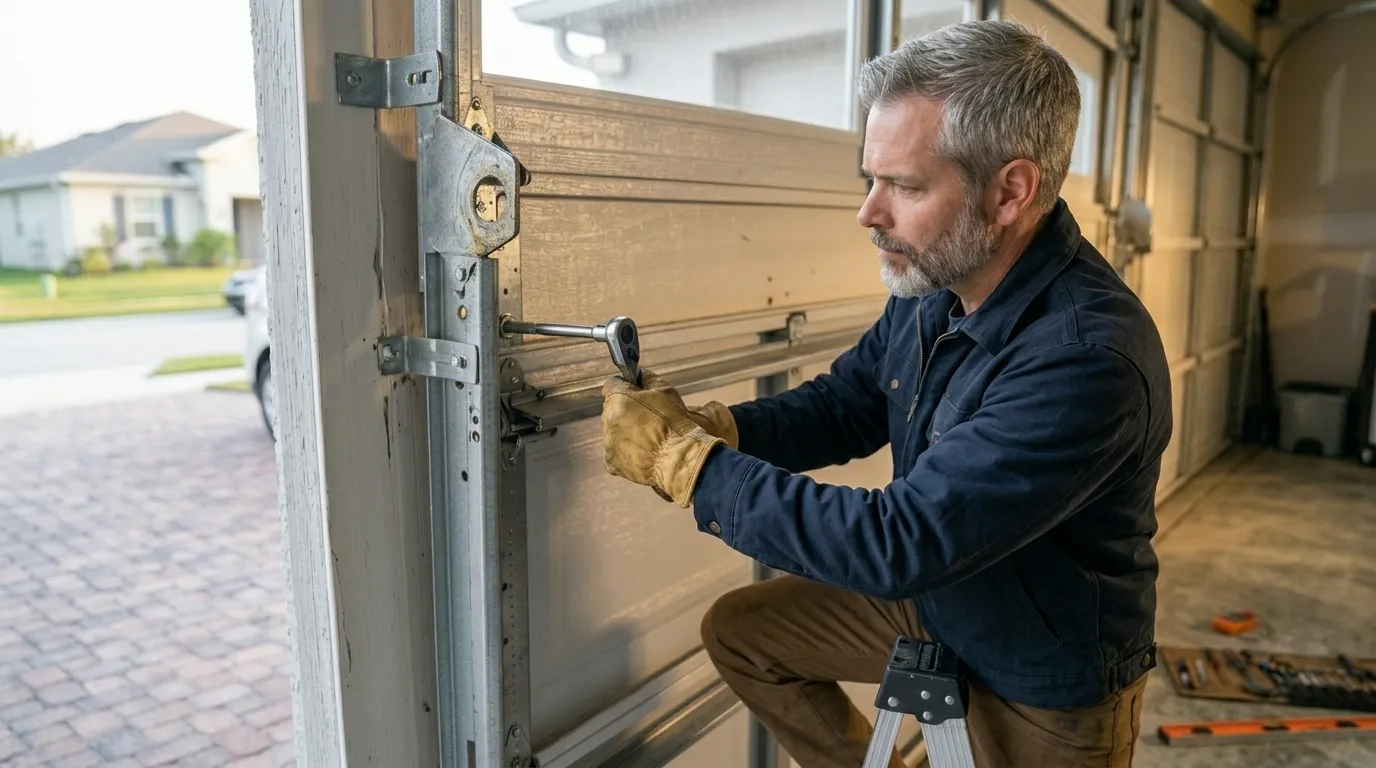
What doesn't belong in DIY territory is anything involving the torsion spring or the header itself. On a house from this build era, the header has had sixty-plus years to settle, and reframing it to take a new track is not a bolt-on job. We won't sugarcoat that part: if your header needs work, that's a bigger job than a door swap, and we'll tell you that upfront rather than quote around it.
We also won't tell you to replace a door that's still sound just to sell an install. If the panels are solid and the only issue is an opener mismatch, we'll say so. Given a median household income of $84,862 across this area, most owners here can justify an insulated steel replacement when the old door is actually failing - but we're not going to manufacture that need where it doesn't exist. If a repair gets you another five winters, that's what we'll quote.