How to Book
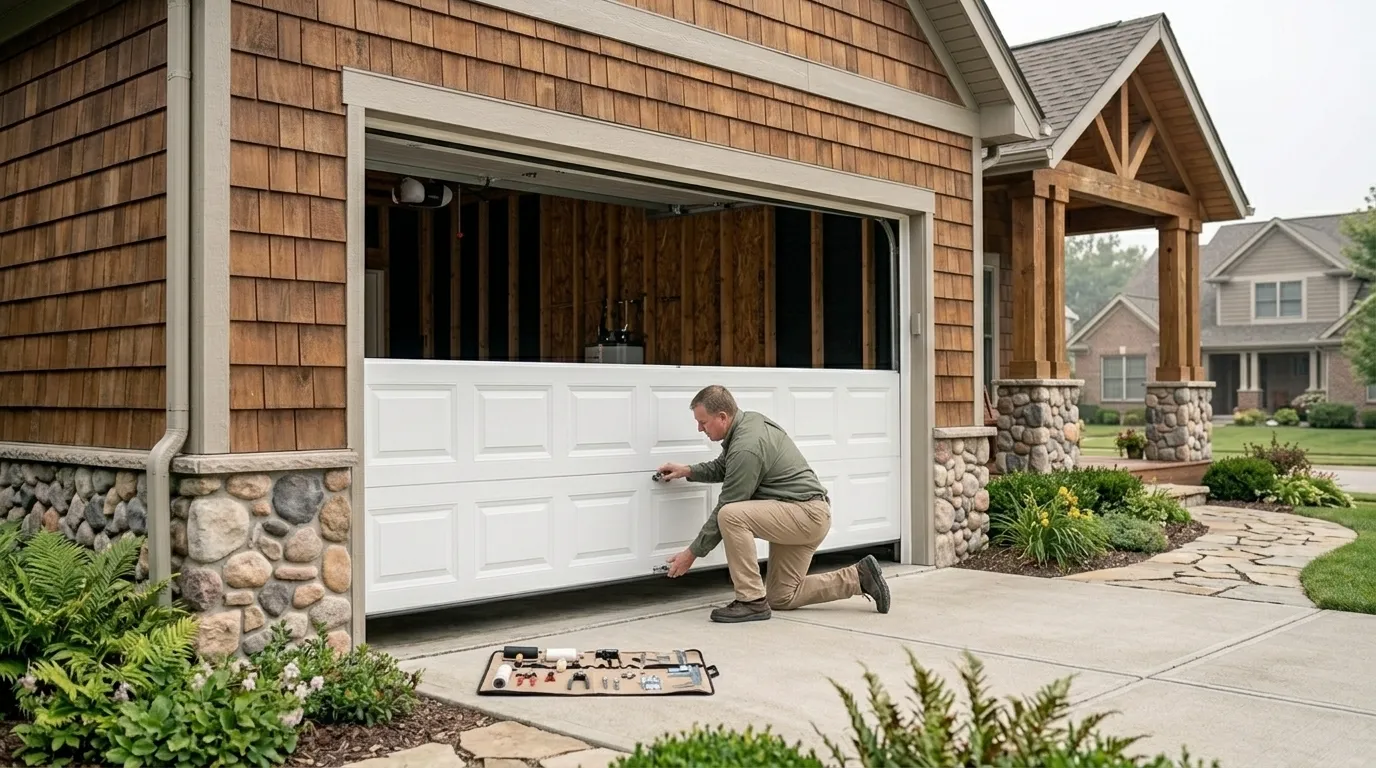
Call and tell us what the door is doing - grinding, sticking halfway, not responding to the remote, or just plain stuck shut. We ask a few questions about the door's age and what you've noticed before we ever quote a number, because a spring job and a track job aren't priced the same and guessing on the phone helps nobody.
Most of the homes we get called to sit in the pocket of construction that went up between 1938 and 2002 here, with the bulk from the 1960s and 70s. That matters for scheduling - a lot of these houses share the same original hardware layout, so once we know the neighborhood and the rough build year, we usually know what's waiting in the garage before the truck pulls up. That's not a guarantee, it just means the first visit tends to be a real repair, not a second look.
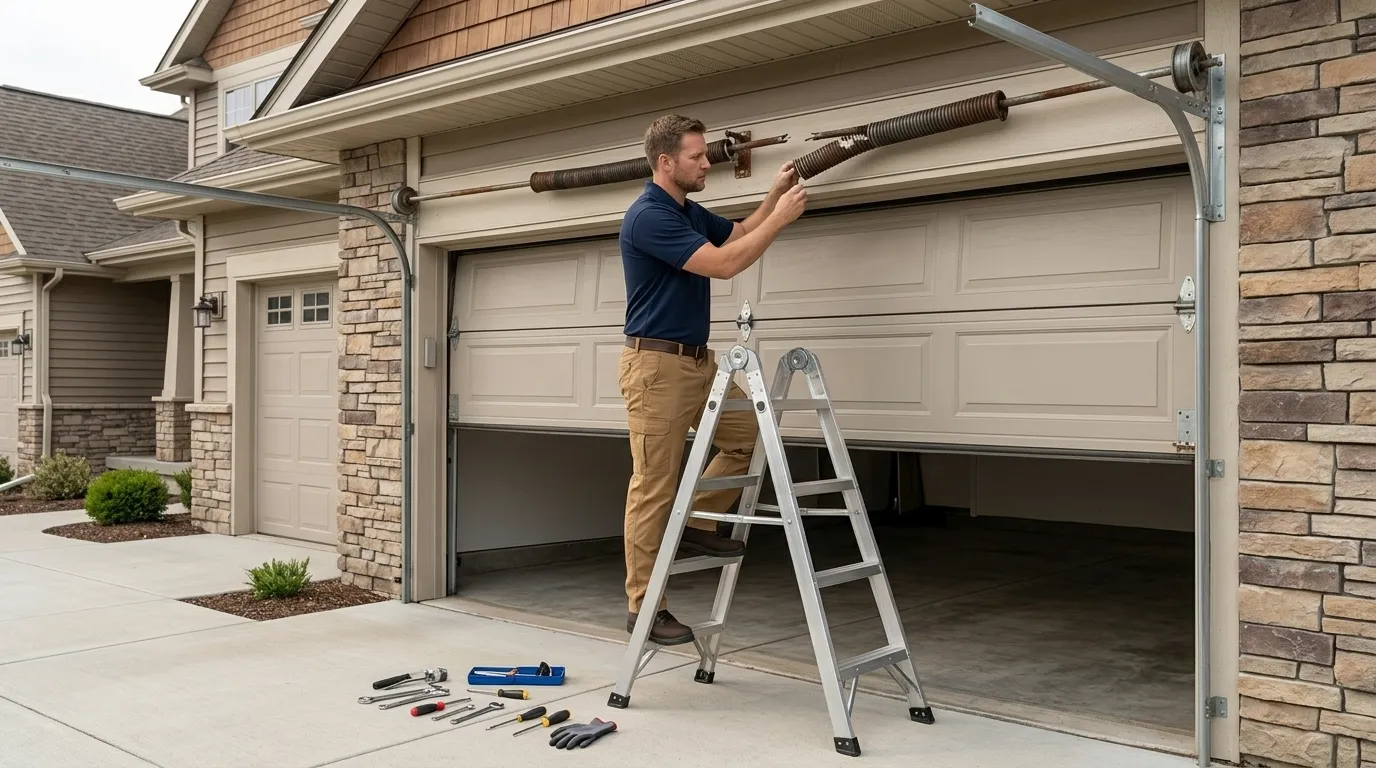
If the door is off its track or a cable has jumped, don't try to force it down or up - that's how a torsion spring under load turns into a real injury. Leave it alone, call, and we'll walk you through what's safe to do until we get there.
Why This Fails Locally
Rochester Hills sits in a cold, severe winter band, and that's the part people underestimate. Steel contracts in the cold, lubricant thickens, and a spring that was already tired from twenty-plus years of cycles gives out on the first hard freeze of the season, not in July. That's not bad luck - it's physics acting on hardware that's already near the end of its life.
Pair that with the housing stock: a median build year around 1960 means a lot of these doors are on their second or third opener but still running original track brackets and jamb hardware sized for a lighter door than what's hanging on it now. Owners replace the door face over the decades but the framing and mounting hardware behind it often never gets touched. Cold makes the weak point fail; old hardware decides where the weak point is.
We're not saying every older door is a ticking clock. Plenty of well-maintained 1960s doors run fine. But when a fault does show up in this area, it tends to be exactly this combination - original hardware meeting a cold snap - rather than something random.
The DIY Question
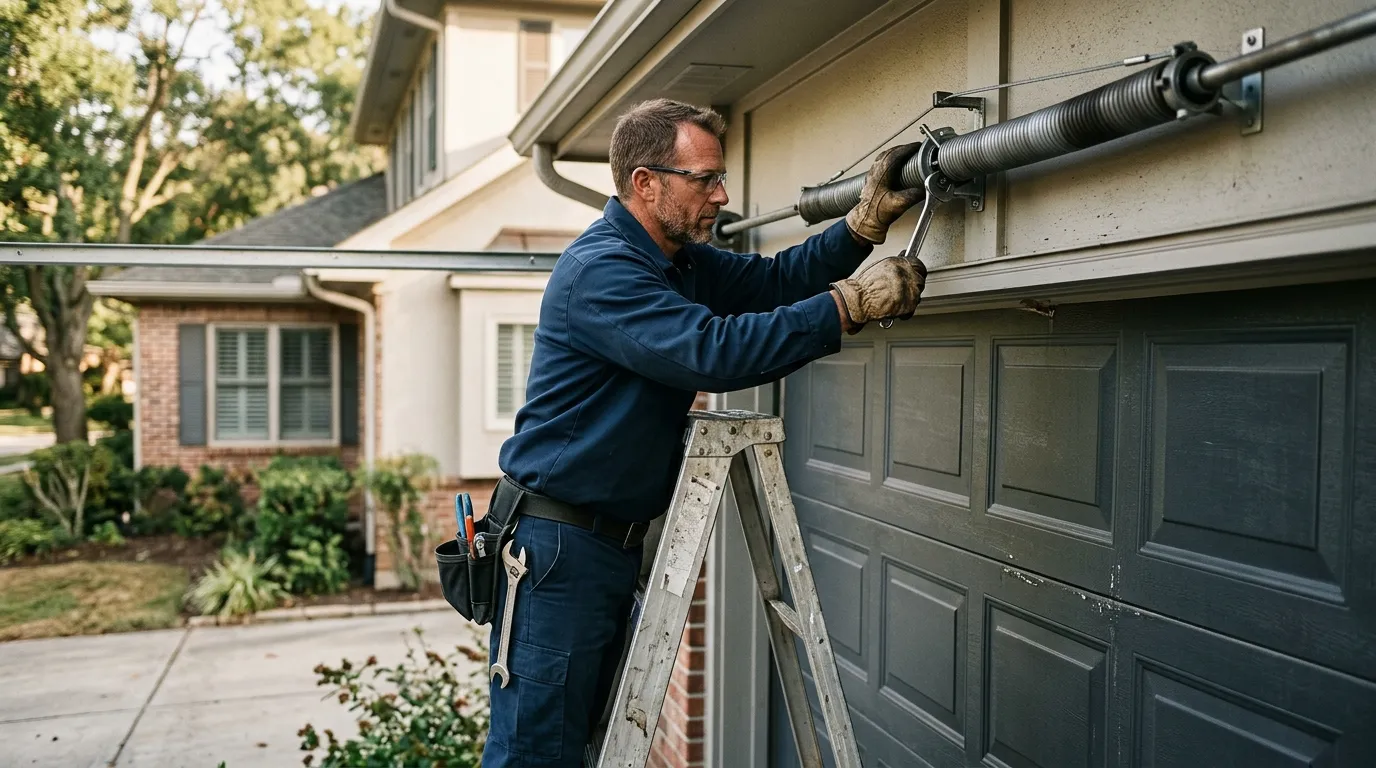
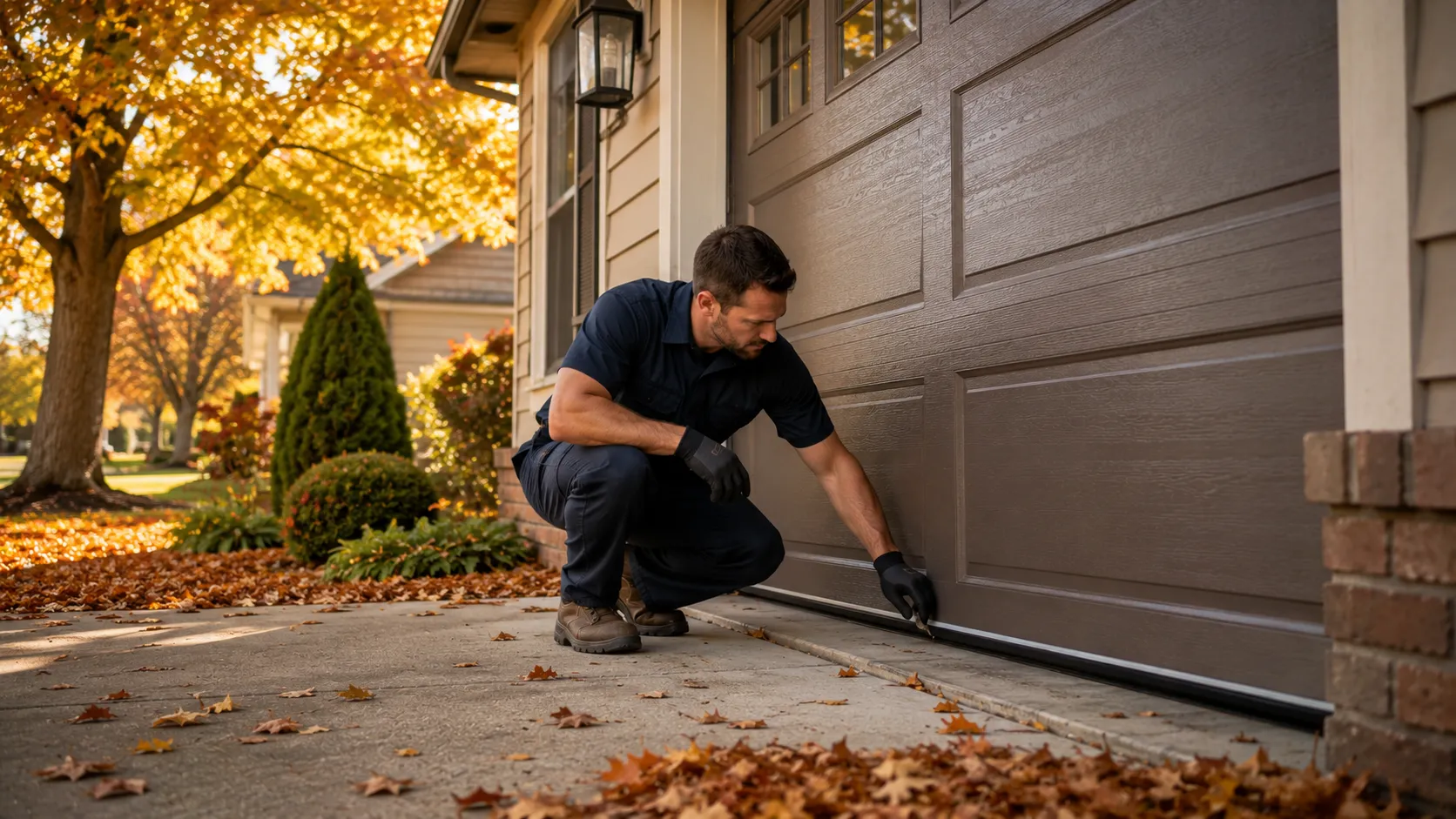
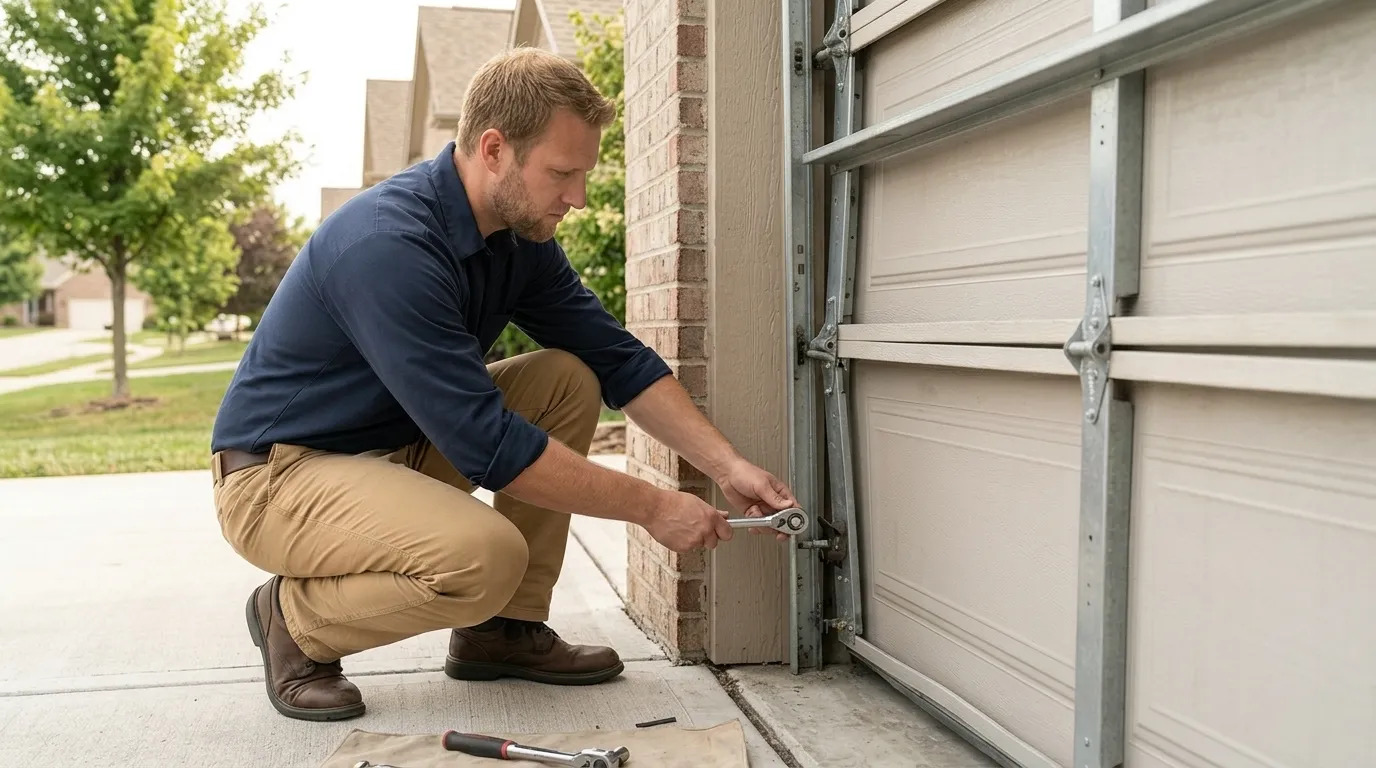
There's a real line between what's safe to check yourself and what isn't. Checking the weatherstrip, tightening loose bolts on the track, or clearing debris from the sensor eyes - fine, go ahead. Touching anything on the spring side of the door, or trying to re-tension a torsion spring yourself, is not something we'll walk you through over the phone, because the failure mode there is a steel bar under enough stored force to break bones.
We'll also tell you honestly when replacement beats repair. If the door itself is original to a house built in the 1960s and the spring, track, and rollers are all near the end of their life at once, patching one part just moves the next call a few months down the road. At that point a full door replacement usually costs less over three years than a string of individual fixes.
We don't do glass or specialty custom doors - if that's what you're after, we'll say so up front rather than take the job and figure it out as we go.