Checking It Yourself
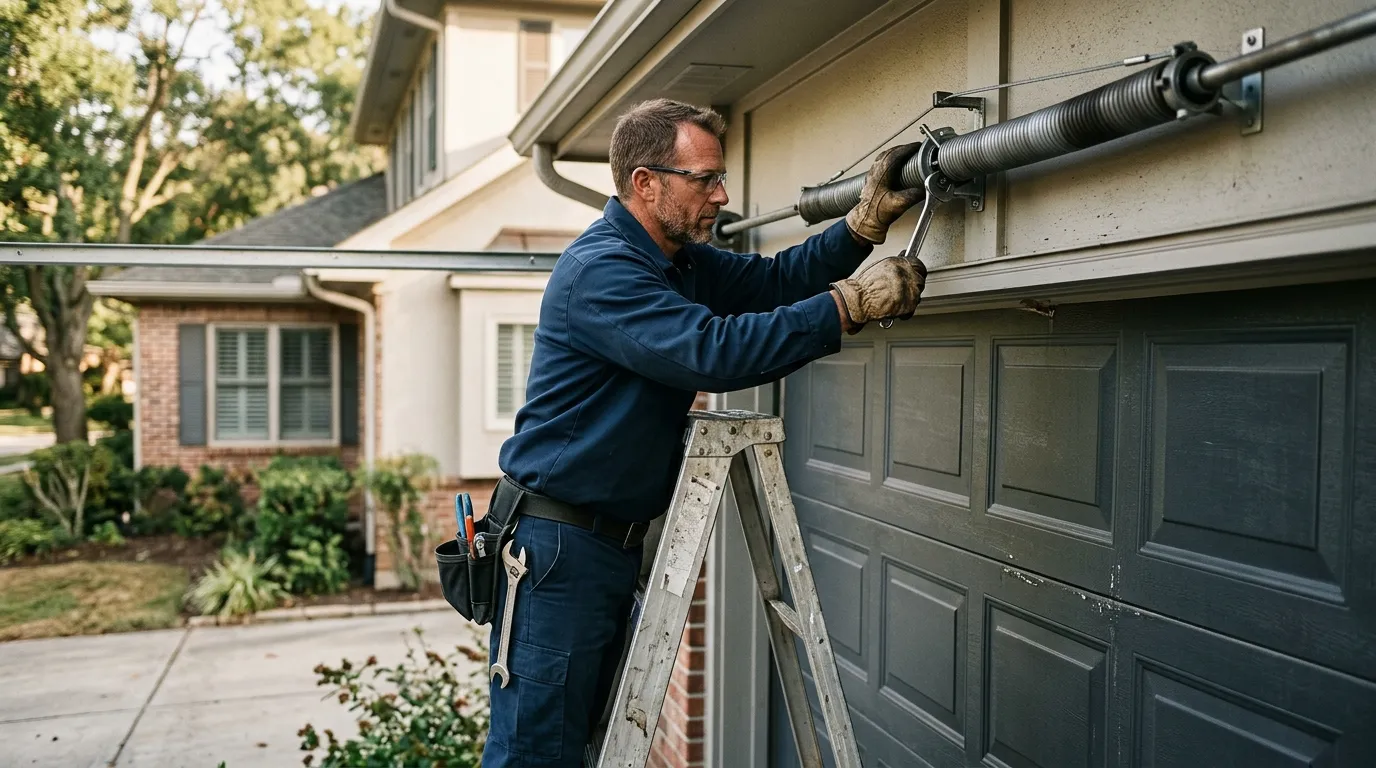
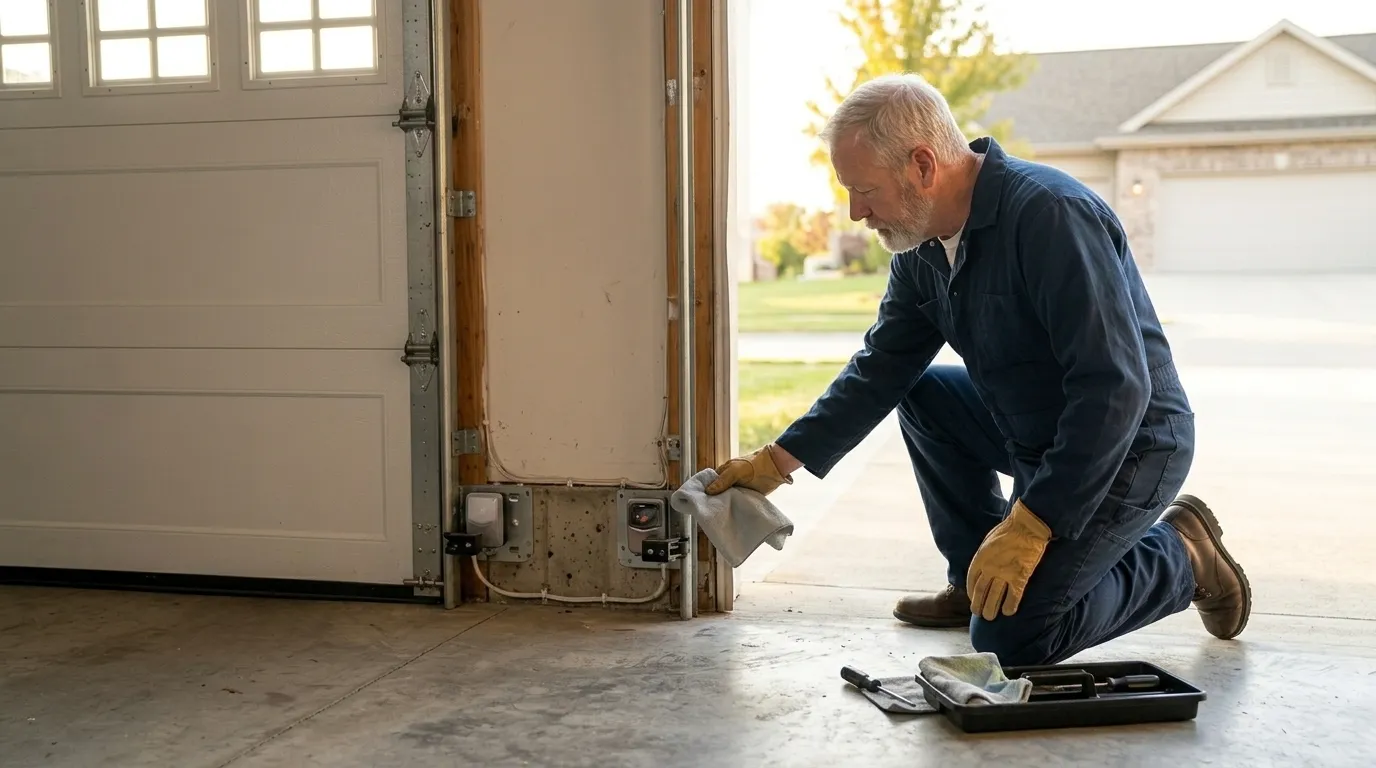
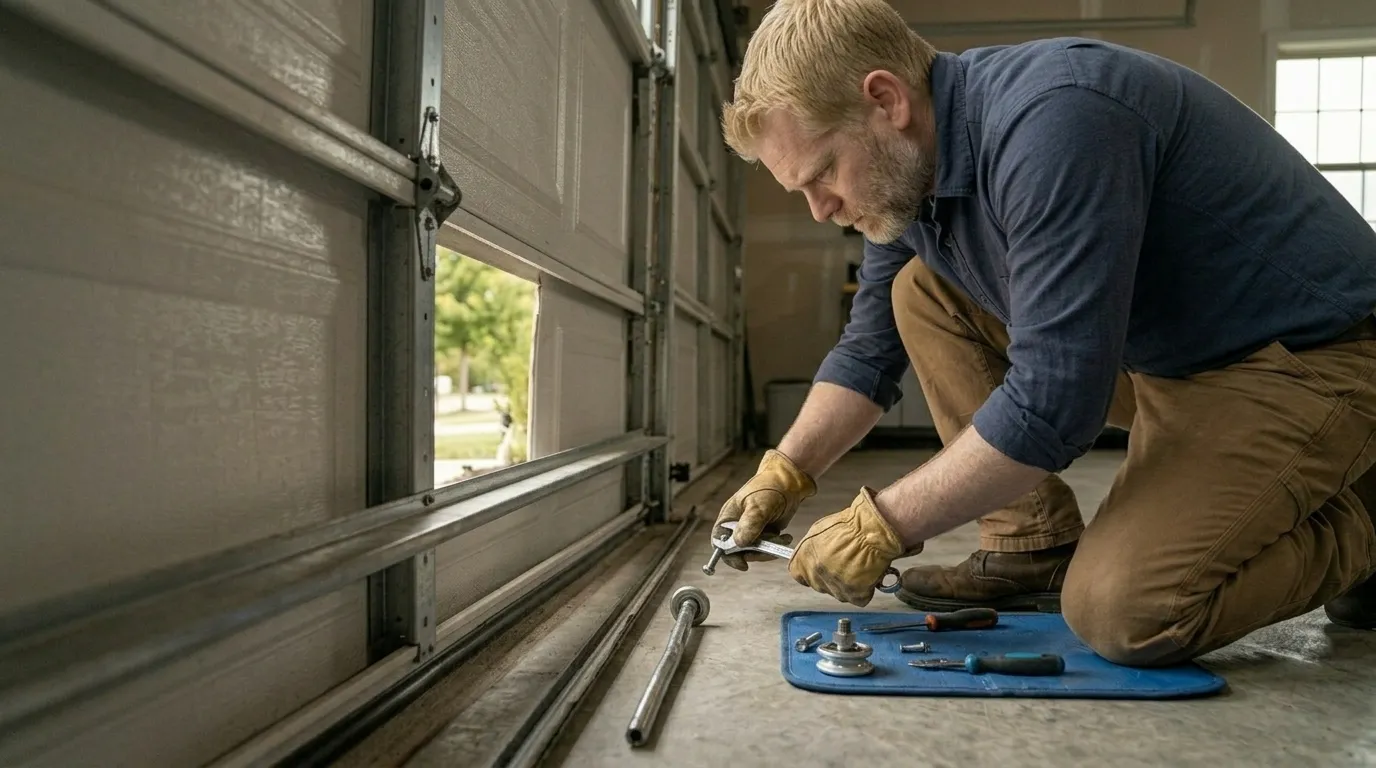
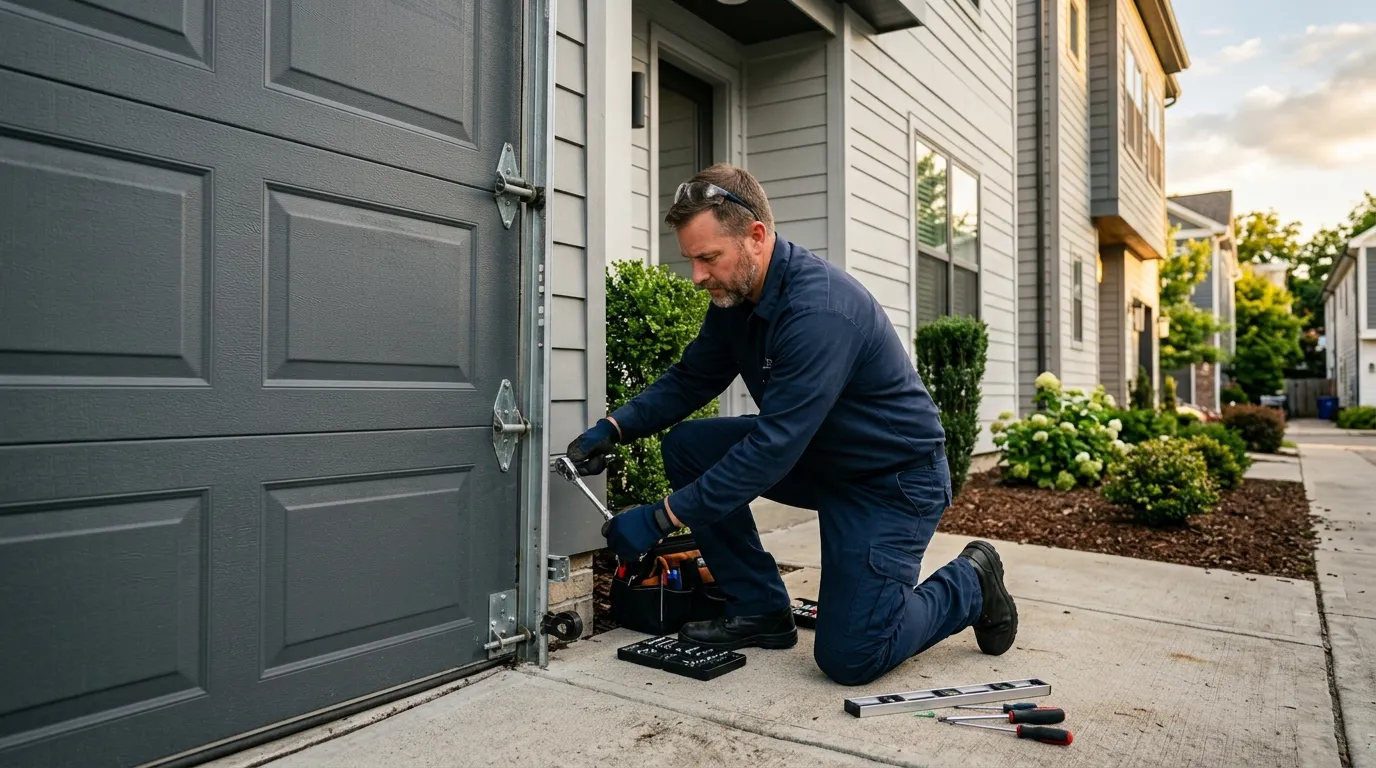
Before you call anyone, look at three things. First, pull the release cord and lift the door by hand - if it's heavy or drops on its own, a spring has weakened or broken, and that's not a DIY fix. Second, look at the tracks where they bolt to the wall; a lot of the housing in this area went up between 1938 and 2002, with most of it dating to the 1960s and '70s, and that vintage of framing has settled over sixty-some years, which throws tracks out of plumb more than it would on a newer build. Third, check the weatherstrip at the bottom panel for cracking or gaps - in a cold-climate service area like this one, that seal is doing more work than people realize. If the door runs quiet and level and the seal looks intact, you may not need a call at all. If it grinds, drifts to one side, or the opener strains and reverses, that's worth writing down before the tech shows up, because it saves diagnostic time on-site.
One honest note: if you're not comfortable putting a hand near a spring or cable under tension, don't. That part isn't a self-check, it's a call.
What You Pay
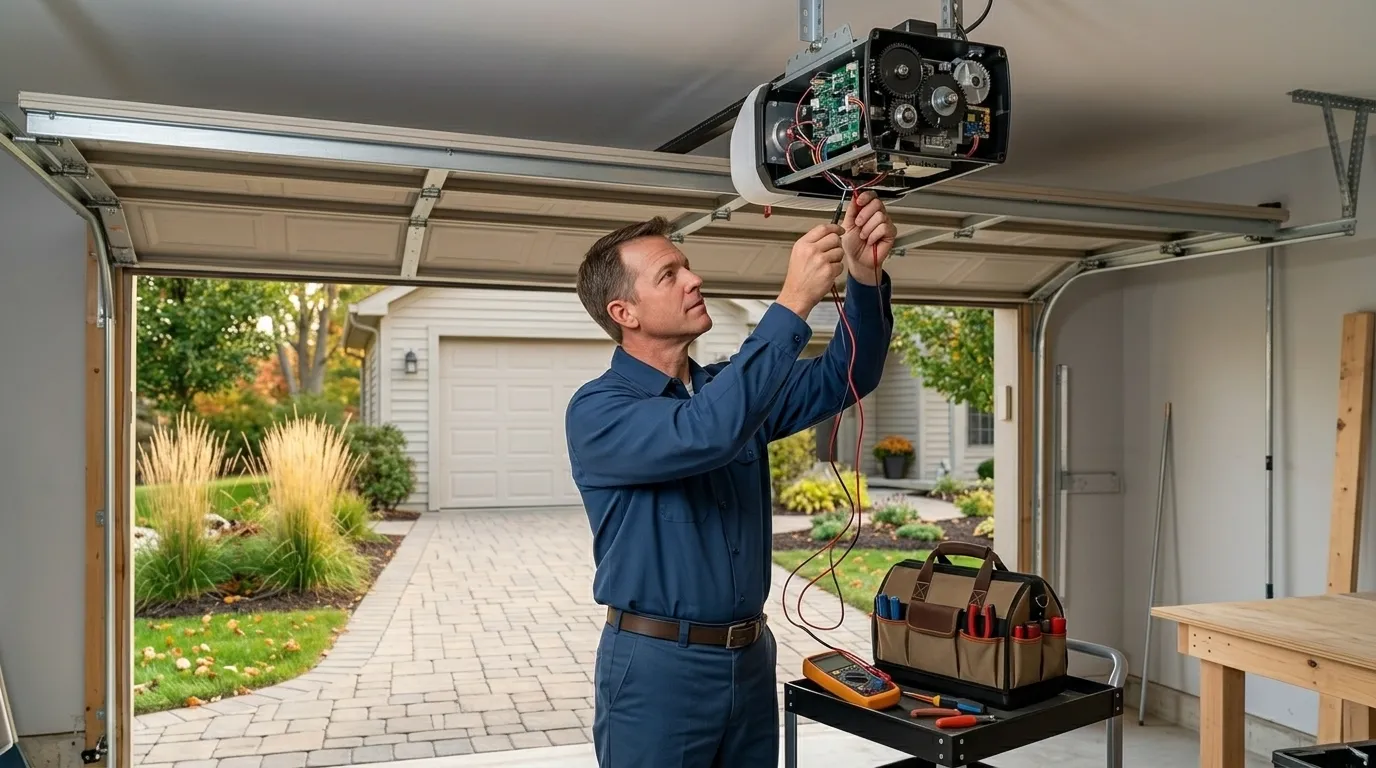
We don't have a flat number to quote here because what you pay depends on what's actually wrong - a torsion spring job costs different money than a track alignment or an opener board swap. What we can tell you is what drives the range in this area: the median household income across the service territory is $84,862, and most homes here were built with the door and opener systems typical of the 1960s-70s construction wave, which means original hardware that often needs full replacement rather than a patch, since parts for that era aren't stocked new. A service call itself covers diagnosis and, if the fix is straightforward, the repair in the same visit. If the fix needs a part we don't carry on the truck - an older size torsion spring or a discontinued opener logic board - that adds a return trip. We'll tell you on-site if that's the case rather than guess.
What Local Conditions Do
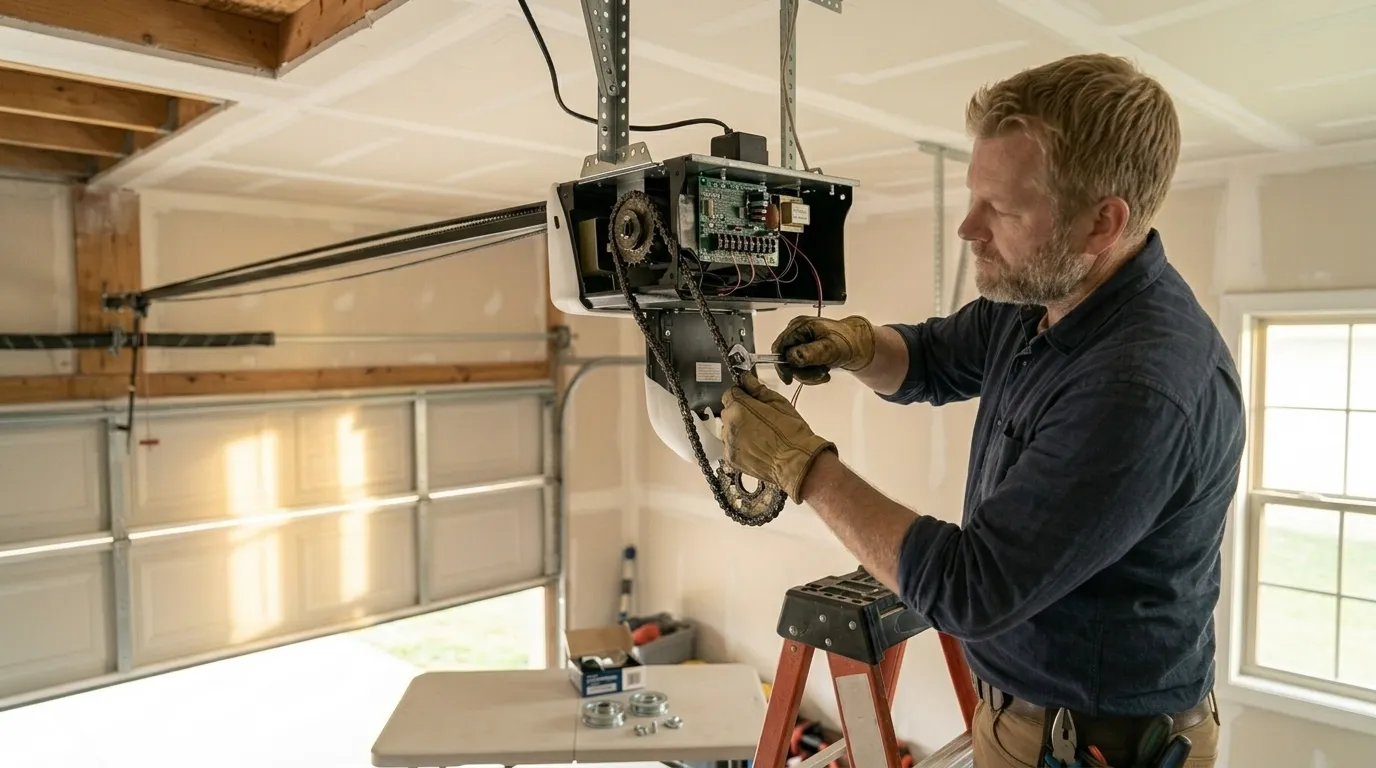
This is a severe cold climate band, and that matters more to a garage door than most people expect. Steel panels contract in deep cold, which tightens tolerances at the rollers and can make a marginal spring finally let go on the first hard freeze of the season. Nylon rollers get brittle and crack; the grease in an old opener gearbox thickens and makes the motor work harder to do the same lift it did in September. On a service call here, we check spring tension and roller condition before we check anything electronic, because in this climate those are the parts that fail first and fail without warning. If your door has been sluggish in the mornings and fine by afternoon, that's usually cold-stiffened grease or a spring that's already borderline - not a sign to wait it out.