What We Will Not Take On
We work out of Rochester Hills, 14 miles from Hazel Park, and we're upfront about what that means. We don't keep a truck stationed here, so we can't promise a same-hour arrival the way a shop based in town could. If your spring lets go at 7 a.m. and you need someone in the driveway in twenty minutes, we're not that call.
We also won't try to force a modern opener onto a track system that's rotted through, or sell you a new panel when the real problem is a header that's sagged out of square. On some of the older single-car garages here, the honest answer is that the wood frame around the opening needs attention before any door hardware will sit right, and that's carpentry work, not garage door work. We'll tell you that instead of billing you for parts that won't fix it.
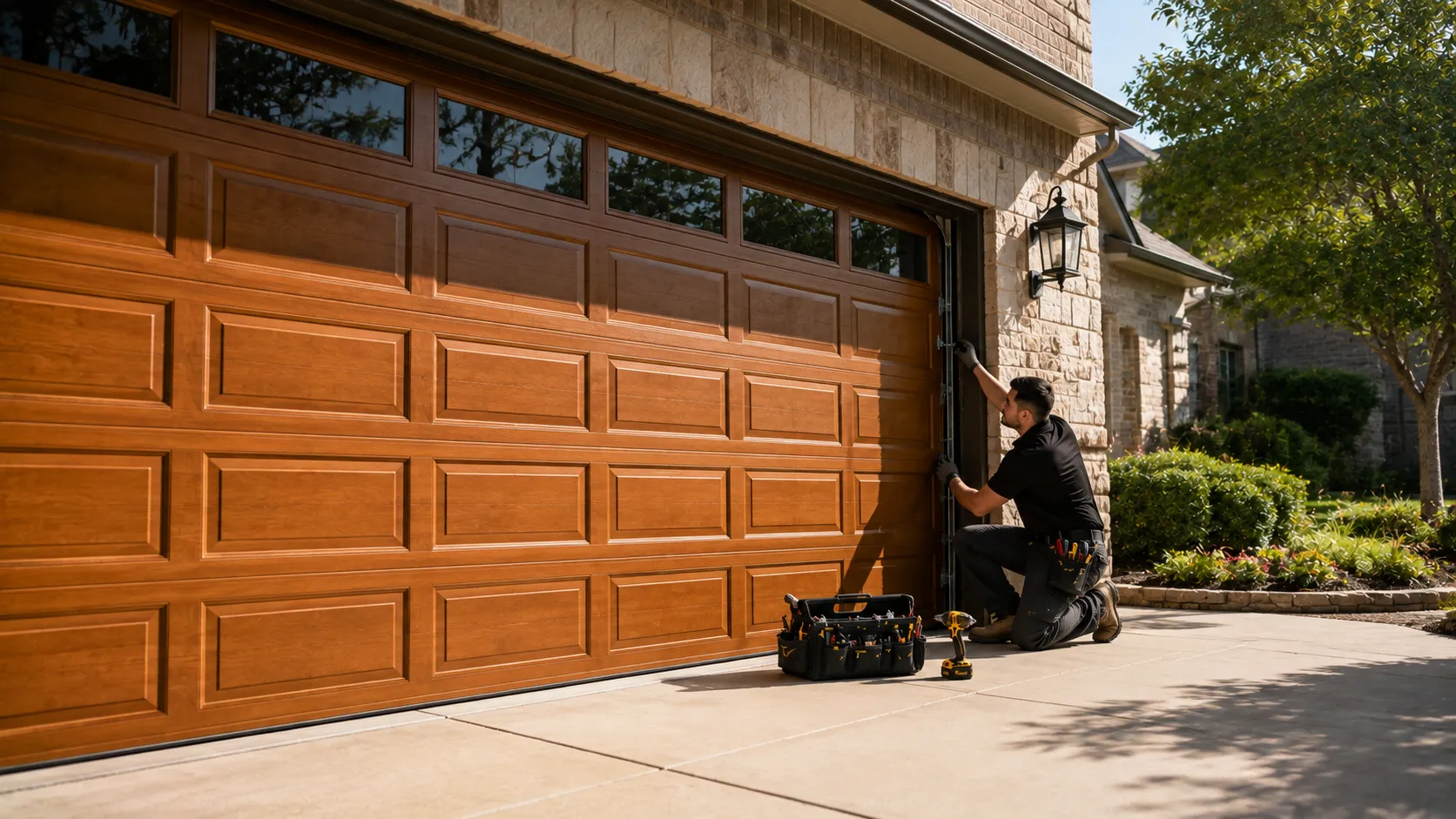
What we will do is show up with the right torsion spring sizes and roller types for the era of door this area actually has, because guessing at that from a shop that only sees newer construction wastes your money and our time.
This Area's Housing
Hazel Park's median year built is 1956, which puts most of the neighborhood ahead of the wider service area's 1960 median. That's not a huge gap on paper, but it means a meaningful share of the 6,799 households here are working with garages that predate the torsion-spring standards that became common through the 60s and 70s across the rest of the coverage map.
Median household income here runs $62,878, well under the $84,862 median across the full 233,489-household service area. We mention that because it changes the math on repair-versus-replace: on an older door with original hardware, a spring and roller job often makes more financial sense here than a full replacement, where in newer subdivisions further out a worn opener sometimes gets swapped rather than patched.
The climate band is the same cold-severe rating that covers the whole area, so the cold-weather stress on springs and cables doesn't change house to house - it's the age of the door taking that stress that does.
Old Streets and New Ones
Not every garage in Hazel Park dates to the same period. Homes closer to the original build era carry the side-mounted torsion setups and steel rollers described above, while houses built or renovated later in the area's history are more likely to already have center-mounted shafts and nylon rollers, closer to what's standard elsewhere in the service area.
That mix means we don't walk in assuming one type of hardware. We look at the door in front of us before quoting anything, because two houses a block apart here can have completely different spring setups depending on when the garage itself went up or was last redone.
If you're not sure which category your door falls into, the giveaway is usually the spring location: mounted on the two side brackets above the track means older original hardware, a single shaft running across the top of the door means it's been updated at some point.