What We Will Not Take On
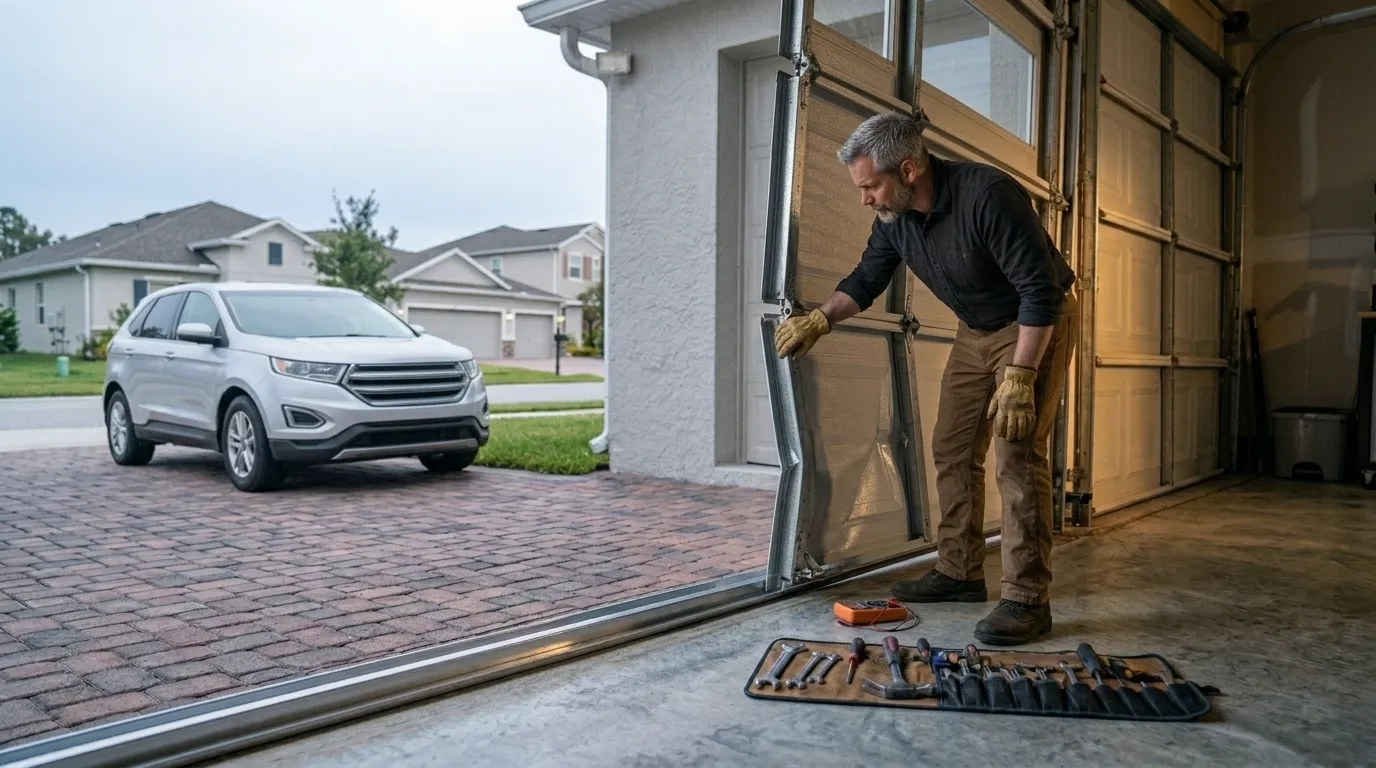
We run out of Rochester Hills, about ten miles from Keego Harbor, and we're upfront about what that means. We don't keep a truck stationed here, so we're not the call for a door that fell off the track at 6 a.m. and needs someone in twenty minutes. If you need same-day emergency work and you're on the far side of Keego Harbor from us, say so when you call, because we'd rather tell you the truck can't get there before noon than promise something we can't hit.
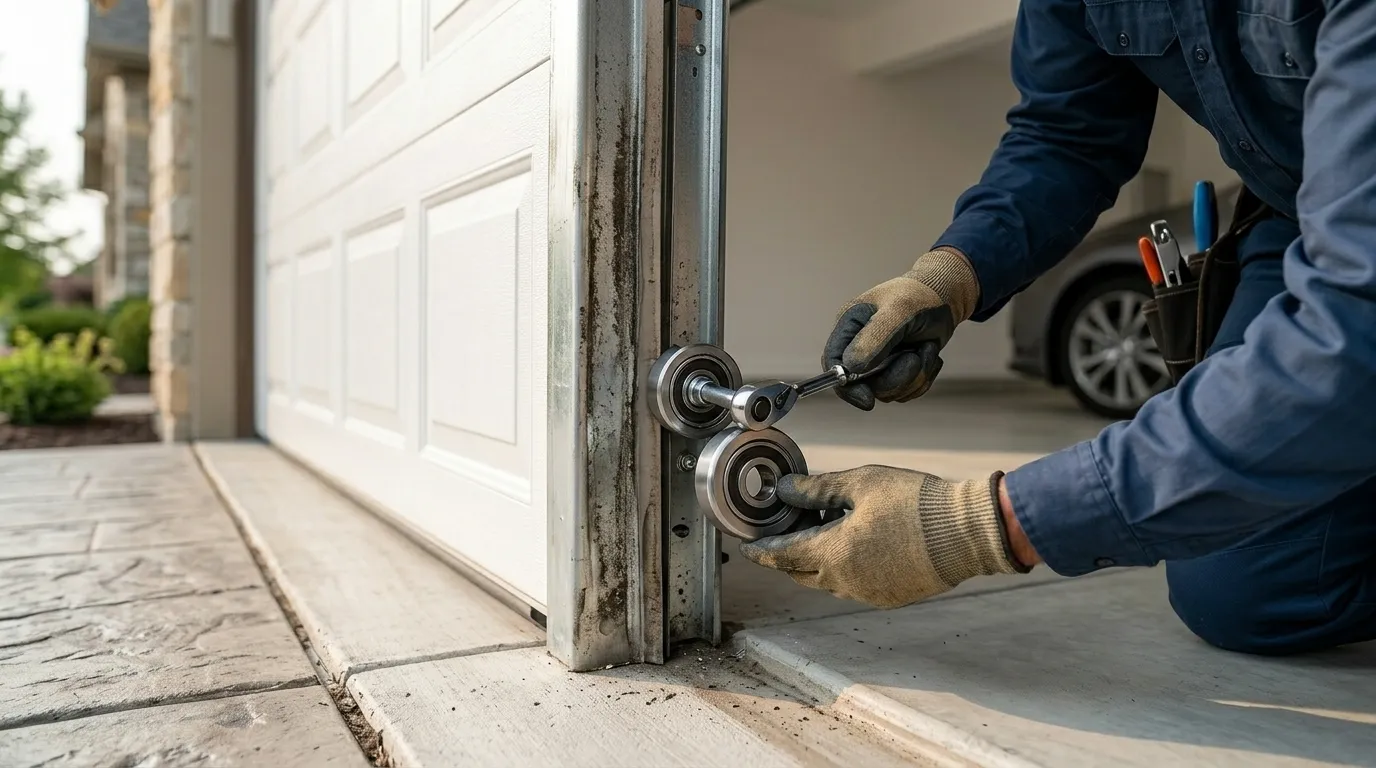
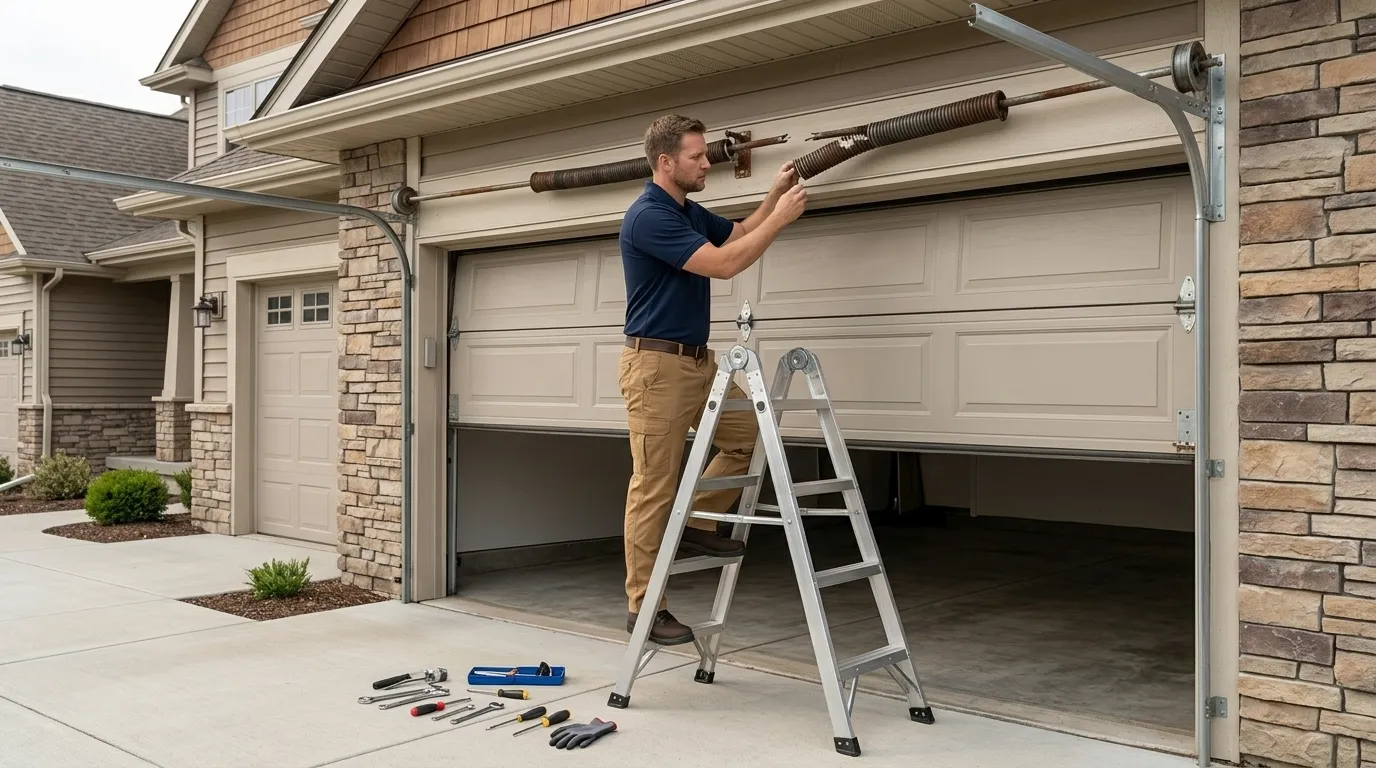
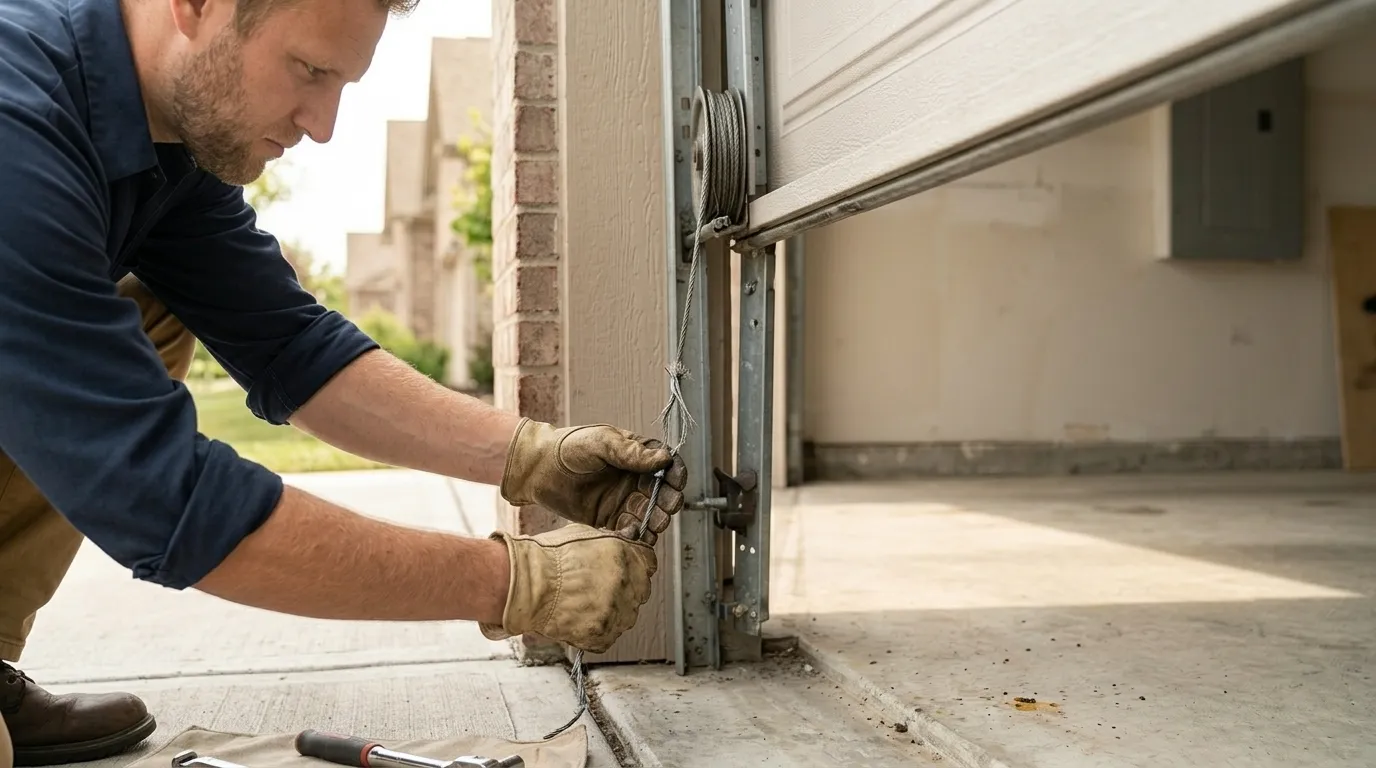
We also won't chase down obsolete extension-spring hardware from a big-box door nobody sells anymore just to keep an old unit alive if the drum or the cable drop is bent. At that point the labor to fabricate a fix costs more than a new spring set and a proper cable, and we'll say so instead of running the meter.
Last thing: we don't do cosmetic-only jobs, like swapping a panel that still opens and closes fine just because it's dented. If the door works, we'll tell you it works, even if that's not the answer you called for.
This Area's Housing
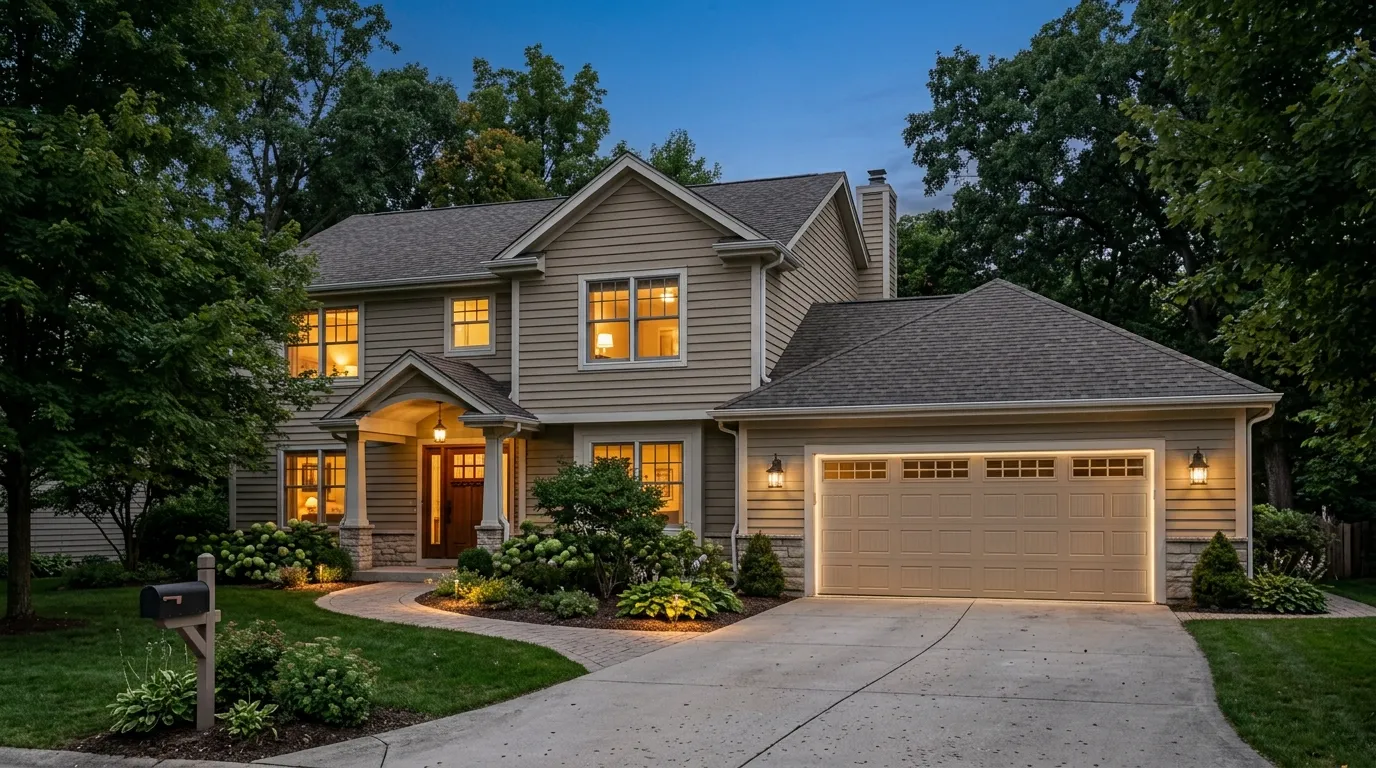
Keego Harbor's homes run newer than a lot of what we see closer to Rochester Hills. The median build year here is 1971, a full decade past the 1960 median across the broader service area covering 42 named communities. That decade matters more than it sounds like it should, because it's the line between doors built for one kind of hardware and doors built for another.
Across the wider area the housing stock spans 1938 to 2002, but Keego Harbor sits solidly in the early-1970s wave: modest lots, attached single-car and two-car garages, and openers that were often installed as an add-on rather than built in from day one. With roughly 1,300 households here, it's one of the smaller pockets we cover, and the housing reads pretty uniform block to block compared to some of the mixed-era neighborhoods closer to the city.
Old Streets and New Ones
Keego Harbor doesn't have the range of build eras you see in parts of the service area where 1938 farmhouses sit next to 2002 infill construction. It's a more consistent neighborhood, which makes the common failure points more predictable - extension springs, aging chain-drive openers, and steel panels without insulation show up again and again rather than one-off oddities.
That consistency is actually useful when we're quoting a job here. If your neighbor's door needed a torsion conversion, there's a decent chance yours will run into the same question in a few years, since the houses went up around the same time. We travel this route from Rochester Hills regularly enough to know the pattern, even without a depot on this side of the coverage area.